First Light Fusion and CLF Develop Fast Ignition for the FLARE Fusion Concept
The collaboration will study how laser driven electrons can heat compressed fuel efficiently, reducing the energy needed for FLARE ignition.
Latest stories
The collaboration will study how laser driven electrons can heat compressed fuel efficiently, reducing the energy needed for FLARE ignition.
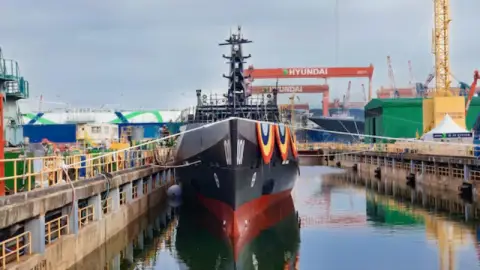
The 600-ton Al001 pairs autonomous navigation with equipment monitoring and a modular deck container; sea trials are planned at Ulsan.
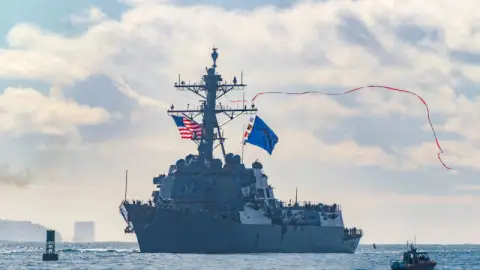
The 9,200-ton destroyer spent 357 days deployed, steamed more than 88,000 nautical miles and took on 8.6 million gallons of fuel.
UNSW Sydney and DY New Energy are testing pulse diagnostics that estimate used EV battery health in under three minutes, at less than $25 per pack.
Italy’s Garante says Facebook’s shared Android permission failed to explain gallery suggestions to about 20 million users. Meta plans to appeal.
Reports describe how app and ad data may have helped map base routines. The evidence points to a broader exposure from location trails on personal devices.
KAIST’s model reached a 19.4% word error rate on LRS3 by filling confident words first, though real-time use remains a goal.
A four-element cathode design pairs magnesium and calcium with titanium and zirconium, reporting strong rate performance and cold-temperature capacity.
Xometry is bringing process recommendations, pricing and manufacturability checks into design tools while applying AI to inspection and supplier workflows.
IMTS 2026 pointed to an industrial AI stack built around connected data, agent interfaces and human oversight, with early tests reaching robot cells.
Industrial router and access point revenue is forecast to reach $4.08 billion by 2030, with mobile automation and 5G shaping demand.
Wombat 3.24 maps USB controller buttons and sticks to ADB keys and mouse input, with four presets and four learnable profiles.
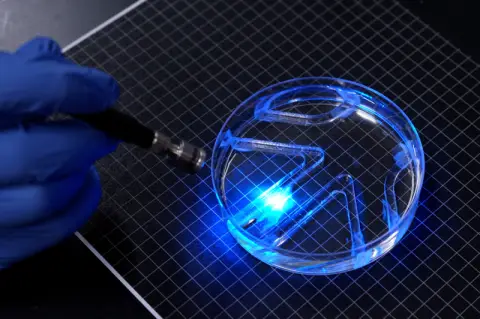
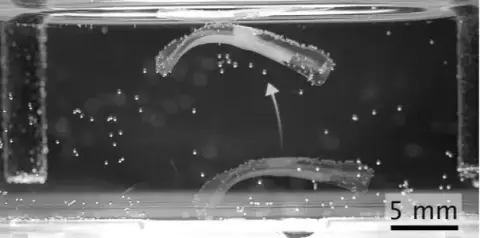
A gel film and light-responsive muscle cells power a two-finned swimmer that can steer through a water maze.
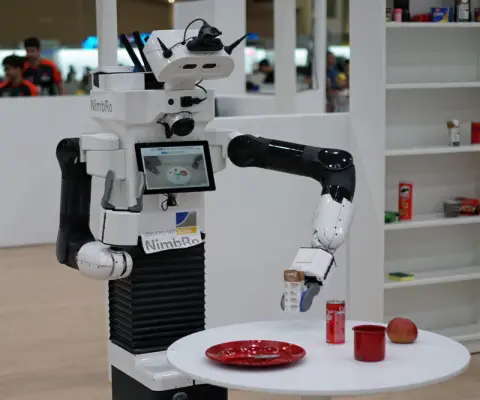
NimbRo’s labeling method automates about 60% of object annotations, freeing RoboCup@Home teams to spend more of their short setup window testing robot tasks.
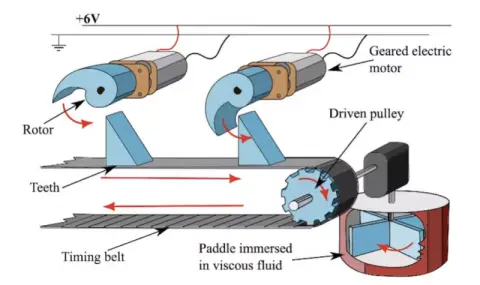
A tabletop motor array developed at the University of Bristol produces muscle-like coordination through a shared backbone, pointing to simpler robot actuation.
October’s robotics work spans human perception, autonomous control, muscle-powered prototypes and industrial deployment, with practical limits still to resolve.
RoboCup’s progress reflects advances in hardware and learned control, but household use still faces data, reliability and task-fit challenges.
AI100 highlights physical AI as a major open challenge, with real world complexity still separating robot demonstrations from broad deployment.
Impulse turbines extract energy from high-speed jets; reaction turbines use pressure and velocity changes through a water-filled runner.
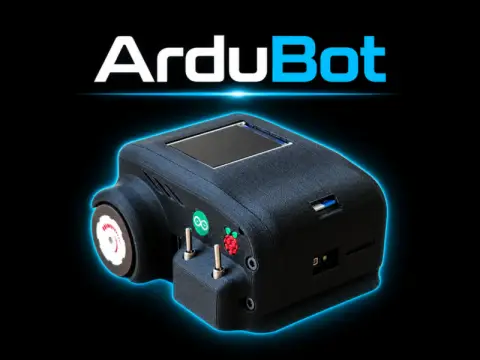
The 100 × 100 × 50 mm ArduBot combines ToF depth sensing with ROS 2 tools for 2D navigation and 3D mapping.