Cobalt-Free Nickel-Rich Cathode Delivers 278.6 Wh/kg in a Cold-Temperature Pouch Cell
- Daniel Kamberski
- 343 reads
A four-element cathode design pairs magnesium and calcium with titanium and zirconium, reporting strong rate performance and cold-temperature capacity.
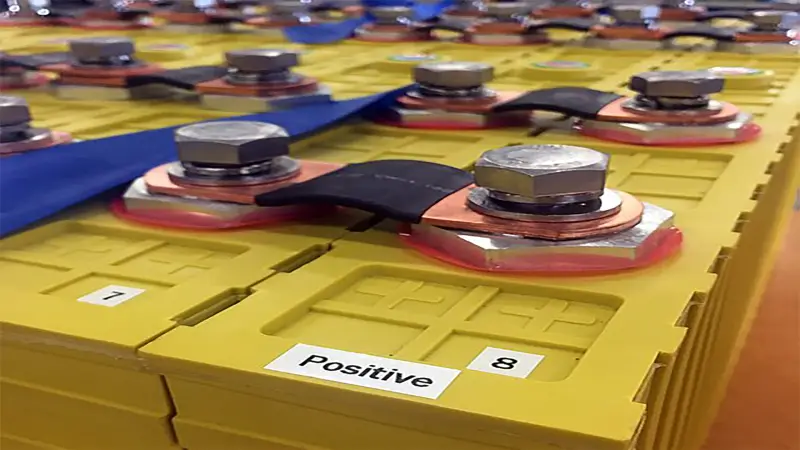
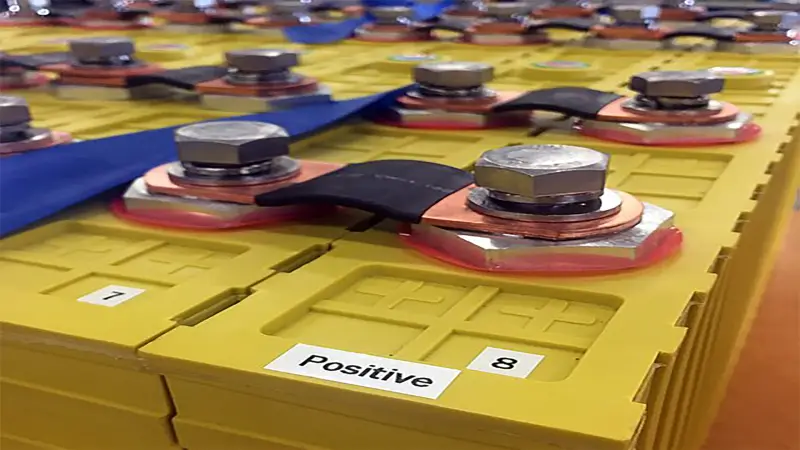
A cobalt-free, nickel-rich lithium-ion cathode reached 278.6 watt-hours per kilogram in a 5.74-ampere-hour pouch cell at minus 20 degrees Celsius, according to researchers at the Institute of Metal Research, part of the Chinese Academy of Sciences. The team’s design combines four dopants selected for two material properties: ionic charge density and metal-oxygen bond strength. The results, published in Nature Synthesis on Oct. 1, point to a way to address two common problems in cobalt-free cathodes: sluggish lithium-ion movement and an unstable crystal framework.
The composition uses magnesium and calcium to influence how lithium ions move through the cathode, and titanium and zirconium to help hold its oxygen framework together. That division of roles is the useful engineering idea here. Removing cobalt can lower material cost and raise capacity, but a cathode still has to transport ions and preserve its structure through repeated charge and discharge. Improving one property can leave the other as a limitation.
Two properties guide four dopants
Dopants are small additions to a material that can change its behavior without replacing its main composition. Their selection is often guided by experience and repeated experiments. The researchers, led by professors Feng Li, Hui-Ming Cheng and Chunyang Wang, instead organized the selection around two descriptors: ionic charge density and metal-oxygen bond strength.
Magnesium and calcium have low ionic charge density. The team’s stated rationale is that they weaken electrostatic constraints on lithium ions moving through the material. Titanium and zirconium form strong bonds with oxygen; those bonds are intended to reinforce the lattice of oxygen atoms that helps keep metal ions in place. In practice, the design asks the dopants to address transport and structural stability within one cathode composition.
That combination matters because a material can show good capacity under gentle conditions yet struggle when discharged quickly or cooled. Faster discharge calls for lithium ions to move through the electrode on a shorter timescale. Lower temperature can make that transport harder. Meanwhile, repeated cycling can alter the material’s crystal structure. A composition that performs well across these conditions has to balance ion movement with resistance to structural change.
Rate and cold-temperature results
The paper’s abstract reports a specific capacity of 130.9 milliamp-hours per gram at 25 C. Specific capacity describes the charge stored per gram of active material, so this figure helps compare the cathode material by mass. The report also gives a cycling result: after 350 cycles at 10 C, the cathode retained 82.4 percent of its capacity.
A C rate expresses current relative to a cell’s capacity. At 10 C, the nominal discharge time is one tenth of an hour, or six minutes; at 25 C, it is about 2.4 minutes. These are demanding rates, and the retained-capacity figure offers a measure of performance over repeated cycling at the stated rate. The available figures do not specify the cell format used for that 350-cycle test.
At minus 20 degrees Celsius, equivalent to minus 4 degrees Fahrenheit, the cathode delivered 112.2 milliamp-hours per gram at 1 C. That result addresses performance in the cold at a stated rate, while the pouch-cell energy-density figure gives a separate measure at the cell level. The two measurements describe different aspects of performance and should not be treated as interchangeable: capacity per gram of cathode material is distinct from energy per kilogram of a complete cell.
What the pouch-cell result establishes
The Chinese Academy of Sciences reported that a 5.74-ampere-hour pouch cell reached 278.6 watt-hours per kilogram at minus 20 degrees Celsius. A pouch cell packages the battery in a flexible foil casing. The reported energy density is notable as a cold-temperature cell result, but the available account does not state the discharge rate or provide enough information to compare it directly with cells tested under different conditions.
The team also used several characterization methods to examine what happens inside the material. The researchers reported faster lithium-ion transport and fewer harmful phase changes. Those observations are consistent with the design’s two aims: enable ion movement while limiting changes to the cathode structure. The reported results connect the material-level rationale to measured cell behavior, though they do not, on their own, establish how the approach will perform across other compositions or cell designs.
Questions for further development
Several details needed to assess practical readiness are not given in the available results. They include the amounts of each dopant, a direct comparison with another cathode, cost figures, the pouch cell’s discharge rate and the format used for the cycling test. The reported pouch-cell result therefore establishes a performance point, but leaves key conditions for evaluating repeatability and comparison unspecified.
Other research groups are also investigating cobalt-free cathodes. Work associated with Caltech has examined lithium iron phosphate, while McGill-led research has explored disordered rock-salt cathodes that use neither cobalt nor nickel. Those chemistries differ from this nickel-rich design, so they illustrate the range of approaches rather than provide direct performance benchmarks.
The practical question now is whether the two descriptors can help researchers select dopants for other cathode compositions, and whether the reported combination retains its performance as cell designs and test conditions change. For engineers following the work, the strongest result is the pairing of high-rate measurements, cold-temperature capacity and a pouch-cell energy-density figure, alongside a clear design rationale. The next useful evidence will be fuller test conditions and comparisons that show how broadly that rationale applies.