Elementl Power and Google Cloud Build AI Tools to Shorten Nuclear Project Planning
- Aman Tripathi
- 539 reads
Elementl Lattice uses cloud data tools to speed reactor site screening and carry project knowledge into later builds.
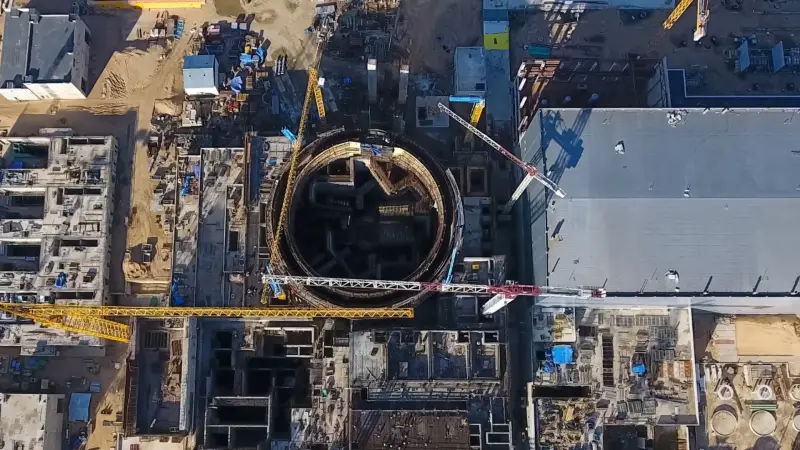
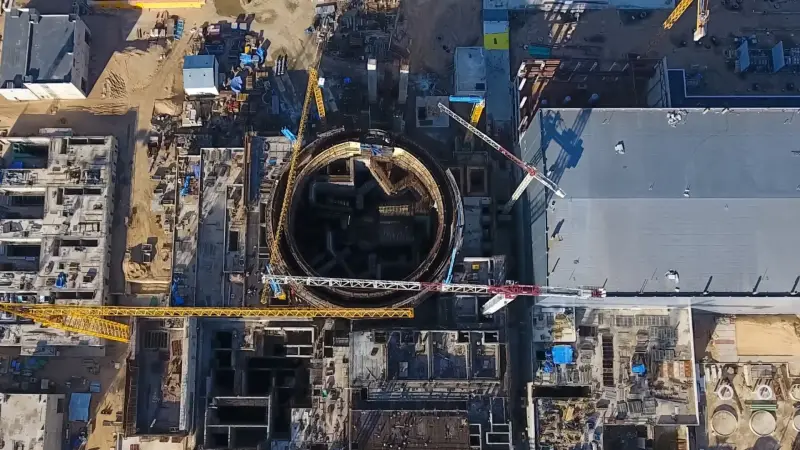
Planning a nuclear power plant can consume years before construction begins. Elementl Power and Google Cloud are targeting that early phase with Elementl Lattice, a digital platform designed to bring site research, project planning and capital management into shared workflows. Its first operational tool, Atlas, screens potential locations; later Lattice tools are intended to help teams reuse engineering and licensing records across projects.
The practical case for this approach is straightforward: early development work draws on many kinds of information, from geography and environmental conditions to grid connections and reactor design requirements. When teams handle these inputs through separate studies and manual processes, comparing sites and carrying decisions between project groups can take time. Lattice aims to organize that work and make the underlying information more useful as projects progress.
The platform combines Elementl’s experience in nuclear engineering and energy finance with Google Cloud technology. It is built on BigQuery data analytics and Gemini for business models. The companies describe the system as a way to replace disconnected planning tasks with standardized digital workflows. As projects use the platform, Lattice is intended to collect operational data that can inform cost and schedule estimates on later builds. That could make planning assumptions easier to compare, though the source provides no measured results for cost reductions or schedule gains.
Raiford Smith, global director of Power & Energy at Google Cloud, described a core preconstruction problem as one of data coordination. He said Gemini for business is being applied to shift project delivery from isolated studies toward “real-time, predictive project delivery.” Smith linked that goal to getting efficient baseload power onto the grid. The claim describes the companies’ intended direction; the stated material does not provide performance figures from completed projects.
Atlas narrows the site search
Atlas is the first Lattice tool to enter operation. Selecting a nuclear site requires teams to consider a wide set of geographic, environmental and grid infrastructure variables, while also checking whether a location suits the technical needs of different reactor designs. Atlas can assess several candidate sites across thousands of square miles in parallel, according to Elementl.
That parallel screening changes where development teams can spend their time. Preliminary desktop research that previously took months can, according to the project description, be completed in days or weeks. The point is not to replace field work: a desktop screen can help teams identify promising candidates and move sooner to detailed physical site assessments. Those assessments still determine whether conditions on the ground support a project.
The tool’s ability to consider requirements from multiple reactor designs also matters for developers evaluating a portfolio of technologies. A location that appears workable for one design may not meet another design’s needs. Screening options together can help teams compare candidates against the technical demands they actually face, although no specific screening criteria, accuracy measures or site results have been published in the material provided.
Elementl’s project pipeline gives the software an immediate setting for use. Earlier in June, the developer announced plans for a 1.5-gigawatt nuclear facility in Southeast Ohio. An Early Works Agreement with GE Vernova Hitachi Nuclear Energy covers a site planned for BWRX-300 small modular reactors. The project is described as among the earliest commercial projects of its kind in the United States. The linked BWRX-300 project details provide further context on the reactor plan.
Carry verified work between projects
Elementl’s next planned Lattice updates address repeated engineering and licensing work. Engineers are developing a unified digital ledger to record a plant’s design specifications, licensing requirements and structural modifications. The aim is to maintain a controlled master record that teams can consult as a project changes, then reuse verified information on later plants built around standardized reactor designs.
That reuse could reduce the need to recreate the same documentation and analysis for each project. It also creates a clearer way to track how a design evolves: a structural change, for example, can be connected to the relevant record rather than treated as an isolated update. The value depends on keeping records accurate and applicable to the plant in question. Standardized designs make reuse more plausible, but each site and project still has its own conditions to assess.
Elementl chairman and CEO Chris Colbert said the collaboration turns accumulated nuclear expertise into software intended to help teams move faster and with more confidence. The broader goal is repeatable commercial deployment, with lessons from one project informing the next. For engineers, the measure to watch will be whether Lattice can make site comparisons and design records easier to act on while preserving the project specific checks that determine whether a plant can be built at a particular location.
Elementl has also linked its work to the wider effort to expand commercial nuclear projects, including development of fuel supply arrangements such as the HALEU deal described here. Lattice focuses on the planning side of that challenge: helping teams organize early decisions, then retain useful project knowledge as designs move toward construction.