China’s Fourth Carrier Takes Shape as Nuclear Propulsion Remains Unconfirmed
- Daniel Kamberski
- 506 reads
Satellite imagery shows a growing hull at Dalian, while reactor clues and the ship’s final size remain assessments rather than confirmed specifications.
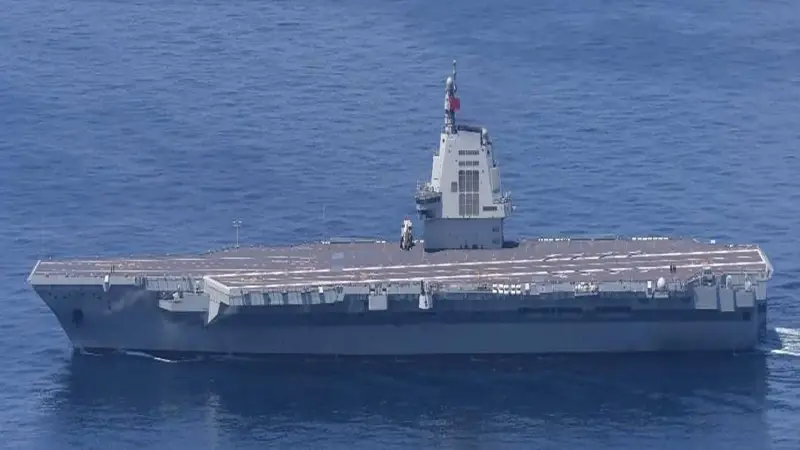
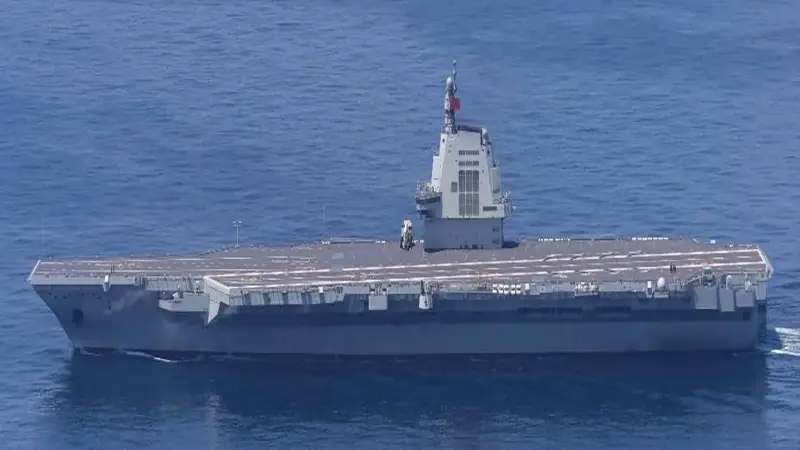
China’s fourth aircraft carrier is taking shape at Dalian Shipyard, and its propulsion system is the key unanswered engineering question. Satellite images captured on Nov. 12 show new sections along both sides of the hull and flight deck. An assessment by the Center for Strategic and International Studies (CSIS) considers nuclear propulsion likely, but the available imagery does not establish that the ship has a reactor.
The distinction matters because propulsion would shape the ship’s range, onboard power supply and flight operations. A reactor could let the vessel operate for long periods without refueling its propulsion plant, while providing substantial electrical output for systems such as electromagnetic aircraft catapults. Those catapults use magnetic forces to accelerate aircraft from the deck. The ship’s actual propulsion system and catapult arrangement remain unconfirmed.
What the hull imagery suggests
CSIS identifies the ship as Type 004, a label analysts use that China has not confirmed. China has acknowledged a fourth-carrier program, but has not disclosed how the vessel will be powered. The latest images, reported by The Aviationist on Nov. 16 and attributed to Vantor satellite imagery, show extensions along both sides of the hull. CSIS associates the work with sponsons, which project outward from a hull, and with a superstructure on the starboard side.
The propulsion assessment draws on earlier construction imagery as well as the new views. CSIS points to images from May 4 showing two compartments, each about 49 feet (15 meters) on a side. Their appearance is consistent with spaces that could house shielded reactor containment, according to the assessment. The comparison the analysts make is with the conventionally powered Fujian, which did not show similar openings at a comparable construction stage.
That is a clue, not a reactor identification. External shapes and openings can suggest how a ship’s internal spaces are arranged, but imagery alone cannot confirm the installed machinery or its operating status. Reports of a reactor-like structure in the hull date to at least November 2025. CSIS also cites a late-2024 Associated Press investigation indicating that China had built a land-based prototype naval reactor in Sichuan province. Taken together, these points support the possibility of nuclear propulsion; they do not settle it.
A larger hull, with dimensions still changing
CSIS measured the hull at 1,056 feet (about 322 meters) long and 151 feet (46 meters) wide as of October. That makes it longer than the Fujian, which the assessment puts at roughly 1,037 feet (316 meters). The comparison with the U.S. Ford class is closer: CSIS gives that class a length of about 1,106 feet (337 meters), putting the new Chinese ship within a range where further construction could bring it close to, or beyond, that figure.
These are construction-stage measurements rather than final specifications. Hull sections and flight-deck structures are still being added, and the completed vessel’s dimensions remain unknown. Length alone also cannot tell engineers how much aircraft a ship can carry, how quickly it can launch them, or how the vessel will perform at sea. Those questions depend on the final deck arrangement, elevators, catapults, internal layout and operating systems.
The potential electrical demand helps explain why propulsion is receiving close attention. Electromagnetic catapults need a way to store and deliver large amounts of energy on demand. A nuclear plant could provide a high-output source, but that does not prove that this design uses one: the ship’s power architecture has not been disclosed. The Fujian’s conventional propulsion and the apparent differences in its construction offer a useful comparison, while leaving the new ship’s internal design unresolved.
Construction schedule and open design questions
As of October, CSIS judged the ship’s construction stage similar to where the Fujian stood in May 2021. The Fujian launched about a year later. That history offers a rough point of comparison for the new vessel, but its larger size and different design could affect the schedule. Launching would mark the start of another phase, followed by fitting out and sea trials; CSIS expects several more years of construction.
Other visible features remain uncertain too. CSIS rates a three- or four-catapult layout and a possible third aircraft elevator as plausible, rather than confirmed. The flight deck should eventually make the catapult count easier to assess, while further construction imagery may clarify how the island and deck edges are arranged. Until then, those features are best treated as design possibilities.
The ship will also operate as part of a larger maritime system. Aircraft carriers rely on escort vessels and replenishment ships to sustain operations, so the carrier’s engineering cannot be assessed from its hull alone. CSIS notes that a large replenishment vessel was recently launched near Guangzhou, but that does not establish how it will be used with the new carrier.
For now, the clearest evidence is the growing hull, its measured dimensions and several construction features that differ from the Fujian. The reactor interpretation remains an assessment, and final specifications have not been published. Future views of the flight deck and additional construction stages should help resolve the catapult layout, while the internal propulsion system may remain difficult to verify from exterior imagery alone.