F-15EX Eagle II Adds Missile Capacity and Electronic Warfare Systems in Japan
- Kaushal Kishore
- 695 reads
Two F-15EX aircraft arrived at Kadena, bringing capacity for up to 12 air-to-air missiles alongside upgraded radar and electronic protection.
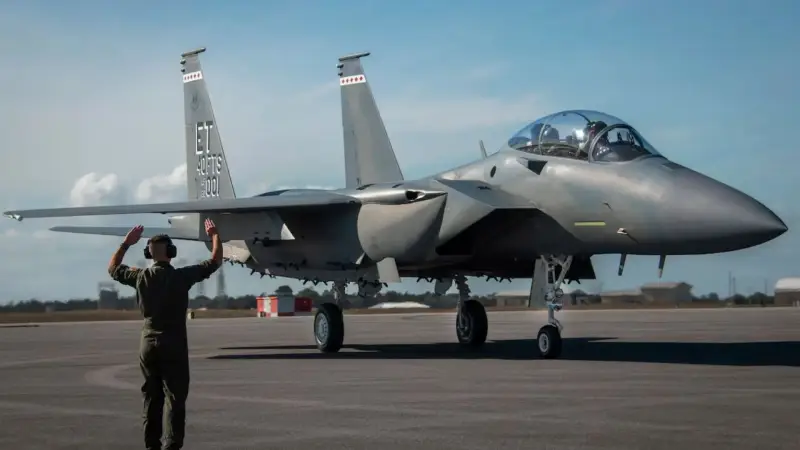
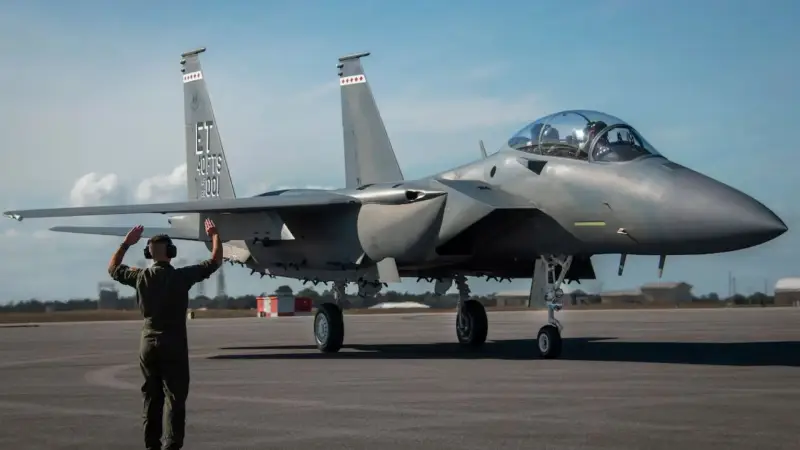
The F-15EX Eagle II combines a larger potential air-to-air missile load with updated radar and electronic protection. Two aircraft arrived at Kadena Air Base in Okinawa on November 15, 2026, marking the first permanent assignment of the type in Japan. The engineering change is straightforward to describe: the aircraft can carry more missiles than the older F-15C while adding systems intended to detect and respond to radar threats.
More missile stations expand the aircraft’s load
The F-15EX can carry up to 12 air-to-air missiles, compared with eight on the F-15C. That raises maximum capacity by 50 percent. U.S. Air Force testing has demonstrated launches of AIM-120 radar-guided missiles and AIM-9X infrared-guided missiles from additional outboard stations.
Maximum capacity describes what the aircraft can carry, not what every sortie will carry or how many targets it can engage. Mission requirements, weapon configuration, detection and identification, firing conditions, and opposing countermeasures all affect how the load translates into operational use. Still, additional stations give planners more room to configure the aircraft for a sortie where several aerial threats may need to be addressed before the aircraft returns to rearm.
The F-15EX is expected to operate alongside aircraft with different design priorities. The F-22 carries six AIM-120 missiles and two AIM-9 missiles internally. The F-35A uses reduced radar signature and advanced sensing to collect and share information. The Eagle II contributes a larger potential missile load within this mix. Its role depends on how aircraft share information and coordinate their tasks, rather than on missile capacity alone.
Radar and electronic protection
The Eagle II’s equipment includes the AN/APG-82 active electronically scanned array (AESA) radar and the Eagle Passive Active Warning Survivability System (EPAWSS). The systems are intended to detect, identify and locate radar signals. The aircraft can then use electronic jamming and expendable countermeasures to respond to threats.
That combination adds ways to sense and manage the electronic environment, but it does not make the F-15EX a low-signature aircraft. The F-22 and F-35 are designed around stealth and advanced sensing capabilities; the Eagle II retains a different balance of payload and protection. Its survivability will depend on the threat, the mission and the support available. Those limits matter when comparing aircraft by a single headline measure such as missile count.
Electronic protection also works as part of a broader system. Detecting a signal is useful only if crews can interpret it, connect it to the situation around the aircraft and choose an appropriate response. Jamming and expendable countermeasures provide options, while mission support and coordination affect what those options can achieve. The stated equipment points to an aircraft designed to operate amid radar and electronic warfare threats, without removing the constraints imposed by its signature or by the conditions of a particular engagement.
Planned force changes at Kadena and Misawa
The plan calls for 36 F-15EX aircraft at Kadena, replacing 48 F-15C and F-15D fighters. At Misawa Air Base, 48 F-35As are planned to replace 36 F-16s. These are planned force changes; the arrival of the first two F-15EX aircraft begins the Kadena modernization effort, rather than completing it. The published figures describe the planned fleets and should not be read as a report of aircraft already delivered.
The change in aircraft numbers also shows why headcounts alone don't describe capability. The F-15EX brings a different combination of missile capacity and electronic systems, while the F-35A contributes stealth and sensing. How those aircraft complement each other depends on training, coordination, weapons availability and maintenance support, along with the pace of further deliveries.
What the aircraft can contribute
Expected roles for the F-15EX include air dominance, cruise-missile defense and escort. Its larger missile load could be useful when several aerial threats are present. Intercepting aircraft that carry long-range weapons before they release them requires early detection, accurate tracking and coordination with ground-based defense systems. A higher missile capacity can extend the set of available responses, but it doesn't by itself guarantee that a threat will be detected or engaged in time.
Aircraft operations in the region involve a broader set of capabilities, including carrier-based aircraft, Marine-operated F-35B aircraft, airborne command-and-control platforms, ground-based air defenses and logistics support. Japan’s self-defense forces also monitor its airspace and respond to threats. For the new aircraft, practical performance will depend on the people and support systems that connect those capabilities: pilots and maintainers need training, serviceable aircraft, available weapons and the ability to coordinate missions.
The first two F-15EX aircraft establish the type’s permanent presence at Kadena. Their most measurable distinction is capacity for up to 12 air-to-air missiles; their operational value will emerge as more aircraft arrive and crews build experience with the radar, electronic protection and combined aircraft operations. The Kadena plan sets out the intended force replacement, while the arrival announcement marks the start of that transition.