Varda W-9 Returns After 48 Days in Orbit With Reentry Test Hardware
- Daniel Kamberski
- 465 reads
W-9 landed in South Australia after 48 days in orbit, carrying hypersonic-flight instrumentation and composite samples for heat-shield testing.
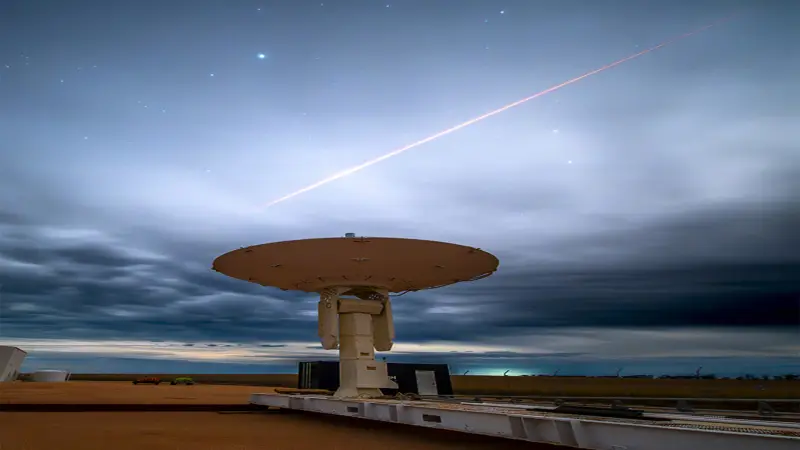
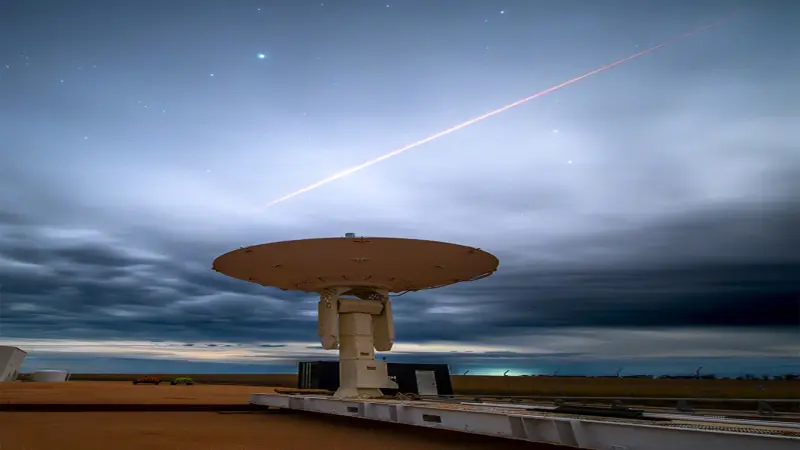
Varda Space Industries’ W-9 capsule returned to Earth after 48 days in orbit, bringing back hardware exposed to the heat of atmospheric reentry. It landed at the Koonibba Test Range in South Australia at 5:56 a.m. Pacific time on Nov. 17, according to the El Segundo, California, company. W-9 was Varda’s second spacecraft to return this month.
The flight combined two useful demonstrations: operating more than one spacecraft from a shared launch, then bringing each vehicle back on its own schedule; and exposing test articles to hypersonic flight conditions. The landing confirms the capsule completed its return, but Varda has not yet reported results from the onboard data system or the composite samples. Their performance therefore remains an open question.
Two spacecraft, separate returns
W-9 and W-8 launched together on Oct. 1. Varda says they were the first two commercial reentry vehicles launched on the same rocket. They did not return together: W-8 landed on Nov. 5 at 5:58 a.m. Pacific time, followed by W-9 twelve days later.
That sequence gives Varda a chance to operate multiple vehicles in orbit while planning separate return dates. The company says this approach can provide more flexibility in scheduling flights around customer needs. In practice, the value depends on being able to manage each vehicle’s on-orbit operations and coordinate its return independently. The two landings show that Varda completed this sequence for W-8 and W-9, though the available details do not establish how often it can repeat it or what it costs.
Wendy Shimata, Varda’s vice president of autonomous systems, said the paired launch and separate returns demonstrate flexibility across mission types. She also described regular access to orbit and back as increasingly routine. That is the company’s assessment; no flight count, cost data or broader reliability figures were provided to quantify the claim.
Reentry as a test environment
W-9 carried a system designed to collect data during hypersonic flight, defined here as travel at more than five times the speed of sound. Varda says the system was funded by a public-sector customer, but it did not identify the funder or the system’s maker. The company says the flight conditions cannot be replicated on the ground, making the capsule’s return an opportunity to gather measurements in an environment that is difficult to reproduce in terrestrial testing.
The capsule also carried small samples of next-generation composite materials embedded in an exterior nose tile. Varda says the materials are being developed for ablative thermal protection. An ablative shield protects a vehicle by gradually wearing away as it absorbs and carries off heat. The samples were exposed to the full heating of reentry, but Varda has not released measurements or an assessment of how they fared.
For engineers evaluating thermal protection, the distinction between exposure and a reported result matters. The return establishes that the samples flew through the intended environment and came back with the capsule. Determining whether a material performed as intended requires test findings that have not yet been shared, such as measurements or a post-flight assessment. No such details are available for W-9.
Earlier flight experience and the W-7 mission
Varda has also flown thermal-protection test articles on earlier capsules. Its W-6 capsule carried a Sandia National Laboratories nose tile with embedded temperature sensors, along with two NASA shoulder tiles. W-6 also flew a navigation experiment funded by public-sector organizations, including the U.S. Space Force and the Air Force Research Laboratory. The W-9 mission details do not say whether it carried a similar navigation experiment.
While W-9 remained in orbit, Varda’s mission operations team in El Segundo also managed the launch of W-7 and W-8’s return. W-7 is a separate spacecraft intended to study how cancer drugs crystallize in orbit. Varda has described orbital pharmaceutical processing as one of its business areas; its first capsule returned HIV drug crystals produced in orbit.
Varda says W-7 remains healthy in orbit and is scheduled to return before the end of the year. The company expects to provide further mission updates in the coming weeks. For W-9, the next useful information will be the reported results from its flight data system and the condition of the composite samples after reentry. The company announced the landing on Nov. 17, 2026.