MIG Transfer Modes: Balancing Spatter, Heat Input and Deposition Rate
- Weld Team
- 653 reads
Short circuit, spray and pulse each suit different material, positions and production needs. The right mode can reduce spatter, burn-through and rework.

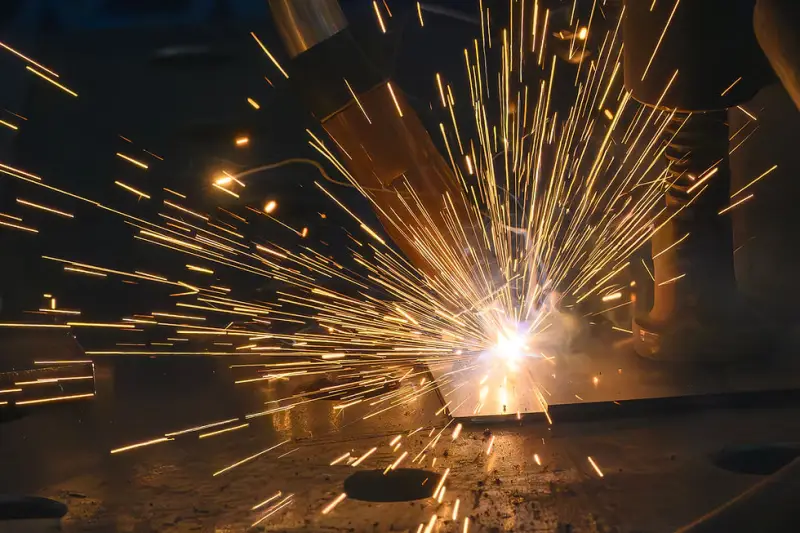
Spatter, burn-through and slow deposition can point to a mismatch between the job and the MIG transfer mode. Short circuit, spray and pulse move wire into the weld pool in different ways, changing heat input, penetration, puddle control and cleanup. Choosing among them is one part of weld setup; wire, shielding gas, joint preparation and machine settings still matter.
Three ways to move wire into the weld pool
In short-circuit transfer, the wire repeatedly touches the weld pool, briefly shorting the arc before it re-establishes. The rapid cycle produces a crackling sound, often compared to bacon frying. Its relatively low heat input makes it useful on thin sheet, heat-sensitive parts and root passes, where burn-through and distortion are concerns. It also works in flat, horizontal, vertical and overhead positions, which helps when the workpiece cannot be repositioned.
The trade-off is that short circuit tends to produce more spatter and post-weld cleaning. Its lower current can also limit penetration on thicker material. It runs on a conventional MIG power source and does not require a specific gas mixture.
Spray: fast deposition with a heat and position limit
Spray transfer uses higher current to send a continuous stream of fine droplets across the arc. With suitable settings, the arc is stable and produces little spatter, with a steady hiss. Good penetration and a high deposition rate make spray a productive choice for thicker material in flat and horizontal positions.
That productivity comes with substantial heat input. Without a suitable procedure, the result can be burn-through, distortion or other quality problems. The molten pool is also very fluid, making it difficult to control in positions beyond flat and horizontal. Spray requires at least 80% argon in the shielding gas; an industrial MIG power source can run it with the appropriate gas and settings.
Pulse combines peak current with a lower background
Pulse, also called pulsed spray or pulse MIG, switches rapidly between a high peak current and a lower background current. The peak provides heat for fusion; the background lets the pool cool somewhat, reducing overall heat input compared with continuous spray. The result can retain spray-like penetration and deposition while offering more control over heat and puddle behavior.
Pulse is suited to work that needs good penetration and low spatter but also benefits from controlled heat, including vertical and overhead welding. Pulse programs vary in their current patterns, but share those general advantages. The limitation is equipment: the power source must support pulse programs. Pulse also requires 80% argon in the shielding gas.
Match the mode to the symptom
For burn-through on thin sheet or distortion on heat-sensitive parts, consider short circuit or pulse, both of which offer lower or more controllable heat input than spray. If the main burden is spatter cleanup, spray or pulse may help because both can produce low-spatter transfer. For slow production, spray and pulse offer higher deposition rates than short circuit.
These are starting points, not fixed settings. The comparison depends on the equipment, wire, shielding gas, material, joint preparation and weld procedure. Short circuit has low heat input, high spatter and low deposition; penetration can be limited on thicker material. Spray has high heat input, low spatter and high deposition, with good penetration but greater burn-through risk on thin material. Pulse sits between them in heat input, with low spatter, good penetration and high deposition. Short circuit and pulse suit all positions; spray is generally restricted to flat and horizontal work.
What automation can clarify
Manual welding introduces changes in stickout, travel speed and torch position that can make a defect harder to diagnose. A robot can hold those variables more consistently, helping teams assess whether settings or transfer mode are contributing to spatter. Repeatable travel speed also makes heat input more predictable: slowing down at a corner or pausing to reposition can concentrate heat enough to burn through thin sheet, while a robot can maintain a consistent speed through the weld path.
A positioner can turn the part to bring more joints into flat or horizontal orientation, where spray is easier to control. That can make spray viable for more of a job, though the mode still needs to suit the material and procedure.
Automation does not select the transfer mode or replace process planning. Joint preparation, part fixturing, gas selection and weld procedure development remain necessary, and a robot’s consistent motion cannot compensate for a poor setup. The practical choice comes down to balancing heat, position, spatter and deposition against the workpiece and available equipment.