Sony’s Repaired Aibo Robots Find a Role Supporting Children in Japanese Hospitals
- Kaushal Kishore
- 765 reads
Sony refurbishes donated Aibo robot dogs for care settings, where their movements and familiar form can help children engage with medical staff.
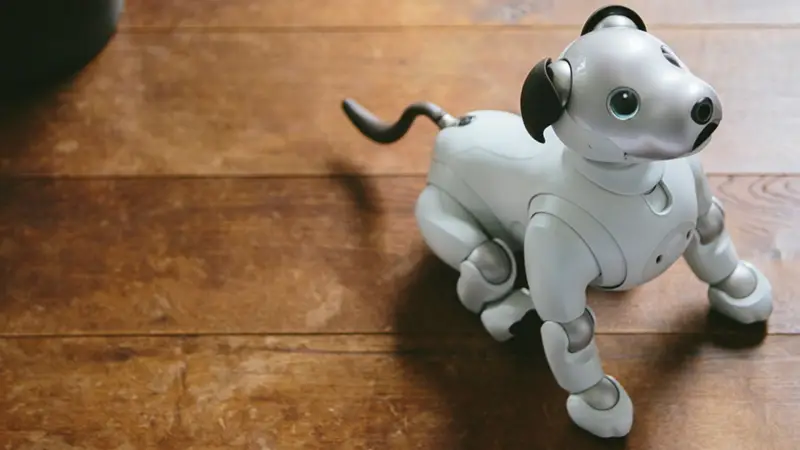
A robot dog that once lived in a home can take on a different role in a hospital: giving children something familiar to focus on while they wait for care or face an uncomfortable test. Sony’s Aibo adoption scheme repairs and upgrades donated units for use in medical and other establishments, extending the working life of a product that is no longer made and has run out of stock.
Aibo has been available for purchase since 1999. Some owners who can no longer care for their robots donate them to Sony Group Corp. The company then refurbishes the units and places them in settings where their interactive behavior can support companionship and conversation. The scheme gives existing machines a new use without relying on newly produced Aibos.
Interaction can make clinical encounters easier
At St. Marianna University School of Medicine in Kawasaki, near Tokyo, an Aibo is used to help patients relax. Dr. Manabu Komori, from the university’s department of otolaryngology, says the robot has helped persuade children who might otherwise avoid medical tests to take part. Its contribution is social rather than clinical: the robot draws attention and can give a child and medical professional a shared subject to talk about.
That role matters in settings where a child may be apprehensive or reluctant to engage. Aibo’s movements and responses create opportunities for interaction before or during treatment. Staff can use the robot as a conversational starting point, while the child can direct attention toward something approachable in the room. The reported experience at the university suggests this can help some children participate; it doesn’t establish that a robot will work for every patient or replace other ways of helping children feel at ease.
Aibo can recognize people and aspects of its surroundings. It responds to its own name, can identify the faces of its owners, and analyzes its environment. It can bark, move its head and ears, approach people, and respond to stroking with behavior that suggests contentment. The robot can also take pictures and carry out self-diagnosis. Together, these functions make it more interactive than a static toy, while keeping its role in the care setting focused on engagement.
Refurbishment gives an out-of-production product another use
Sony does not disclose Aibo sales figures or prices. The adoption scheme instead centers on collecting units owners no longer need, repairing them, and upgrading them for another setting. For a care facility, that means a donated robot can become a point of interest for patients waiting for or receiving treatment. Its presence may also give medical professionals a low-pressure way to begin a conversation with a child.
There is an emotional dimension to passing on a long-time companion. Yoshiyuki Katsuno, Sony’s representative responsible for the scheme, says some owners see donating an Aibo as akin to sending away a child. He says the robots can stimulate discussion and brighten the mood of people who feel lethargic or demotivated. That response helps explain why reuse involves more than restoring hardware: owners may value the bond they formed with a particular unit, and its next role depends on people being willing to interact with it.
Hospitals also use live dogs to provide companionship. Their needs differ from those of a robot: live animals require feeding and care, and their behavior can sometimes be difficult to manage. Komori hasn’t said robot dogs are better than live dogs. The practical choice depends on the setting and what staff need; a robot’s different care requirements may make it useful in some circumstances, while the source does not claim that it can reproduce the relationship patients have with an animal.
Design is part of the interaction
Aibo’s appeal also draws on kawaii, a Japanese concept associated with cuteness, friendliness, and sociability. A friendly appearance can affect whether people approach a machine and how readily they engage with it. Jerry Wang, executive chairman of U.S.-based FF EAI Robotics Ecosystem, which produces four-legged monitoring robots, has emphasized that appealing design can help people form emotional bonds with machines. In a hospital, that bond need not involve complex tasks: a robot that attracts attention may already help people start talking.
Aibo cannot do housework, but a domestic product can still be useful when its capabilities fit another environment. In a hospital, barking, movement, and responsiveness can make it a conversational focus for patients and medical professionals. The adoption scheme puts those qualities to work again through repair and reuse. Its clearest value is practical and human: an out-of-production robot can still help make a clinical encounter feel more approachable.
For facilities considering interactive robots, the example points to a modest measure of usefulness: whether a machine helps patients engage, and whether staff can fit it into care without expecting it to perform a clinical task. Sony’s program gives donated Aibos a second setting in which to answer that question.