GAC Magazine Battery 3.0 Combines Impact Protection With Acoustic Fault Detection
- Kaif Shaikh
- 612 reads
GAC’s EV battery pack withstood severe impact tests without cell ignition, while sensors monitor structural damage and fluid ingress.


GAC Group’s third-generation Magazine Battery 3.0 is designed to keep severe damage to an electric vehicle’s underside from reaching its cells. The company, which also calls the pack Danxia Battery 3.0 in China, demonstrated a test vehicle that powered on after an explosive charge damaged its battery enclosure. The engineering story is the combination of layered physical protection and sensors intended to detect damage as it happens.
GAC revealed the pack at the Guangzhou Auto Show on November 27, 2026. The company’s demonstration included impact tests up to 2,000 joules, a side-pole crash test and monitoring for small breaches that could admit water or coolant. GAC hasn’t said which production Aion or Hyptec vehicles will get the battery first, so its specifications describe a tested design rather than a confirmed model rollout.
Testing the underside protection
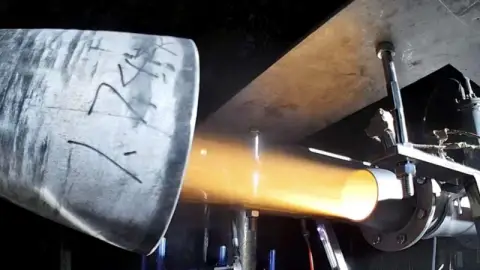
GAC worked with the China Automotive Engineering Research Institute (CAERI) on destructive evaluations. In the most dramatic demonstration, a 62-gram charge of TNT was detonated beneath a test vehicle carrying the pack. The blast deformed and perforated the outer steel skid plate, but the cells did not ignite. The doors unlocked normally, and the vehicle powered on afterward.
Reports from CarNewsChina describe the test charge as a Type 82-2 hand grenade. GAC’s result is best read as a demonstration of the enclosure’s response to an extreme, localized underside event; it doesn’t establish how every vehicle configuration would perform in every crash or impact scenario.
The pack also underwent a sequence of bottom-impact tests at 150, 300, 500, 1,000 and 2,000 joules, along with high-speed scraping trials. The source reports that China’s current EV battery safety standard sets a 150-joule bottom-ball impact requirement. GAC’s top test level is therefore more than 13 times that energy, though a higher test energy alone doesn’t describe the full test method or establish performance across other hazards.
Tarmac Life reports that the underside was exposed to temperatures above 2,800 degrees Celsius and shrapnel traveling at about 1,030 meters per second. Those conditions help explain why GAC emphasizes the shield’s ability to absorb damage before it reaches the cell modules. The company has described the tests as a way to assess hazards such as sharp steel or concrete debris striking the vehicle’s floor.
Protection built around load paths
Wang Qingquan, GAC’s head of battery system research and development, described two structural defenses supported by active diagnostics. The first is a layered underbody shield intended to absorb puncture energy. Elastic-wave sensors embedded along the pack floor monitor structural vibrations, with abnormal readings prompting an alert to the driver. The practical value depends on the system distinguishing damaging events from ordinary road vibration quickly enough to give useful warning.
The second defense addresses lateral loading. Reinforced crumple channels in the enclosure are intended to spread side-impact forces away from the cells. In a reported side-pole test at 20 mph (32 km/h), the pack recorded zero cell intrusion. That result speaks to the tested setup; GAC has not provided details here about the full crash protocol, vehicle configuration or how the enclosure performs across other impact directions.
Damage can also create electrical risks if coolant or water reaches parts of the battery where it can cause a short circuit. GAC says its active airtightness and fluid-monitoring system can detect a breach as small as 2 millimeters within three seconds, then trigger automated drainage. The detection time and breach size give a clearer sense of the system’s intended response, though the available details don’t specify the drainage capacity or what the vehicle does after fluid is detected.
What the design adds
Magazine Battery 3.0 builds on GAC’s earlier generations, introduced in 2021 and 2023. Those designs used nanoporous thermal insulation to separate cells and limit heat spreading from a failing cell to neighboring modules. The newer pack extends that safety approach to physical intrusion and post-impact monitoring: it aims to slow damage with structure, then use sensors to identify problems that the enclosure alone can’t prevent.
For vehicle engineers, the key question is how these protections perform once integrated into a production vehicle, where packaging, mass, cooling and repair requirements shape the design. GAC has shared several severe test outcomes, but hasn’t identified an initial production application. Until it does, the demonstrated pack offers a set of design targets—impact resistance, controlled load paths and rapid breach detection—rather than a complete picture of vehicle-level performance.
===