Metal Powder Afterburner Reaches Ground Ignition Test at Nanchang Hangkong University
- Kaif Shaikh
- 327 reads
A small-turbine test rig demonstrated stable ignition, while powder metering, oxide buildup and throttle transitions remain unresolved engineering challenges.
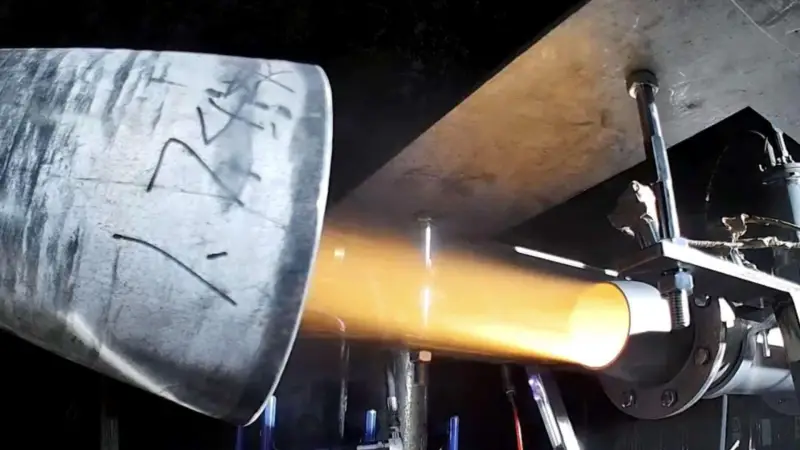
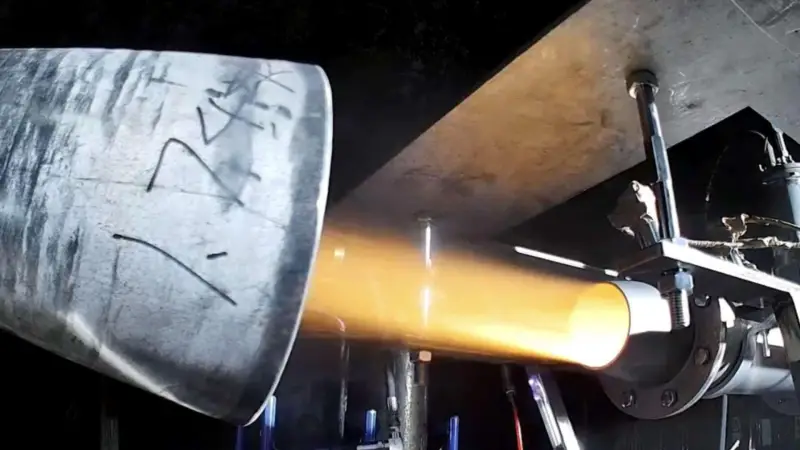
A prototype turbojet afterburner fueled with solid metal particles has completed a ground ignition test at Nanchang Hangkong University. The result shows that the team could ignite and sustain metal powder combustion in a small-turbine test setup. It does not yet establish how much thrust the system can produce or how it would perform across an engine’s operating range.
The project took four years and received support from a Jiangxi provincial research and development program. The university team was led by Sun Haijun of its School of Power and Energy. During bench trials on a dedicated test rig, the prototype reportedly achieved stable ignition and met its target operating parameters. The team has not released measured thrust figures, the metal composition, or the powder’s particle size distribution.
What metal fuel could change
A conventional afterburner adds liquid aviation fuel to the hot exhaust downstream of a gas turbine. That fuel burns using oxygen remaining in the exhaust, raising exhaust temperature and increasing thrust. The added output comes with a substantial fuel consumption penalty, so afterburners are generally used for limited periods rather than as a continuous operating mode.
The experimental design substitutes solid metal particles for some or all of that added liquid fuel. Aluminum and magnesium powders have been studied in other propulsion settings, including solid rocket motors and experimental ramjets. Their appeal comes partly from the amount of chemical energy packed into a given volume. The reported comparison puts solid aluminum at roughly 84 megajoules per liter, or about 301,000 BTU per gallon, versus around 34 megajoules per liter, or about 122,000 BTU per gallon, for standard aviation kerosene.
Those figures describe chemical energy content, not the thrust or efficiency of the tested engine. Turning fuel energy into useful thrust depends on combustion, heat transfer, engine geometry and the flow of exhaust through the nozzle. The test report provides no measurements that would show how the prototype compares with a kerosene afterburner in those respects.
Metal particles may also react with compounds in the turbine exhaust. The team’s approach is described as allowing particles to burn with both residual free oxygen and oxygen bound in carbon dioxide and water vapor from the main combustion process. If that reaction can be sustained under engine conditions, it could change the heat released in the afterburner. The test’s undisclosed operating data leave the practical effect on exhaust temperature and thrust unclear.
Powder delivery is a central design problem
Liquid fuel can be pumped through lines and sprayed through atomizing nozzles. Powder needs a different delivery system: particles must be carried in a gas, kept moving through the feed path and metered at a controlled rate. A blockage, uneven distribution or fluctuating feed could disrupt combustion and create pressure oscillations. These challenges become more demanding as exhaust flow and operating conditions change.
Sun said the team developed custom powder-conveying and injection hardware, flow-rate controls and aerodynamic cavity flameholders. A flameholder creates a local region where the moving mixture can remain hot enough to support combustion, even while the main exhaust stream moves rapidly through the engine. With powder fuel, it must accommodate a mixture of gas and solid particles while maintaining a stable flame.
That combination makes the afterburner more than a matter of replacing one fuel with another. The feed system, injection pattern and flameholder all affect whether particles reach the combustion zone evenly and burn at the intended rate. A ground ignition result is a useful demonstration of the basic process, but the team still needs to validate smooth transitions as engine throttle settings change.
Exhaust products and testing still limit the claim
Burning metal creates solid metal oxides. Alumina, for example, can leave particles in the exhaust that may wear nozzle throats or coat downstream surfaces. Deposits and erosion would affect durability and maintenance, while visible particles in the exhaust could constrain applications where a clear plume is undesirable.
The researchers have not identified the exact metal formulation or particle dimensions used in the test. Those details matter: particle size and composition influence how powder moves through the system and how it reacts in the hot exhaust. Without them, it’s difficult to assess the operating window or compare this prototype with other metal-fueled propulsion studies.
The university has pointed to possible use in sustained high-supersonic or Mach 5-class flight, but the system remains an early ground prototype with no airborne trials reported. Its next engineering questions are practical ones: whether powder flow can stay controlled, whether combustion remains stable through throttle changes, and whether the exhaust hardware can tolerate the resulting particles. Until those points are demonstrated and performance data are published, the test establishes ignition capability rather than a flight-ready propulsion system.