Antarctic Sea Ice Hits Record October Low After Losing 500,000 Square Miles
- Maria Mocerino
- 794 reads
Antarctic sea ice fell to record daily lows in October 2026. The decline affects ice shelves, wildlife and Southern Ocean processes.
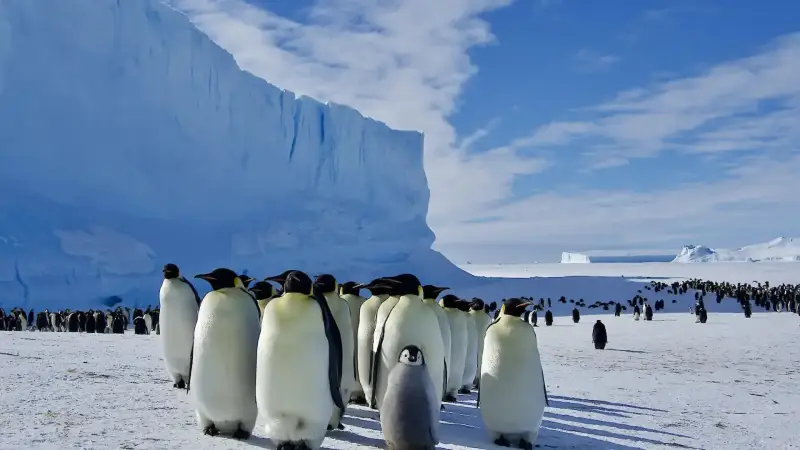
Antarctic sea ice lost approximately 500,000 square miles over four weeks in October 2026, reaching record daily lows. The Australian Antarctic Division (AAD) says the rapid retreat followed a winter maximum of 6.84 million square miles on September 11, the third-lowest peak in the satellite record that began in 1979.
The timing matters. Sea ice normally begins expanding as the Southern Ocean cools, yet the decline continued into a period when freezing and ice growth would be expected. October’s lows also fell below the exceptionally low coverage recorded in October 2023. That earlier season was associated with widespread emperor penguin breeding failure.
“Unfortunately, Antarctic sea ice is now also declining at a time of year when the ocean should be freezing, and the ice cover should be advancing,” said Rob Massom, an AAD sea ice scientist. Massom also noted that the four lowest annual winter maximum extents in the satellite record have occurred within the past four years.
A shorter season across more of Antarctica
The change is broader than a single low reading. The AAD traces an acceleration in Antarctic sea ice loss to 2015, followed by an abrupt drop to record lows during autumn and winter in 2023. Low coverage had previously been more concentrated in particular regions. Recent losses have appeared around Antarctica in both summer and winter.
Satellite observations also show a shift in the seasonal cycle: ice forms later and retreats earlier. In many areas, that change shortens the period with sea ice by as much as three to four months. The duration of the season helps explain why a snapshot of the annual maximum alone cannot describe the full change. The timing of formation and retreat shapes how long ecosystems and nearby ice shelves experience the protection and conditions associated with sea ice.
AAD climate scientist Krystyna Saunders described the recent pattern as unprecedented in the satellite record and said it substantially exceeds the natural variability in Antarctic sea ice coverage over past centuries. The satellite record provides consistent observations from 1979 onward; the longer comparison cited by Saunders places the recent decline in a much broader context.
Why the loss reaches beyond the ice edge
At its winter peak, Antarctic sea ice covers about 3.6 percent of Earth’s surface and 5.1 percent of the global ocean surface, according to the AAD. Its bright surface reflects sunlight, while the ice cover also changes the exchanges of heat, moisture, greenhouse gases and wind energy between the ocean and atmosphere. A change in its extent therefore affects both local conditions and interactions between the Southern Ocean and the air above it.
Sea ice also buffers Antarctic ice shelves from ocean waves. With less ice in place, waves can reach the shelves more directly. The AAD report says declining sea ice raises the risk of iceberg breakaways and reduces the stability of shelves that help restrain the Antarctic Ice Sheet. These are connected effects: sea ice is not the same as the land-based ice sheet, but it can influence the conditions around the shelves that border it.
The ecological consequences are already visible. British Antarctic Survey scientists found that record-low coverage in late 2023 caused catastrophic breeding failure in about 20 percent of Antarctic emperor penguin colonies. Antarctic krill also rely on sea ice for shelter and food during their larval stage. A shorter or less extensive ice season can therefore affect animals that depend on ice directly, as well as species connected to them through the food web.
“If you have reduced winter sea ice or ice overall, then there’s a lack of this critical early season food source – and this has a flow-on effect across food webs,” said Klaus Meiners, an AAD sea ice ecologist. That link makes the amount of ice only part of the picture: when it forms and how long it persists can shape access to food during important stages of marine life cycles.
What researchers plan to measure
The AAD broadly links the decline since 2015 to rising heat in the upper ocean, together with changes in winds and atmospheric temperatures. Those factors can affect when the surface ocean freezes, how ice moves, and how waves and storms break it up. The available account identifies these as contributing processes, while leaving their individual roles and interactions to be investigated.
The Australian Antarctic Program plans a research voyage in 2028 to examine how waves, storms, ocean heat and atmospheric processes affect sea ice formation and melting. Researchers also plan to study consequences for marine ecosystems and the Southern Ocean’s capacity to absorb carbon dioxide. Those measurements should help connect the changing ice season to both ocean processes and biological effects.
For engineers and researchers tracking the system, the key signal is the combination of repeated low winter maxima, record October lows and a season that can be three to four months shorter in many areas. The 2028 work is intended to examine the mechanisms behind that pattern and its effects; the latest observations already show that Antarctic sea ice is changing across seasons and regions.