iFire 2.3 Lets Firefighters Test Bushfire Decisions in 360-Degree Simulations
- Kaushal Kishore
- 939 reads
UNSW Sydney and FRNSW’s iFire 2.3 recreates major bushfire events and lets crews adjust 12 conditions to examine how fires can change.
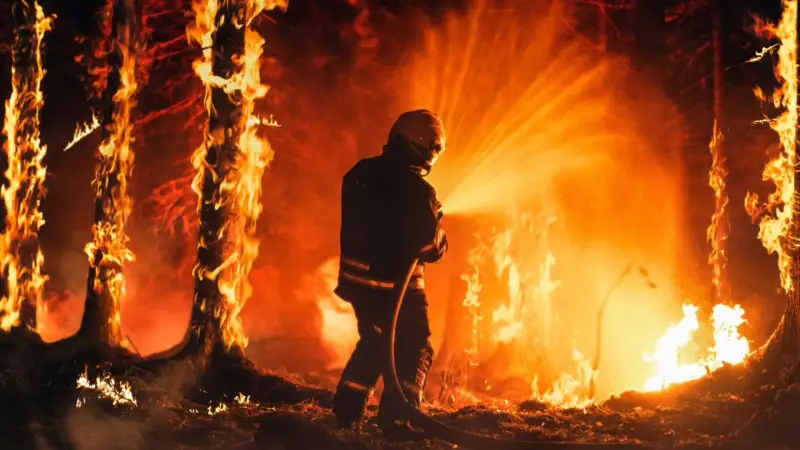
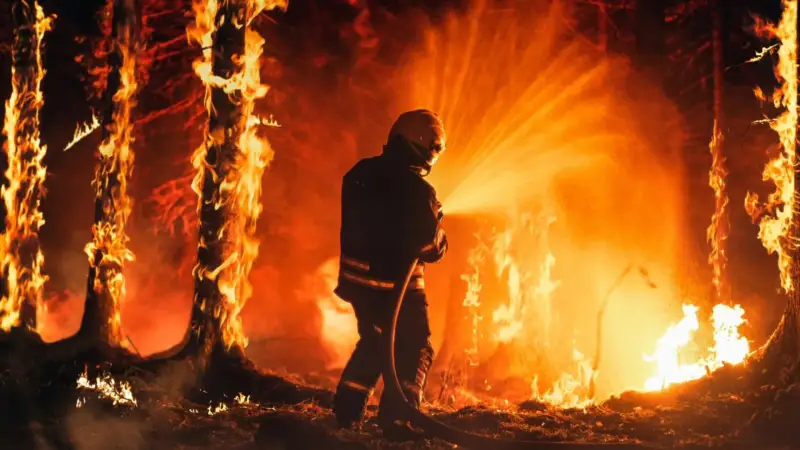
A fire that shifts as wind and other conditions change is difficult to reproduce safely in a training exercise. iFire 2.3 gives firefighters a virtual setting for examining those changes: its 360-degree simulations recreate conditions based on the 2009 Black Saturday and 2019–20 Black Summer bushfires, while allowing trainees to alter environmental variables and watch the scenario develop.
UNSW Sydney and Fire and Rescue NSW (FRNSW) developed the latest version with input from FRNSW’s Education and Training Simulation team. Its purpose is practical: let crews explore challenging fire behaviour and consider their responses in conditions that could not safely be generated for a live exercise. Both entry-level and senior staff can use the system.
Changing conditions, changing fire behaviour
iFire presents a bushfire as an immersive, 360-degree, movie-like simulation rather than a fixed scene. During a session, users can manipulate 12 variables, including temperature, heat, humidity and wind. The simulation then shows how changes to those conditions affect the fire and the difficulty of managing it.
That ability to adjust a scenario is central to the training value. A crew can begin with a comparatively benign fire and change a weather variable such as wind speed to see how the event might become far more severe. Instead of encountering only a prepared sequence, trainees can investigate how conditions interact and observe the consequences as the simulated fire evolves.
The system’s third version adds artificial intelligence to its science-based virtual reality. The reported capability is to make the fire scenario responsive as conditions are changed. For trainers and crews, that means a session can focus on the relationship between changing weather and fire behaviour, rather than treating the initial scene as a complete picture of what may follow.
The simulations draw on two named periods of major Australian fire activity: Black Saturday in 2009 and Black Summer in 2019–20. They offer a basis for training around events of exceptional severity while keeping the exercise within a virtual environment. The system is intended to help participants consider how their approach may need to adapt when a fire develops in ways that are difficult to anticipate.
A training space for scenarios crews cannot safely stage
UNSW Scientia Professor Dennis Del Favero, director of the university’s iCinema Research Centre, said that mega-bushfires can challenge existing knowledge and ways of managing fires. He described iFire as a secure training space where staff can investigate how their approach might need to change as bushfires worsen. The simulator’s role is to support that exploration before crews face comparable conditions in the field.
FRNSW Commissioner Jeremy Fewtrell said the system lets staff train for extreme scenarios and practise making decisions in them. That practice can build experience for real incidents, while giving trainers a way to present difficult situations without exposing participants to an actual fire. The intended benefit is better preparation for crews and support for the communities they serve.
UNSW Vice-Chancellor and President Professor Attila Brungs connected the project to the need to prepare firefighters for increasingly variable climate conditions and the possibility of less predictable bushfires. In that context, a simulator that lets users alter conditions offers a way to examine uncertainty directly. It can prompt trainees to assess how their decisions and assumptions hold up as a scenario changes.
FRNSW has installed an iFire Immersive Training Simulator at its Emergency Services Academy in Orchard Hills, western Sydney. Staff can train there ahead of the summer bushfire period. The installation gives the service a dedicated location for using the system as part of preparation, while the ability to run virtual scenarios avoids the hazards involved in recreating severe fire conditions outdoors.
From research project to operational training
iFire grew from an earlier artificial intelligence-led bushfire visualization project involving UNSW’s iCinema Centre and FRNSW. Del Favero received an ARC Laureate Fellowship for the project in 2021. The resulting system has three intended areas of use: emergency services staff, the public and academics. The current installation at the FRNSW academy demonstrates its application in firefighter training.
The technology has also been shown at emergency service and cultural venues, including the FRNSW Emergency Services Academy, the Australasian Fire and Emergency Conference in Melbourne, the xFire Conference in Prague, the Melbourne Film Festival and the Royal College of Art in London. Those demonstrations place the simulator in both technical and public-facing settings, though the training installation is where its adjustable scenarios have a direct operational purpose.
For crews, the useful distinction is between seeing a fire scenario and being able to change the conditions that shape it. iFire 2.3 combines both in an immersive environment, with 12 adjustable variables and simulations based on major Australian bushfires. Its practical test will be whether repeated sessions help staff recognise how quickly a manageable scene can change and make better-informed decisions as it does.
More information about the earlier iFire visualization project is available from UNSW.