Brazilian Researchers Combine Shell-Derived Hydroxyapatite and Steel Dust for Solar Water Treatment
- Kaushal Kishore
- 331 reads
A hydroxyapatite–iron oxide material degraded about 75% of methylene blue and produced hydrogen under sunlight, with HFe40 performing best in tests.
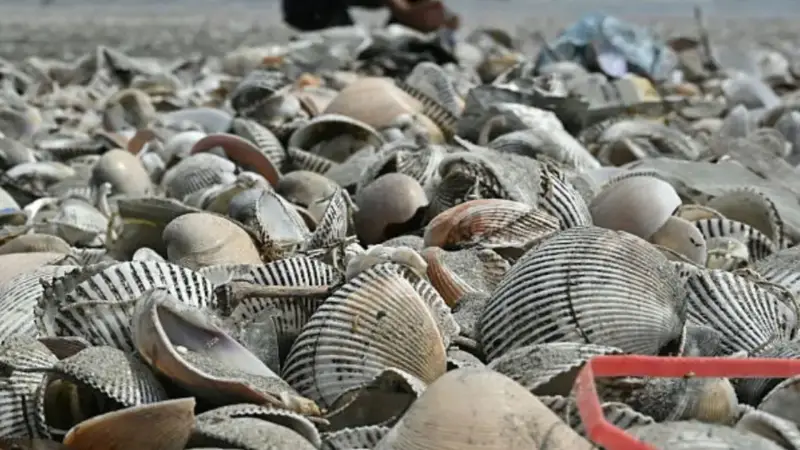
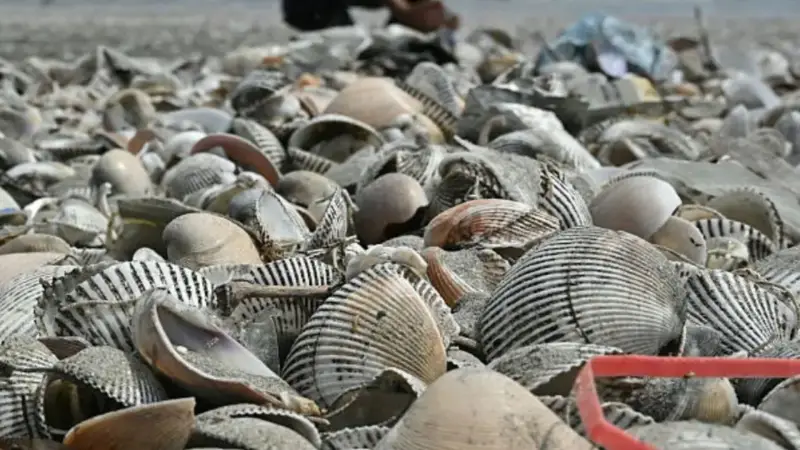
A material made from two industrial and biological by-products showed potential for both dye degradation and hydrogen production under sunlight. Researchers at the Federal University of São Carlos (UFSCar) and Federal University of Rio Grande do Norte (UFRN) combined shell-derived hydroxyapatite (HAp) with iron oxide (Fe₂O₃) recovered from blast furnace dust. Their best-performing composition, HFe40, degraded around 75% of methylene blue in solution after two and a half hours of solar irradiation.
The pairing matters because the material’s two components have different electrical properties. Where they meet, they form a heterojunction: a boundary that affects the materials’ response to light. The researchers examined the band structure of HAp and Fe₂O₃, along with charge-carrier concentration and band gap energy, to investigate how those properties related to the observed reactions. The results connect the composition of the material with both dye degradation and hydrogen generation, though further work is needed to improve and characterize its performance.
Composition shaped the solar response
The team prepared three samples with different iron oxide fractions: 20%, 40% and 60%, named HFe20, HFe40 and HFe60. They assessed the samples before testing their behavior under solar irradiation. HFe40 was the strongest performer in the reported tests, making the proportion of iron oxide a practical variable for further development. The findings do not establish that the same composition will be optimal under every operating condition, but they identify a candidate for follow-up work.
Methylene blue is used in the textile industry. When dye-containing water reaches rivers or lakes, the dye can reduce light transmission and interfere with photosynthesis in aquatic organisms. In the researchers’ test, HFe40 degraded around three quarters of the methylene blue in solution after two and a half hours of solar exposure. That result indicates activity against this particular dye in the tested setup; it does not by itself establish treatment performance for other contaminants or at larger scale.
For water treatment applications, the distinction matters. A percentage degradation result describes what happened to the measured dye under specified conditions, while practical treatment also depends on factors such as the water being treated and the material’s performance over repeated use. The team therefore tested HFe40 across several water types and after multiple degradation runs, offering an initial check beyond a single exposure in one solution.
Hydrogen production was measured separately
The hydrogen experiment used 20 milligrams of HFe40 in 20 ml of 10% lactic acid. The researchers irradiated this mixture with sunlight for four hours and used a gas sensor to record hydrogen generation. The reported yield exceeded 25 micromoles per gram of HFe40, equivalent to around 0.05 milligrams in the experiment.
That measurement comes from a defined laboratory mixture, including lactic acid, and should be read in that context. The reported result demonstrates hydrogen generation under the test conditions; it does not provide a basis for assuming the same yield in other liquids, reactor designs or operating conditions. The researchers’ analysis points to the band structures of both HAp and Fe₂O₃ as factors in hydrogen generation. For methylene blue degradation, they also identified charge-carrier concentration and band gap energy as relevant properties.
These observations give the team specific material characteristics to investigate as they work to improve hydrogen generation. The study also identifies measurement of the gas as an area for refinement, alongside longer-term stability tests. Those steps will help clarify how consistently the material performs and how the composition and its light-driven behavior relate across different conditions.
Reuse and water type tests offer an early check
HFe40 retained most of its photocatalytic ability across five methylene blue degradation runs, with a reported loss of 6%. The researchers also compared its behavior in rain, lake and tap water, finding only slight variations among the three. Together, these tests suggest the material remained active through a limited number of reuse cycles and across the water types examined.
That is useful early evidence, but it leaves open questions about stability over longer operation and performance beyond the tested waters and dye. The researchers identify long-term stability and improved hydrogen measurement among the next areas of study. Broader application will depend on how the material behaves under conditions beyond those assessed so far.
The work demonstrates a route for using blast furnace dust and shell-derived material as feedstocks for a solar-responsive heterojunction. Its results bring two possible functions—dye degradation and hydrogen generation—into one material system, while showing that the component ratio affects performance. The research was conducted by Mário Andrean Macedo Castro, Lucas Oliveira do Rosário, Lívia Dantas Ventura, Marcio Daldin Teodoro, Ricardo Luis Tranquilin, Elson Longo, Fabiana Villela da Motta and Mauricio Bomio. Funding came from CAPES, CNPq and UFRN’s Graduate Program in Materials Science and Engineering; the Brazilian Nanotechnology Laboratory (LNNano), part of the Brazilian Center for Research in Energy and Materials (CNPEM), also worked on the study.
The findings were published in the International Journal of Hydrogen Energy under the title “Solar-driven photocatalytic degradation of methylene blue and hydrogen production using an eco-friendly HAp/Fe₂O₃ heterojunction.” The published study provides the basis for assessing the reported test conditions and results. The next technical question is whether composition tuning and extended stability work can preserve both functions over longer use.