Tektronix EA-ELR 21000 Regenerative Load Tests 800 V Data Centre Power Systems
- Saba Aafreen
- 990 reads
Tektronix’s EA-ELR 21000 targets dynamic testing of 800 V DC data centre power equipment, returning up to 95% of absorbed energy to the grid.
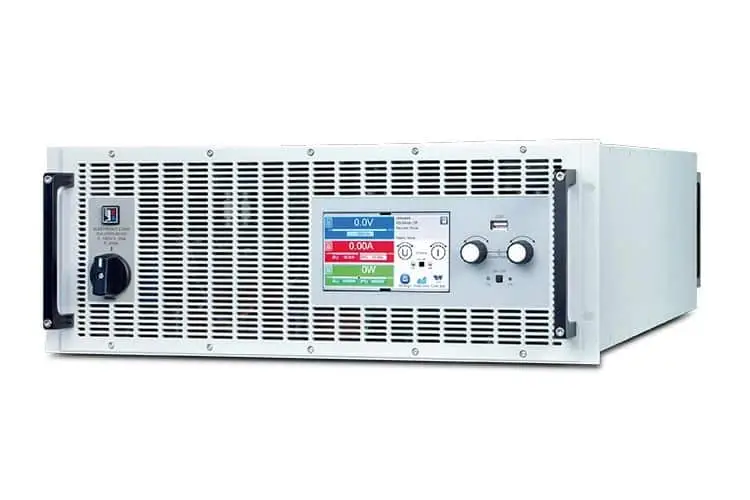
Testing a high power supply system can consume substantial energy, especially when engineers need to reproduce changing loads over extended runs. Tektronix’s EA-ELR 21000 Dynamic Test System is designed to address that problem while exercising 800 V DC power equipment intended for AI data centres. Its regenerative electronic load returns up to 95% of the power it draws from the equipment under test to the grid, according to Tektronix.

The system is aimed at power shelves, power racks and solid state transformers. These units must supply computing equipment whose demand can change quickly. A test load that can reproduce fast changes gives engineers a way to examine how power equipment responds, including whether its output remains stable as the load shifts. The system is intended for validation work; the published specifications describe its electrical capacity and load response, but don’t provide test results for any particular power system.

Energy returned during testing
The EA-ELR 21000 uses an electronic load to draw power from the device being tested. In a conventional electronic load, much of that absorbed energy becomes heat. Tektronix says the regenerative design can feed up to 95% of the absorbed power back to the grid. That can reduce the amount of energy dissipated as heat during long test sessions, which may matter when testing equipment at high power over sustained periods.

The stated recovery figure is a maximum, not a guarantee for every operating condition. The available product details don’t specify the conditions under which the system reaches 95%, or describe the test setup used to establish that figure. Engineers assessing a test installation will need to check the applicable operating limits and site requirements for their intended use.

The EA-ELR 21000-80 4U HS load module is rated for up to 1000 V, 80 A and 30 kW. Those ratings define the module’s stated voltage, current and power capacities; they don’t mean that all three maximums can necessarily be used together in every configuration. For a planned test, the power system’s voltage and load profile need to fit the module’s operating envelope.
Reproducing rapid load changes
For dynamic tests, the system can change its load with a current slew rate of 12 A/µs, at 240 kW. The slew rate describes how quickly current can change, making it relevant to tests that simulate abrupt shifts in demand. Engineers can use such changes to observe a shelf or rack’s response under transient loading and assess stability, efficiency and reliability. The supplied specifications don’t quantify how a particular unit under test will perform during those events; that depends on the equipment and test conditions.

That distinction matters in interpreting a test. A programmable load provides a repeatable way to apply changing demand, but the measurement still needs to reflect the intended system configuration. Results from one power shelf, rack or operating profile won’t automatically establish the behaviour of another. The value of a fast changing load is that it lets engineering teams probe specific responses under controlled conditions.

Scaling capacity by module and rack
The platform is modular. Tektronix specifies 240 kW per rack, with capacity expandable in 30 kW increments. Multiple racks can be combined into a system rated up to 1.92 MW across eight racks and 64 loads. This gives teams a path from module level testing to larger power system evaluations as their test requirements grow.
The ability to service individual modules may also help keep maintenance focused on a component rather than requiring work on the complete rack. The product details don’t state service intervals, repair times or the procedures involved, so those remain points for teams to confirm when planning a test facility.
The practical choice is therefore about more than peak power. Engineers need to match the load module’s voltage and current ratings to the equipment under test, decide how much rack capacity their test plan requires, and account for the installation’s grid connection and operating limits. The EA-ELR 21000 combines high power capacity, rapid current changes and energy recovery in one platform; its usefulness will depend on how closely those capabilities fit the real load profiles a team needs to reproduce.