Raspberry Pi Magazine Issue 171 Pairs Weather Displays With Film, Apollo and Retro Computing Builds
- Richard Jones
- 791 reads
Issue 171 features a weather display built into a safer nixie clock, alongside Raspberry Pi projects for film digitisation, Apollo hardware and retro computing.
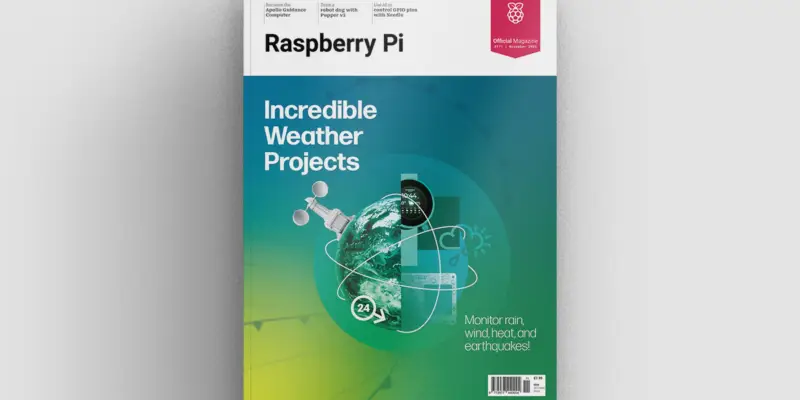
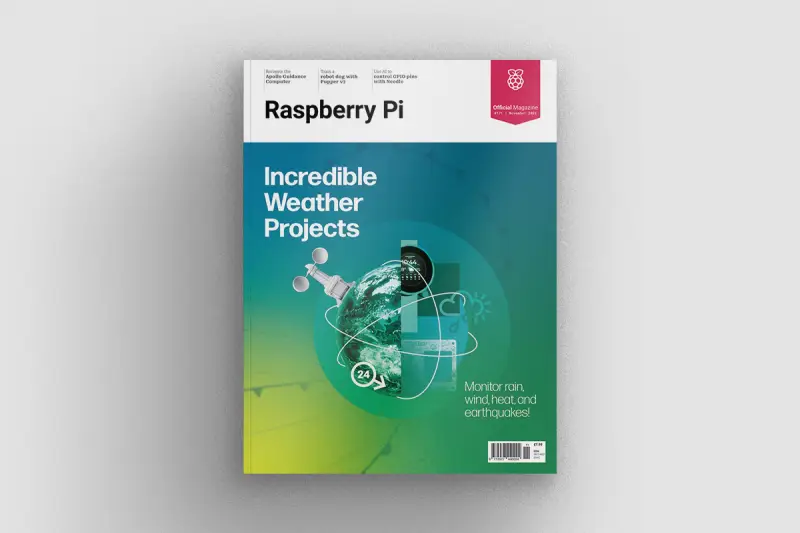
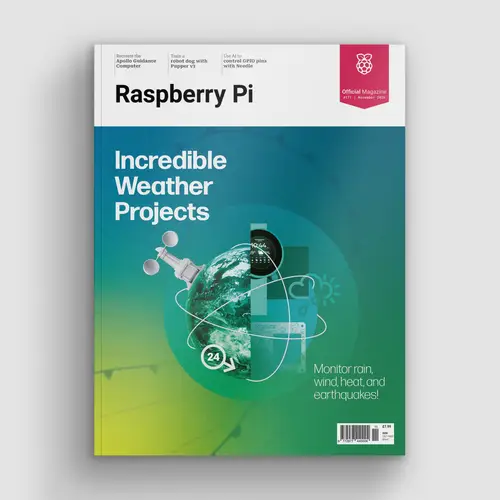
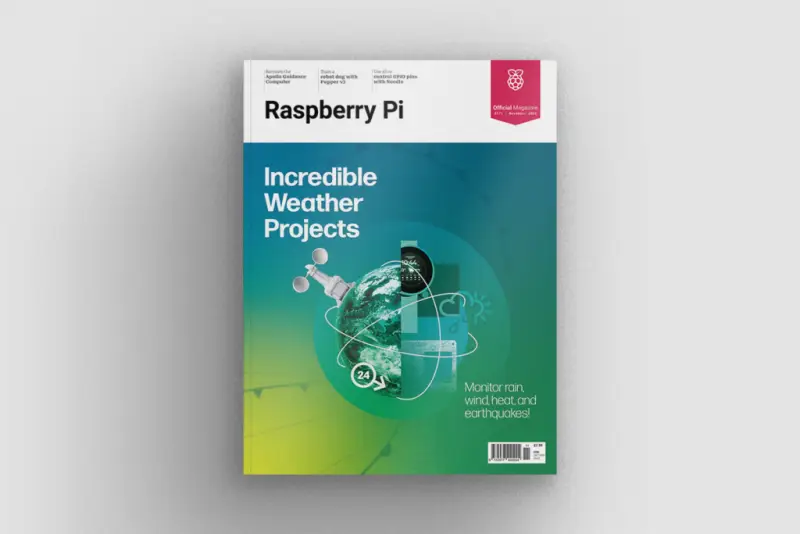
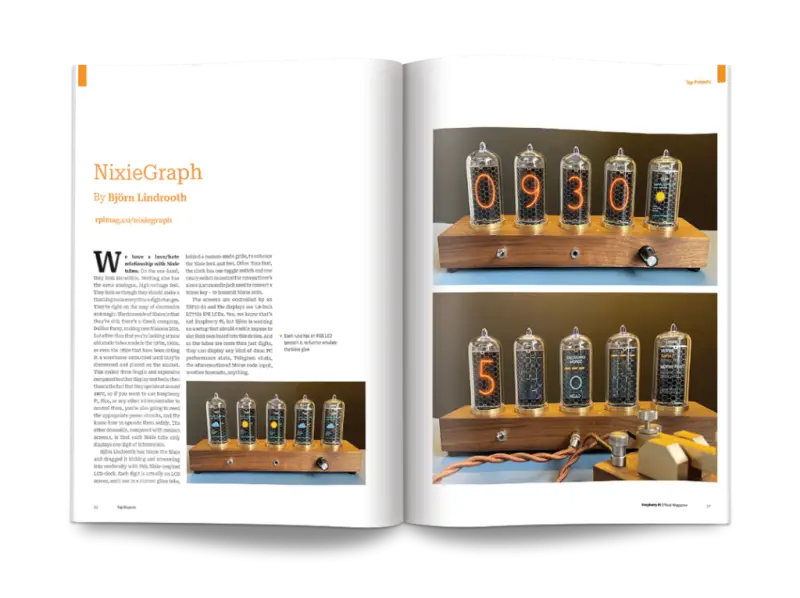
Weather data makes a useful project input: it can become a live display, a record to analyse or a reason to build an interface that people check every day. Raspberry Pi Official Magazine’s issue 171, dated November 2026, puts that theme alongside projects in imaging, electronics and computing. The issue’s weather feature includes a nixie-style clock that combines timekeeping with weather information, a calendar and Morse code messaging.
A clock that puts weather to work
Björn Lindroth’s clock reworks the familiar nixie display idea into a device with several uses. Alongside the time, it presents weather information and a calendar, and it can send Morse code messages. That combination turns a display into a small information terminal: its value comes from showing several kinds of information in one place, rather than from timekeeping alone.
The project also addresses a practical drawback of traditional nixie tubes. Their high operating voltages can make them an unwelcoming choice for beginners. The magazine describes Lindroth’s design as a safer reimagining, though it doesn’t provide electrical ratings or construction details in the article. Those specifics matter to anyone assessing a build: the word “safer” doesn’t, by itself, explain the circuit or remove the need to understand its electrical design.

From film reels to digital files
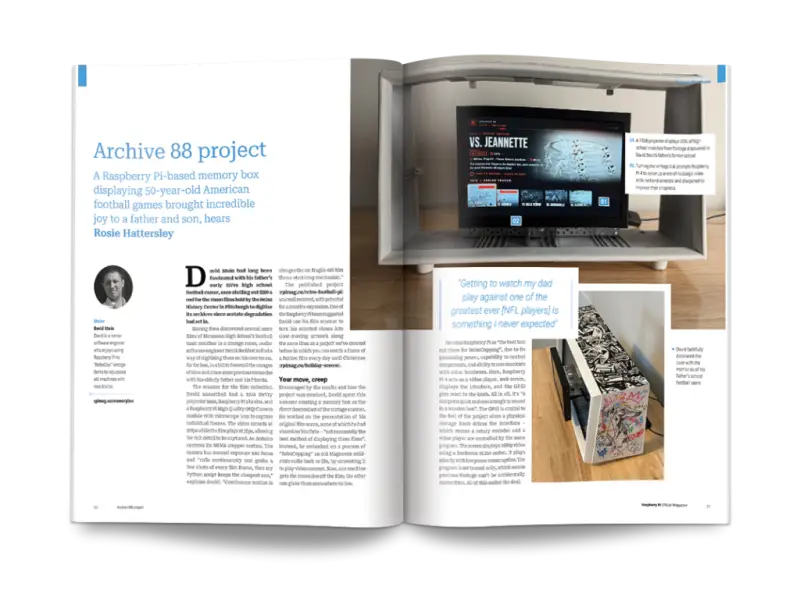
David Stein’s film digitisation setup uses a Raspberry Pi High Quality Camera and Raspberry Pi 5 to capture images from film reels. A Python script sharpens the images, and an integrated screen displays the resulting footage on demand. Stein used the system to digitise film of his father’s high school American football career.
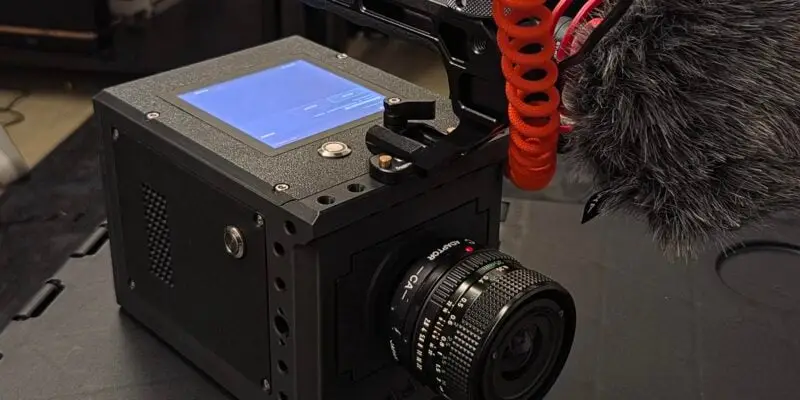
The build is an example of a broader maker approach to preservation: combine a camera, a computer and purpose-written software to make old material easier to view. The reported details don’t specify the film format, capture resolution, frame rate or image-processing method, so they don’t establish how the setup compares with a commercial transfer service. They do show how the Pi can sit at the centre of a workflow that captures and presents footage in one device.
Interfaces for spaceflight and everyday hardware
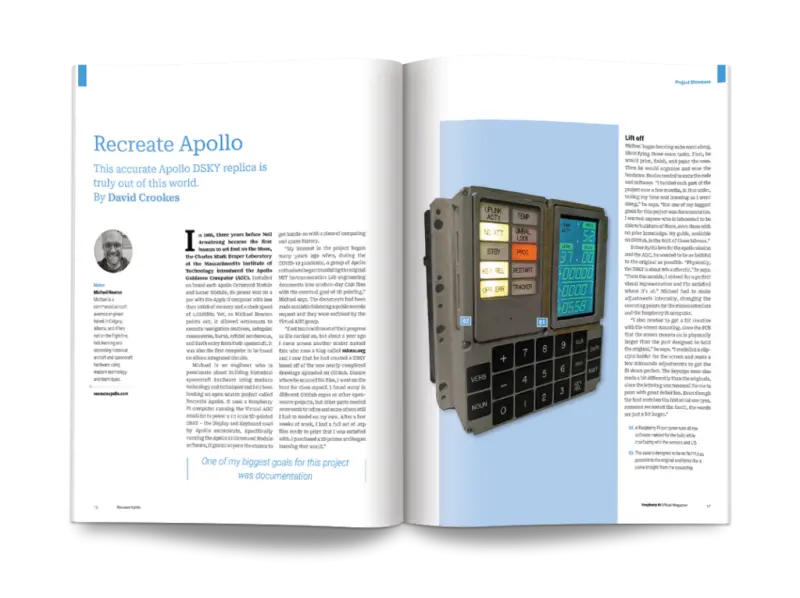
Maker Michael Newton has built a replica of the DSKY, the display keyboard interface associated with the Apollo Guidance Computer. The project brings a distinctive human-machine interface into a maker setting. Its focus is the interface itself: the display and keyboard arrangement that let a person interact with a flight computer. The magazine’s description doesn’t give the replica’s electronics or software, so the build’s internal implementation remains unspecified.
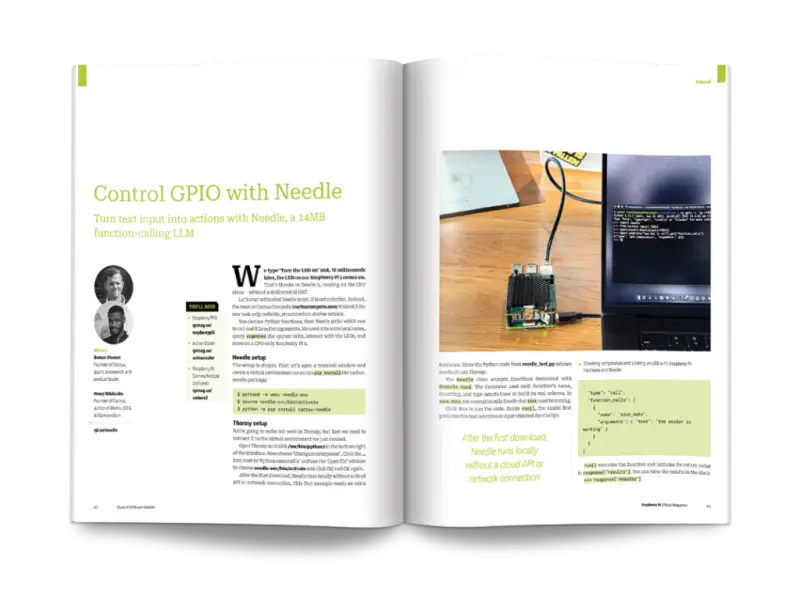
Another project explores a different kind of interface: controlling Raspberry Pi GPIO pins through natural-language requests. A tutorial introduces Needle, described as a large language model that translates requests into actions involving the Pi’s GPIO. That idea could make experimentation more accessible to people who don’t know a programming language’s syntax, but the article doesn’t list supported boards, available commands or safeguards. Those details determine how such a tool fits into a real hardware workflow, especially when software controls physical inputs and outputs.
Old computers, new access
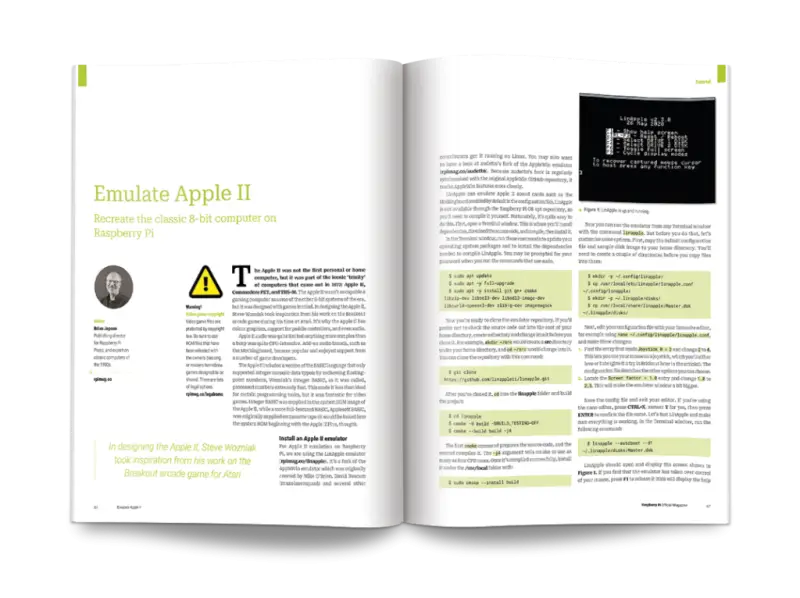
Brian Jepson’s Apple II tutorial makes use of emulation to revisit an early personal computer. The issue recalls that the Apple II launched at $1300 with 4k of RAM, equivalent to £5,400 in today’s money as stated in the magazine. Emulation gives present-day users a way to explore the system without needing original hardware. It also makes the machine’s constraints part of the experience: a 4k memory configuration offers a very different set of design limits from a modern computer.
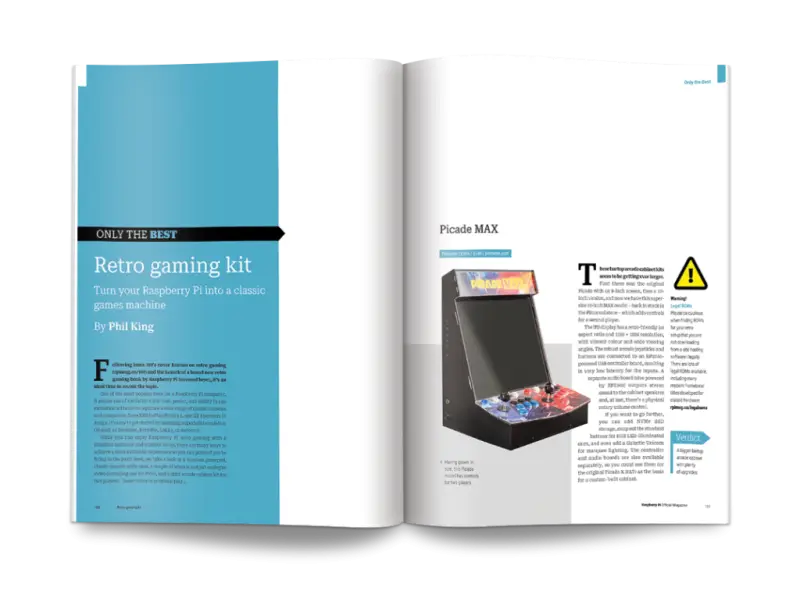
The retro theme extends to a selection of games from before 3D graphics and online multiplayer became common features. That makes the issue’s computing projects a mix of hands-on recreation and historical comparison: the Apple II tutorial puts an older machine’s capabilities in reach, while the games collection looks back at a different style of play.
Issue 171 gathers these projects under a broad maker focus, with weather display and data-driven builds sharing space with imaging, interface design and retro computing. For readers choosing a project, the practical starting point is the detail each build makes available: the camera and computer are named for Stein’s digitiser, while the descriptions of the DSKY replica, GPIO tutorial and weather clock leave some implementation specifics open.
The November 2026 issue is available through the issue page, which also offers a free PDF download. Its standout weather project treats a clock as a compact information display, while the other builds show how a Raspberry Pi can support experiments in image capture, hardware interaction and emulation.