Liverpool MakeFest 2026 Brings Raspberry Pi Projects and Repair Skills to DoES Liverpool
- Michael Davis
- 859 reads
Across three floors at the Tapestry building, MakeFest paired Raspberry Pi projects with hands-on repair, fabrication tools and creative making.
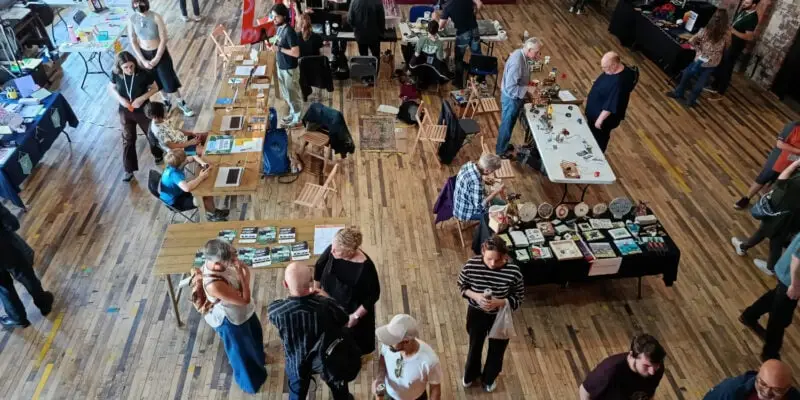
Liverpool MakeFest’s move to the Tapestry building put community making, repair and fabrication under one roof. Held on Sunday 13 September, the event spread across three floors, with DoES Liverpool’s makerspace at its centre and projects ranging from Raspberry Pi interfaces to lacework and live drawing.
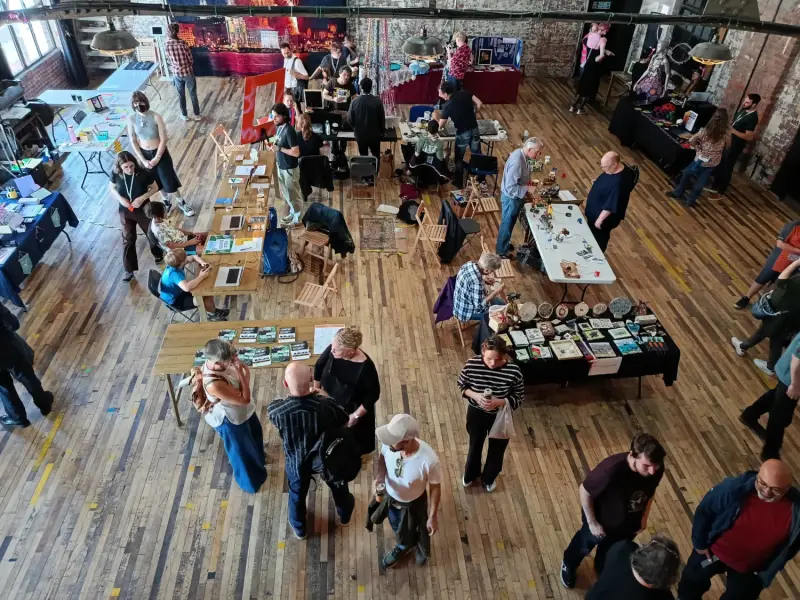
The change of venue gave visitors room to see both finished projects and the equipment and skills behind them. Tapestry is home to DoES Liverpool, a community makerspace that combines shared tools with co-working and events. Its role in the festival was visible throughout the building: visitors could inspect machines, meet makers and join tours of the workspace.
Projects built to be handled
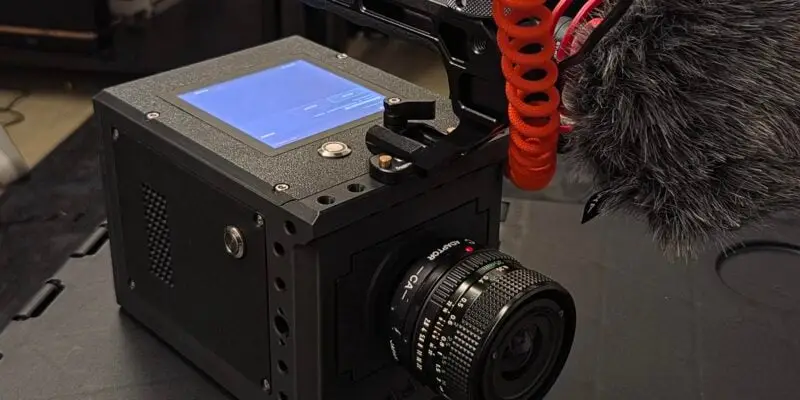
On the ground floor, the FoamO hot wire CNC foam cutter showed how a small embedded board can sit at the heart of a larger fabrication system. The four-axis machine is powered by an RP2040 and cuts foam with a heated wire. Its setup links digital movement with a physical cutting process, making the machine a practical demonstration of CNC fabrication rather than just a display object.

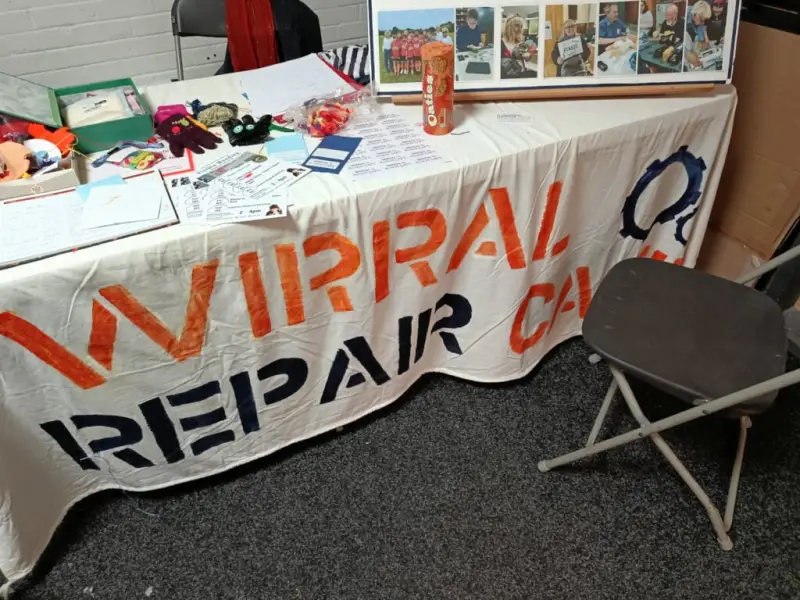
The same floor had Lego builds from Share Our Bricks and a pop-up repair room run by the Wirral Repair Cafe team. Visitors could bring items for repair while learning about the group’s work. That hands-on approach gave the repair stand a different kind of demonstration: the process itself, and the decisions involved in fixing an object, were part of the event.
DoES Liverpool also had a busy stand on this level, including Museum in a Box. The project uses a Raspberry Pi inside a box to play an audio description when someone places an object or card on top. That simple interaction connects a physical item to recorded interpretation without requiring visitors to navigate a separate screen or menu.
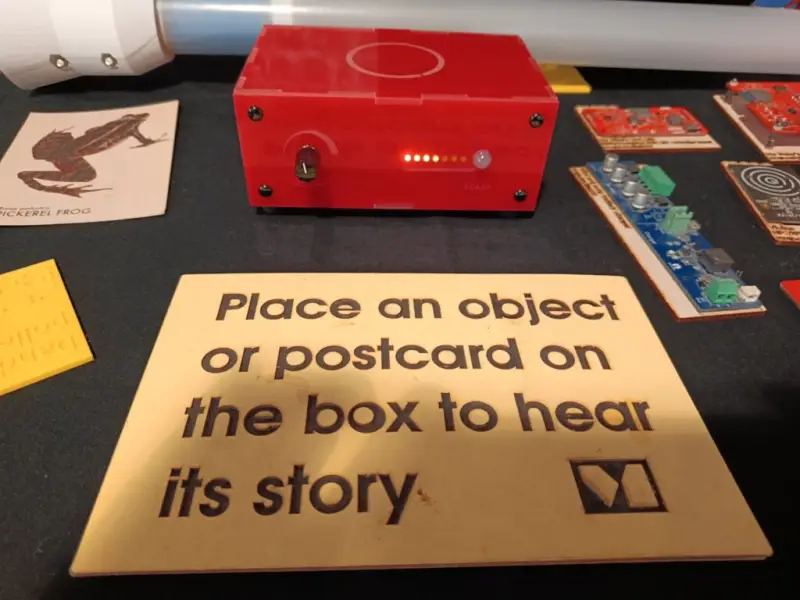
Pairing the box with 3D scanning and printing extends the idea to replicas of objects that would otherwise be too large or delicate for visitors to handle. The example described at the event was a replica of the statue of David. A visitor can hold the model while listening to its story, combining a tactile encounter with an audio guide. The design’s value is in that pairing: an accessible object becomes a way into information about the original.
A working makerspace, open to visitors
DoES Liverpool occupied the middle floor, where attendees could join tours throughout the day. The tours introduced visitors to a workspace equipped for a broad range of making, including CNC routers, digital embroidery equipment, a UV printer, 3D printers and laser cutters. Bringing those tools together matters because projects often cross process boundaries: a design may move from CAD to a router, printer or cutter, while other work depends on textiles or printed surfaces.
The range of equipment also showed how a community workshop can support people at different stages of a project. Some visitors may need access to a particular machine; others may be looking for practical knowledge or collaborators. DoES combines the tools with community experience, and the tours gave newcomers a way to see how the space is organized and what it can support.
An event space on the same floor hosted talks, demonstrations and other sessions on a timetable. That gave the festival a second format alongside the stands: visitors could move between browsing exhibits and attending scheduled activities, while makers had a place to explain techniques in more detail.

Plotters, crafts and creative tools upstairs
The top floor brought together makers and artists working across amateur radio, 3D scanning, pen plotting, synthesizers, live drawing, lace and bobbin crafts, CAD, CAM, game design with Godot and printmaking. The mix made the event useful for people interested in how digital tools meet physical materials, as well as those looking for ideas outside their usual discipline.
Forge and Craft demonstrated a Raspberry Pi-based interface for a pen plotter. A touchscreen let visitors generate designs, which the attached machine then drew with a pen. The interaction turns the plotter into a participatory exhibit: a visitor can create a pattern and see the machine translate it into marks on paper.
The same stall featured a Brachiograph, a low-cost plotting device assembled from a Raspberry Pi Zero, three servos, hot glue, lollipop sticks and a peg. Its construction makes the mechanism easy to inspect. Instead of hiding the linkage inside a finished enclosure, it uses simple parts to move a pen and produce a drawing. That offers a useful contrast with the touchscreen-controlled plotter nearby: both produce plotted output, but the Brachiograph makes the mechanical arrangement part of the project.
The festival’s steady flow of visitors and the three-floor layout gave the new venue room to accommodate exhibits, demonstrations, tours and repair work. Its practical strength was the variety: a visitor could move from embedded control and CNC cutting to accessible museum interpretation, then on to plotting, crafts or a working repair table. MakeFest showed how a shared makerspace can connect those interests, with equipment and knowledge available alongside the finished projects.