eLuminator Electronic Skin Turns Pressure into a Visible Light Map
- Etiido Uko
- 535 reads
NUS researchers’ 70-micrometer eLuminator maps touch with light, reaching 847 dpi; its lab setup still needs a 150 V AC supply.
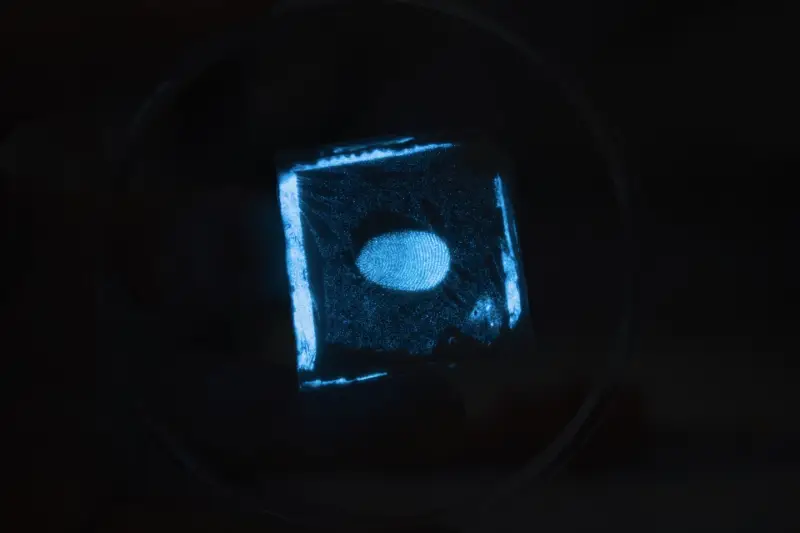
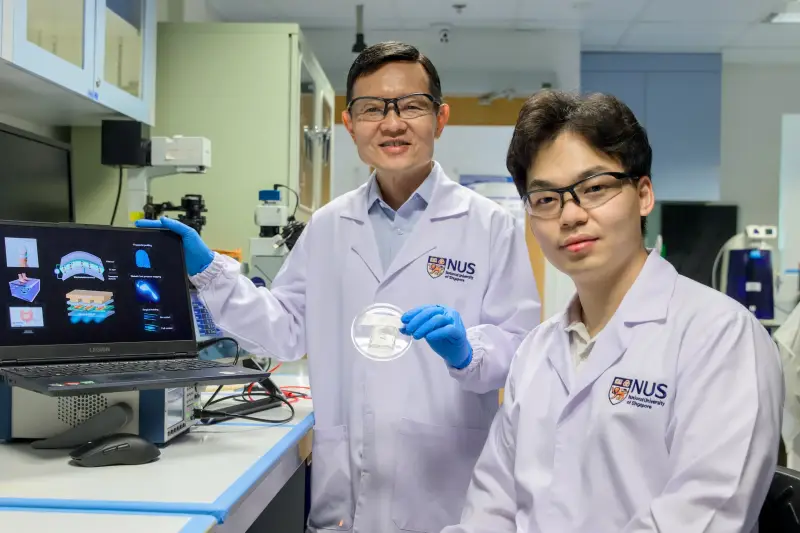
The eLuminator makes pressure visible at the point of contact. Developed by researchers at the National University of Singapore (NUS), this flexible electronic skin emits light where it is pressed, with brightness indicating the amount of force. At 70 micrometers thick and a reported resolution of 847 dots per inch (dpi), it combines tactile sensing and visual feedback on one surface.

That integration could simplify tactile interfaces for robots, prosthetics and medical tools. Many existing systems use an array of pressure sensors, wiring and signal-processing electronics, then send the results to a separate screen or haptic device. Those parts add bulk and complicate installation on small, curved or flexible surfaces. eLuminator instead produces a visible pressure pattern directly where contact occurs. Readout electronics can also measure pressure quantitatively.

Three layers turn force into light
The device has a pressure-sensitive upper layer, a light-emitting middle layer and a transparent electrode underneath. Thousands of microscopic dome-shaped structures cover the upper layer. The middle layer contains copper-doped zinc sulfide particles.

An alternating voltage across the device creates an electric field that is initially too weak to make the particles glow. Pressing the surface compresses the domes. That increases their contact with the light-emitting layer and reduces the distance between the electrodes, strengthening the field beneath the point of contact until the particles emit visible light.

More compression produces brighter light. The illuminated area shows the contact’s shape, while its brightness indicates how pressure is distributed. The compression also changes the device’s capacitance, providing a separate electrical route for pressure readings when readout equipment is connected. A continuous pressure-sensitive structure handles both functions, avoiding a grid of individual sensing points.
That distinction matters for resolution and construction. In a sensor grid, finer mapping generally requires more sensing points and connections. eLuminator’s direct light output avoids that point-by-point display process, though the research team’s demonstrations still relied on external equipment for power and electronic measurement.
Fine detail, fast optical response
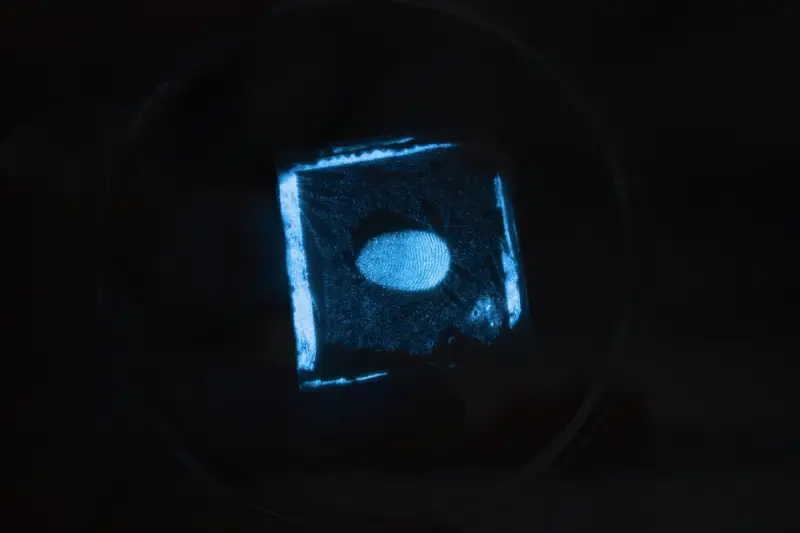
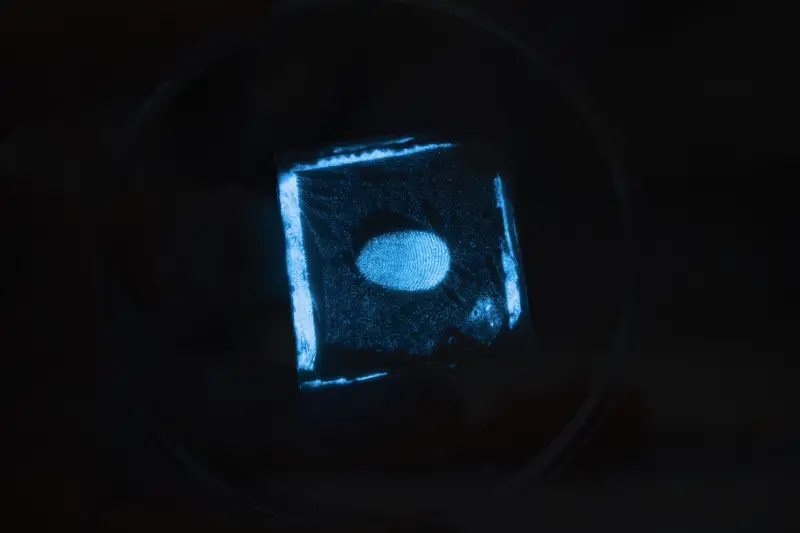
In fingertip tests, the material reproduced the fine ridges and valleys of a fingerprint. The researchers reported a spatial resolution of 30 micrometers, equivalent to 847 dpi. Visible light appeared within 15 milliseconds; electronic pressure readings took about 110 milliseconds.

The team reported detection from gentle touch up to 180 kPa. The skin could stretch to more than twice its original length and retained consistent performance after 1,000 bending cycles and 4,000 repeated loading cycles. Those results suggest the material can accommodate deformation, although they describe laboratory testing rather than long-term use in a deployed device.
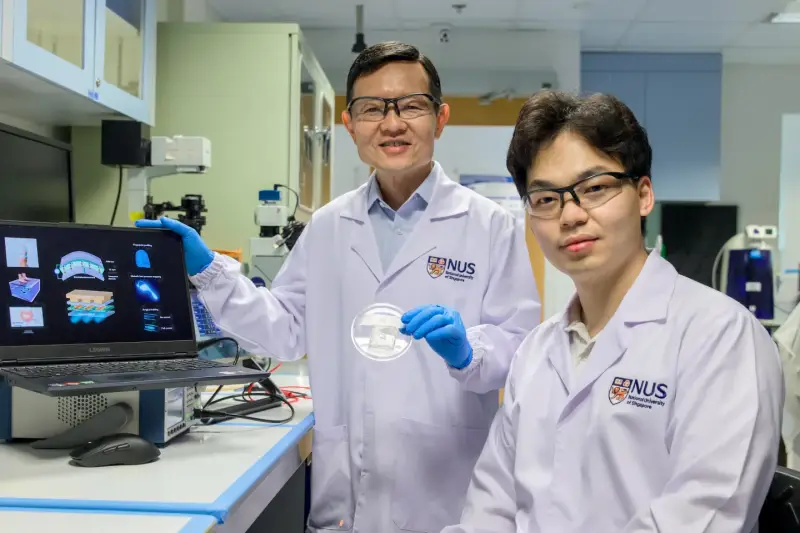
The researchers also attached the skin to a laparoscopic surgical grasper and tested it in simulated procedures using artificial tissue, blood vessels and an appendix model. The illuminated regions changed in size and brightness as the grasper applied different forces. A separate demonstration used a 3D-printed foot model to map pressure, and the material tracked moving contact during writing motions.
For clinical work, foot-pressure maps could help identify areas experiencing excessive load, including in patients at risk of diabetic foot ulcers. On surgical instruments, a visible indication of grip pressure could help an operator judge how firmly tissue is being held. These are potential uses demonstrated or proposed by the researchers; the experiments do not establish clinical readiness.
Applications depend on a smaller power system
Robotic hands could use the material to detect contact across their surfaces and adjust grip on delicate objects. Prosthetic limbs might use pressure information to support grip control, while the fine surface detail could also suit biometric identification. Its thin, flexible construction may make it useful in wearable health monitors and other interfaces between people and machines.
The key engineering constraint is power. During the demonstrations, the experimental device used an external alternating-current supply operating at 150 volts and 1 kHz. That setup would be inconvenient for a wearable device or a robotic fingertip. The researchers say they are working to lower power requirements and improve sensitivity as they develop the technology for healthcare applications.
Prof. Lim Chwee Teck, one of the developers, said the approach lets users see force distribution as it happens instead of relying on more complex electronics. The practical value will depend on whether the team can preserve the skin’s resolution and flexibility while reducing the demands of its power and readout hardware.
The study appeared in Nature Communications. Further project information is available from the National University of Singapore.