Hopcopter’s Flexible Foot Pad Improves Hopping Across Ice, Sand and Rocks
- Maryna Holovnova
- 685 reads
A wider, spring-return foot with grip spikes cut terrain-related performance variation by 84%, helping the Hopcopter land more consistently.
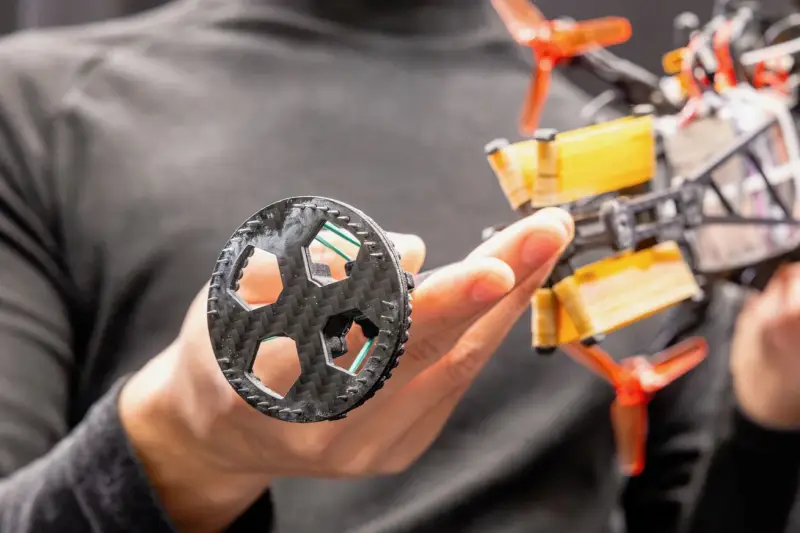
The Hopcopter’s main engineering challenge wasn’t getting airborne. It was arriving on the ground without sinking, slipping or tipping over. A flexible foot pad developed with researchers at the University of Toronto has reduced performance variation across different terrains by 84%, addressing a weak point in this hopping, flying robot.

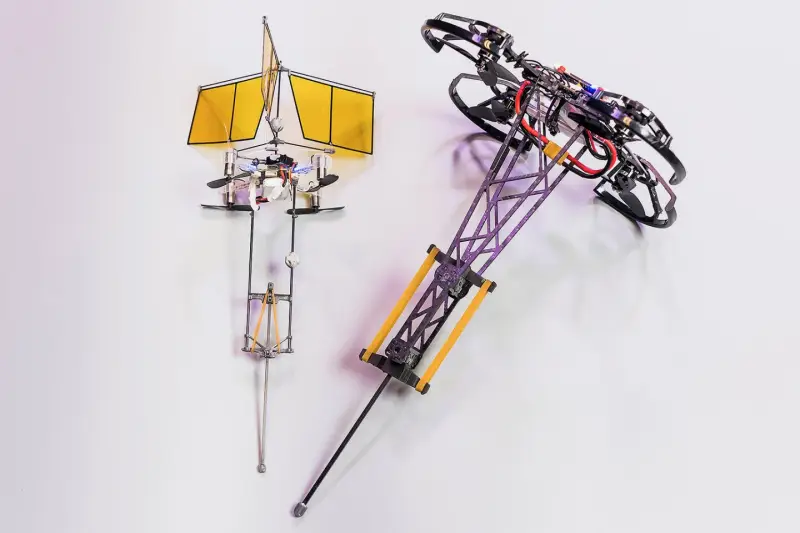
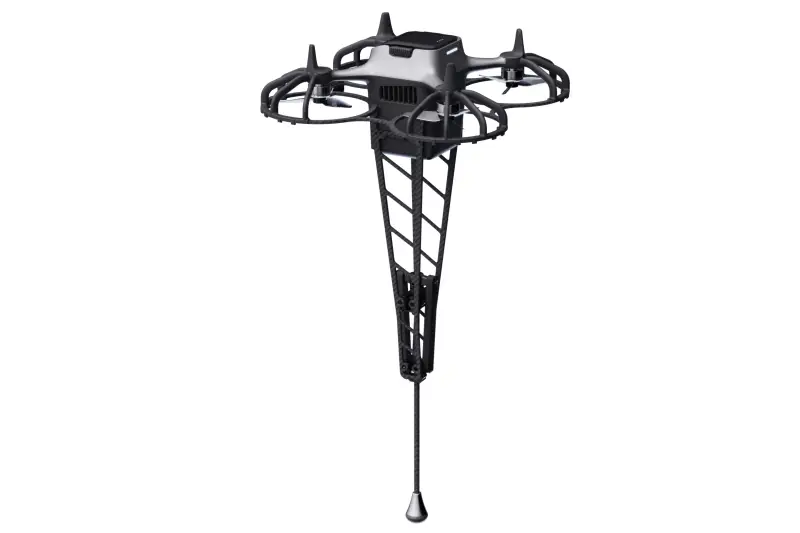
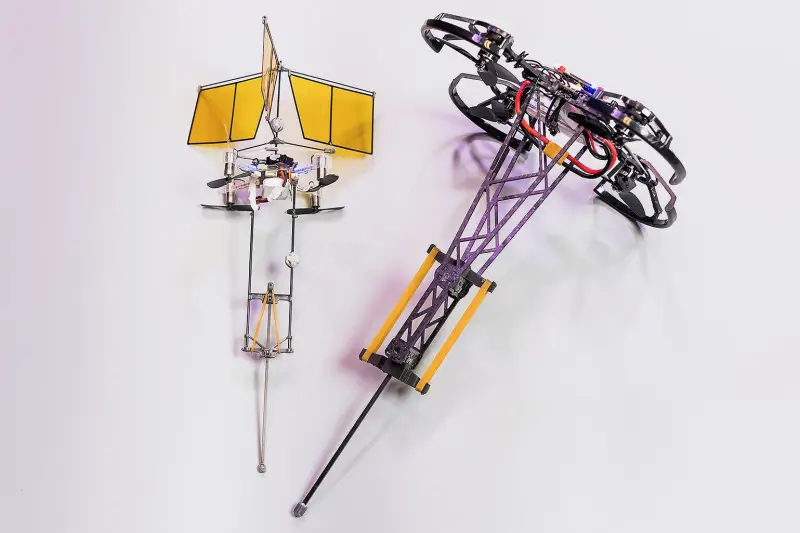
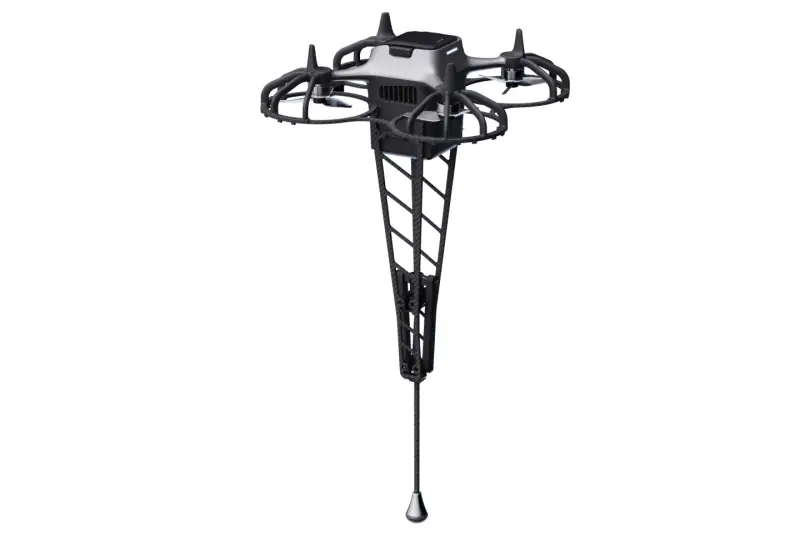
Hopcopter combines a quadcopter with one spring-loaded leg. Researchers at City University of Hong Kong and The Hong Kong University of Science and Technology designed it to move using short hops when it can land, then fly when there’s no suitable surface. The approach borrows from birds, which can hop between nearby locations instead of spending energy in continuous flight.

Combining flight with ground travel
Wheeled and legged machines can be limited by steps, loose ground and other obstacles. A flying robot can bypass those surfaces, but flight puts a limit on how much weight it can carry. Hopcopter uses both modes: it can hop between landing points to save battery energy, or remain airborne when the ground ahead won’t support a landing.

During a hop, the robot enters free fall. Its four rotors engage briefly as it rises, providing the thrust needed to travel to the next spot. The research team says this movement lets Hopcopter cover relatively long distances using one-tenth the energy of a drone of the same size. That figure describes the team’s comparison; the reported material doesn’t specify the test distance or operating conditions.

The first prototype could land on its single leg and push off again on flat ground such as concrete or fine gravel. Its performance fell off when the landing surface became less predictable: it could sink into sand, slip on ice or topple on a slope. Those failures matter because the robot’s hopping gait depends on a reliable contact point. A poor touchdown can disrupt both balance and the next takeoff.
Three features address different ground conditions
The updated foot pad combines a wider contact area, three rubber bands and short spikes on its underside. Each feature targets a different landing problem. The wider surface spreads the robot’s weight over more ground, reducing the chance of sinking into soft soil or sand. The rubber bands stretch during impact and pull the foot back toward its resting position, helping the robot recover its balance. The spikes provide grip on slippery surfaces.
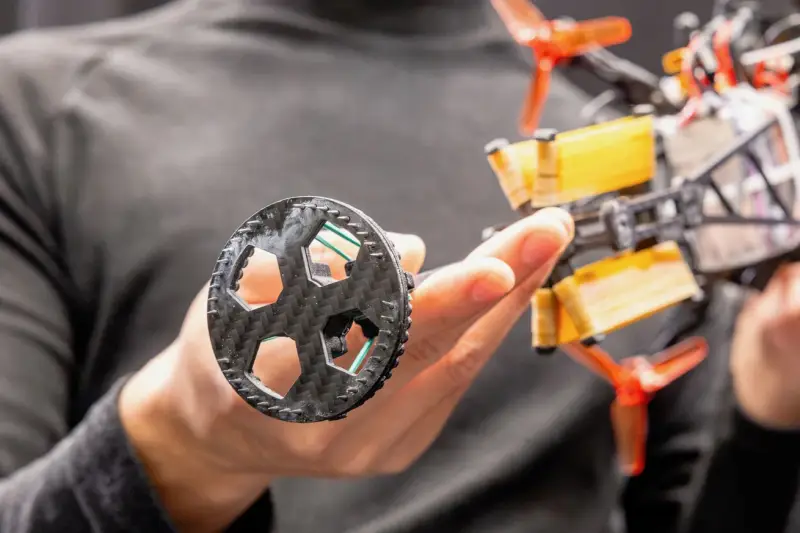
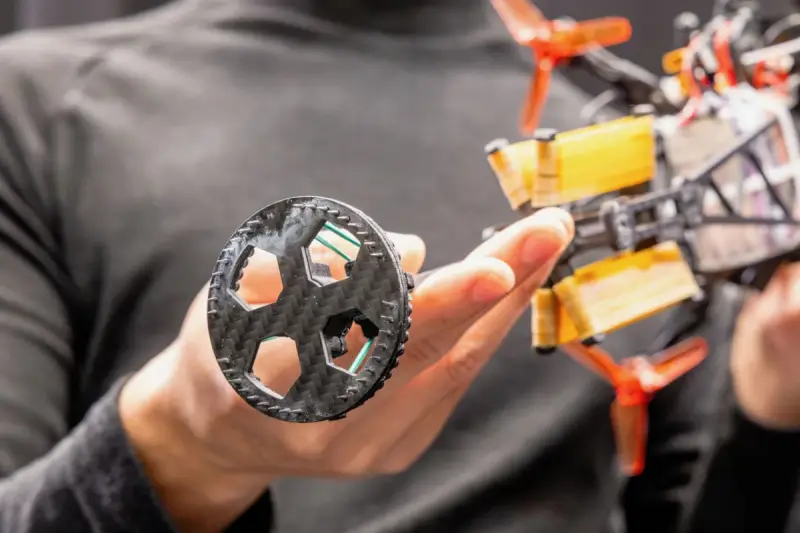
That combination makes the foot more compliant: it can deform at touchdown, then return toward its original shape. For a single-legged machine, the foot has to do more than cushion impact. It must help keep the body upright while accommodating changes in surface firmness and grip. A broader pad alone could help on sand but do little on ice; spikes alone could improve grip without preventing the foot from sinking. The design brings those functions together.
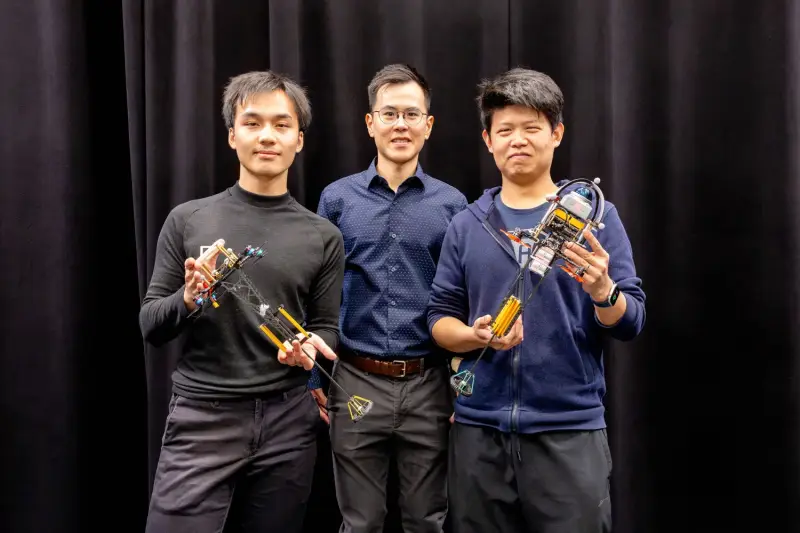
The reported 84% reduction in performance variation across terrains indicates more consistent behavior on surfaces including ice, sand and rocks. It doesn’t mean the robot can handle every ground condition, and no specific slope limit, payload, speed or range is given. The result is best read as evidence that the landing interface is less sensitive to changing terrain, rather than as a guarantee of unrestricted travel.
From research prototype to potential field use
Some members of the team are working to commercialize the technology. A planned commercial version is called Hop-1, but it isn’t available for sale yet. The team is also planning a version with integrated AI modules intended to improve obstacle avoidance; no further technical details are given.

Possible uses identified by the researchers include search and rescue, inspection of remote mining sites and exploration beyond Earth. Those settings share a need to cross uneven ground or reach places where a conventional wheeled robot may struggle. The current work tackles one enabling detail: making each landing more dependable. Practical deployment would still depend on capabilities such as payload, endurance and navigation, which aren’t specified here.
The study was published in Advanced Intelligent Systems. For now, the most concrete advance is at the robot’s point of contact with the ground. If the pad’s improved consistency carries through to longer and more varied runs, Hopcopter’s mix of short hops and flight could make it useful where a landing surface is available only intermittently.


