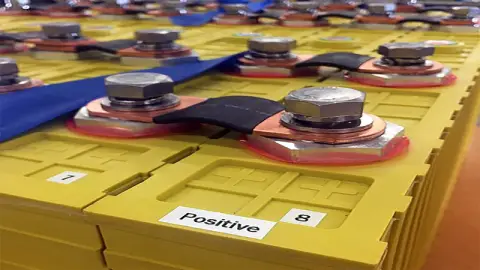
Keysight High-Power Test Systems Span 10 V to 1500 V
- Akanksha Gaur
- 588 reads
Keysight’s new test systems combine voltage options up to 1500 V, power density up to 6 kW per 1U and regenerative operation.
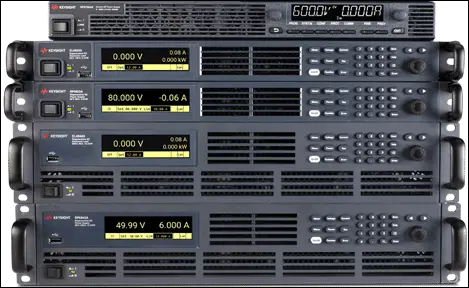
Test engineers working across low-voltage, high-current equipment and high-voltage battery or converter systems can draw on a new Keysight Technologies automated test equipment family spanning 10 V to 1500 V. The portfolio combines regenerative power supplies and electronic loads with a new DC power supply family, with power ratings up to 12 kW. Its main practical change is the range of operating points and power levels that can be assembled in a rack-based test system.

Voltage options align with distinct test needs
The family includes 10 V, 32 V, 300 V and 1500 V models. At the low end, the 10 V units can source up to 1020 A, making them suited to power-stage characterisation, DC bias work and burn-in testing. That pairing of low voltage with high current addresses test setups where current handling is the defining requirement.

The 32 V models target nominal 24 V and 28 V power architectures. The 300 V option is aimed at equipment using nominal 270 VDC aerospace power systems, while the 1500 V models are intended for high-voltage battery modules, converters and chargers. These ranges let teams select equipment around the voltage of the device under test, rather than treating one supply rating as a fit for every application.

For test-system designers, the nominal architecture matters alongside the instrument’s maximum voltage. The stated compatibility with 24 V, 28 V and 270 VDC systems gives a clearer indication of where the models are intended to fit. The supplied information does not specify measurement accuracy, transient response, output ripple or interface details, so those characteristics still need to be checked against a particular test plan.
Rack density and system scaling
Keysight lists regenerative power supplies and electronic loads rated at 6 kW per rack unit (1U) and 12 kW per two rack units (2U). The new DC power supply family reaches 12 kW per 2U, with some models rated at 7.5 kW per 1U. The company says this density can allow two to three times more channels in the same rack space than before.

That capacity can change the physical layout of an automated test station. More channels in a given rack footprint may help when a system needs to exercise several units or test points in parallel. The practical benefit will depend on the selected models and the complete installation; the stated rack ratings alone do not describe cooling, input-power requirements, cabling or channel configuration.

Supported configurations can automatically parallel as many as 12 power supply units, and system power can scale to 90 kW. Those figures provide a path from an individual supply to a larger test system, while keeping the design within supported combinations. Engineers planning a multi-unit setup will need to confirm which models can be paralleled and how the intended voltage and current requirements affect the final configuration.
Regenerative operation and software
Regenerative operation is a key part of the offering for tests in which equipment under test returns electrical energy. Rather than treating that energy only as something to be consumed by a load, a regenerative instrument can return energy to the electrical supply, as supported by its design. This can reduce the amount of power dissipated during suitable test sequences. The supplied details do not quantify energy recovery or specify operating conditions, so those values should not be assumed.
The portfolio includes PathWave Advanced Power Control and Analysis software for configuring tests and examining their results, alongside PathWave Advanced Battery Test and Emulation software. Battery emulation and test software can support workflows where engineers need to apply controlled electrical conditions and assess system behaviour. The product description does not set out supported protocols, software licences or compatibility across every instrument, so those details remain relevant when choosing a system.
For teams testing batteries, converters, chargers and power stages, the range from 10 V to 1500 V offers a broad hardware base, with high-current capability at the low end and higher voltage models for battery and conversion equipment. Rack density, parallel operation and energy recovery shape how a station might scale, but the model-specific ratings and integration requirements will determine whether a given configuration fits its test job.