TE Connectivity Connectors Target Zonal Controllers, Dense Vehicle Electronics and EV Batteries
- Semiconductor For You
- 527 reads
TE describes hybrid connectors, compact terminals and internal board links for vehicle architectures that combine more computing, power and high speed data.


As vehicle electronics move toward zonal control and software-defined functions, connector design has to keep pace with changing combinations of power, signals and data. At electronica India 2026, TE Connectivity product managers Vinod Viswanath and Dominik Schmitt described how the company is addressing those demands with configurable hybrid connectors, compact terminals and links for electronics inside vehicle control units.
Combining power, signal and data
A software-defined vehicle can use standardized hardware across multiple vehicle variants, with some features added or updated through software. That approach shifts pressure onto the physical connections: designers need systems that can support different configurations while maintaining data integrity, limiting signal interference and preserving compatibility across vehicle generations.
TE’s response includes modular hybrid connector systems that place power, signal and data terminals in one connector. Configurable inserts fit housings with two to eight or ten compartments. The company identifies high-performance computers (HPCs) and zonal controllers as key applications, where one enclosure may need to connect several types of circuits.
Combining circuits in a common housing can simplify the connection layout, but it also makes electrical separation and signal quality important parts of the design. As Viswanath described it, flexibility in the connector footprint supports different vehicle configurations; the system still has to manage the interference and compatibility concerns that come with carrying unlike signals together.
Inside the enclosures, TE also offers board-to-board and wire-to-board connectivity. Schmitt cited zonal control units, HPCs, batteries, battery control systems, integrated power distribution units and DC-DC converters as intended settings. These internal connections address a different packaging problem from the vehicle harness: they have to fit within a closed electronic assembly and link its boards, wires and subsystems.
Smaller terminals and assembly tolerance
Reducing connector size can free space and cut material, but vehicle electronics still face vibration and mechanical variation during assembly. TE points to NanoMQS and PicoMQS terminal systems for compact automotive connections designed for high-vibration environments. For applications with lower requirements, Schmitt also mentioned the Signal Grace Inertia terminal from TE’s Connected Living Solutions business unit.
Dense controller layouts can use floating board-to-board connectors with a 0.5 mm pitch and up to 120 positions. Their floating action helps absorb assembly tolerances in the X, Y and Z directions. That accommodation matters when connector and board positions vary slightly: the interface can tolerate some misalignment without requiring every part of the assembly to land at one exact position.
At the circuit-board level, moving from standard MQS to NanoMQS reduces terminal pitch and, in turn, the connector’s PCB footprint. Surface Mount Technology (SMT) can also free underlying layers in a multilayer board. These choices give packaging teams more room to arrange components and routing, though the suitable terminal and mounting approach depends on the electrical and mechanical requirements of each connection.
Weight savings can extend beyond the board. Smaller headers use less housing plastic, while smaller terminals can accommodate thinner wire cross-sections and reduce harness mass. Viswanath added that aluminum-conductor solutions may offer further savings where the application permits them. Those measures affect different parts of the system, so their value depends on whether the connector, conductor and surrounding design can all meet the vehicle’s requirements.
Higher data rates in hybrid assemblies
More sensors and real-time processing are raising data demands inside vehicles. Schmitt gave adaptive matrix LED headlamps as an example: their pixel arrays can respond to inputs from cameras, radar or LiDAR, requiring more bandwidth than legacy CAN networks provide for these applications.
TE’s hybrid connector approach can place high-speed coaxial or differential data connections alongside standard power and signal terminals. That lets a single connector housing serve circuits with different roles, including high-throughput data streams. For designers, the central question is how to package those paths together while protecting the data connection’s integrity and meeting the requirements of the other circuits.
Zonal layouts and high-voltage battery connections
Depending on the vehicle architecture, central and zonal controllers can consolidate functions that would otherwise sit in a larger number of separate control units. Viswanath said this can reduce unit count and allow more functions to fit in the same or less space. Connector design also contributes to the material choices available across the system, including the use of more sustainable raw materials.
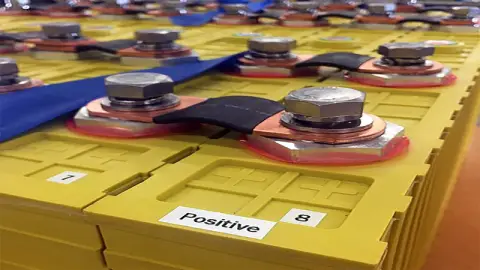
Battery systems bring another set of connection needs. Alongside high-current power paths, battery enclosures use high-voltage, low-current sensing to monitor cells. TE described connectors with wide contact spacing that interface with Flexible Printed Circuits (FPCs) and Flexible Flat Cables (FFCs) for cell monitoring.
For high-voltage designs, Viswanath highlighted touch-proof interfaces intended to prevent accidental contact with live components. TE also uses thermal simulation before hardware prototyping to map hotspots and coordinate connector footprints with vehicle cooling circuits. Integrated shielding can help reduce electromagnetic interference between high-voltage lines and low-voltage signal paths. Together, these measures show why battery connectivity involves mechanical packaging, thermal behavior and electrical separation as well as current capacity.
Engineering for the Indian market
Viswanath said TE adapts product development for India through localized, cost-optimized engineering while maintaining global quality standards. The company’s engineering and manufacturing facilities in Pune support domestic automakers as well as export platforms.
He described the technical adoption gap between India and global markets as narrowing, alongside wider deployment of Level 2 advanced driver assistance systems and changing occupant-safety and emissions requirements. For connector suppliers, that shift increases the value of platforms that can be adapted to local vehicle programs while supporting the denser electronics and mixed data needs of newer architectures.
The engineering takeaway is that software-defined and zonal designs don’t remove hardware constraints; they concentrate them. Connector choices have to reconcile flexible configurations, compact packaging, assembly tolerance, high speed data and battery safety. The fit of each solution will depend on the application’s electrical and mechanical demands, but these are the interfaces that will help determine how readily vehicle platforms can add functions without redesigning every connection from scratch.