Rashi Restar Combines Indian Distribution With Semiconductor Design Support
- Semiconductor For You
- 862 reads
Rashi Restar links pan-India distribution with Tokyo engineering and Bengaluru prototyping to help Indian OEMs develop semiconductor-based products.
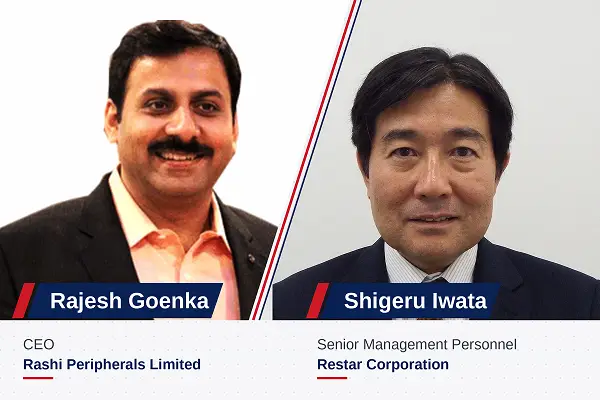
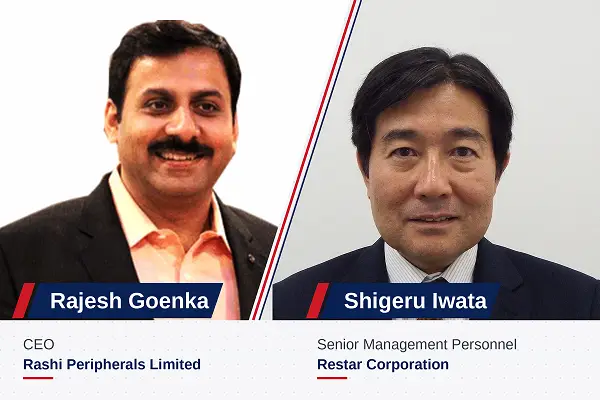
Rashi Peripherals and Restar Corporation are aiming to make semiconductor distribution more useful to product engineers by pairing broad component access with design support and local prototyping. Their joint venture, Rashi Restar Semiconductor Solutions Pvt. Ltd., brings together Rashi’s customer reach across India and Restar’s supplier relationships and application expertise.
The companies discussed the venture at electronica India 2026 in Bengaluru. The meeting brought together Rajesh Goenka, Director and CEO at Rashi Peripherals Limited; Shigeru Iwata, Senior Management Personnel at Restar Corporation; and Vaishali Umredkar, Editor of Semiconductor For You. The venture was described as launching around October.
Distribution tied to engineering support
Rashi’s role rests on its pan-India logistics network and established customer relationships. Restar contributes access to semiconductor suppliers and application know-how, backed by the Japanese conglomerate, which the source describes as a $4 billion company. The two organizations’ leaders had known each other for more than two decades, and discussions about the venture continued for nearly two years.
That combination is intended to help Indian original equipment manufacturers (OEMs) find components and work through the engineering decisions needed to use them. For product teams, component availability is only one part of development: choosing parts that fit a design, building a prototype and getting technical help can also affect how quickly a product reaches production. Rashi Restar’s stated approach puts those activities alongside distribution.
“Semiconductor is the most common word used now—it’s like air, water, food, and fourth is semiconductor. We didn’t want our country just to be a trading hub, but to be a design hub,” Goenka said.
The venture plans to bring Restar’s semiconductor component and solution lines to Indian OEMs. It also combines Restar’s 200-engineer design team in Tokyo with Rashi’s embedded laboratory in Bengaluru. The stated aim is to expand local prototyping and technical support, connecting overseas engineering resources with work closer to Indian customers.
A further route to customers comes through Japanese automotive and industrial manufacturers operating in India. The companies cited Hitachi and Maruti as examples. The source does not specify particular programs or components for those manufacturers; the practical point is that the venture intends to establish distribution pathways into this customer base.
Iwata described the arrangement as a combination of Rashi’s reach and Restar’s semiconductor expertise, built on a long-standing relationship between the organizations. For OEM teams, the proposed value will depend on how that access translates into suitable parts, timely engineering input and prototype support for their specific products.
Reference designs for edge AI products
Rashi’s embedded business is also responding to a shift in demand, according to Vishwas Kanwar, its GM and BU Head for Embedded. He said customer interest has moved quickly from basic Internet of Things applications toward Edge AI across automotive, industrial automation and consumer electronics.
Kanwar pointed to work with NVIDIA and Intel for compute, alongside memory and storage suppliers. Rashi also handled technical hardware infrastructure for large installations, including the setup of 512 AI servers at Yotta. The figure describes the scale of that infrastructure work; the source gives no further detail on the server specifications or deployment conditions.
At its electronica India booth, Rashi showed an AI-trained autonomous rover, a tire pressure monitoring system (TPMS) for two-wheelers and smart consumer appliance solutions. These demonstrations span different embedded workloads: a mobile system that acts on sensor inputs, a vehicle system that monitors tire pressure, and connected appliance functions. The source does not provide performance figures or component-level details for the demonstrations.
“When you think AI, think about Rashi. We are not just saying it, but demonstrating it through reference designs and demos—from AI rovers to two-wheeler tire pressure monitoring,” Kanwar said.
Pre-built designs aim to shorten development
Rashi says its Bengaluru Embedded Lab prepares 50–60% of reference designs in advance. For an OEM, a reference design can provide a starting point for a product’s electronics and embedded system, reducing the amount of work needed before adapting a concept to the product’s requirements. The company says this can shorten design-to-revenue cycles, though the source does not state a measured time saving or define which design elements are included in that percentage.
The distinction matters in projects where teams need to evaluate a new processor, sensor or connectivity approach without building every subsystem from scratch. A prepared design can help with early prototyping and technical assessment; each manufacturer still needs to determine whether it meets its own functional and production requirements.
Rashi Restar’s stated model therefore extends beyond supplying components. Its test will be whether the combined supplier access, engineering team and Bengaluru lab can help OEMs move from part selection to working prototypes across automotive, industrial and AI hardware. The venture brings those resources under one arrangement; the product-specific results will emerge as customers apply them to real designs.