Rohde & Schwarz FNH Combines Spectrum, VNA and Power Measurements
- Saba Aafreen
- 389 reads
The handheld R&S FNH combines spectrum and real-time analysis, VNA, cable testing and power measurements, with frequency coverage up to 32 GHz.
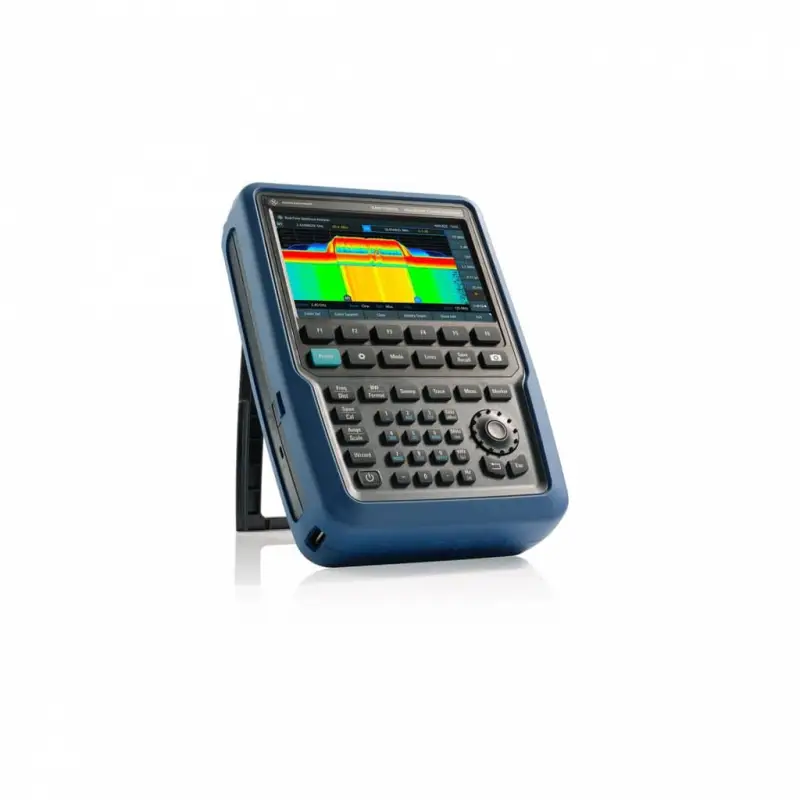
Field RF work often means switching between instruments to inspect a signal, locate interference and check an antenna path. Rohde & Schwarz’s R&S FNH handheld combi analyzer brings several of those tasks into one platform: spectrum analysis, real-time spectrum analysis (RTSA), vector network analysis (VNA) and power measurement. The practical gain is fewer instruments to carry between sites, while the measurement options still depend on configuration and compatible accessories.

One platform, several RF tasks
Spectrum analysis is included as a standard function. It lets technicians examine frequency content and identify signals or interference. RTSA adds a view of changing RF activity, with IQ capture bandwidths available for recording signal data. Rohde & Schwarz specifies intercept times down to 3.6 μs, a measure relevant when trying to capture short-lived transmissions that a slower observation could miss.

The instrument can also be configured for cable and antenna testing (CAT) and two-port VNA measurements through keycodes. These functions address a different part of field work: CAT checks feed lines and antenna paths, while a VNA measures the behavior of a network across frequency. Bringing those tools together can reduce setup changes during fault finding, although the available function set depends on which options have been enabled.

Power measurements use a compatible USB power sensor, so the instrument itself is not the only hardware needed for that task. Pulse analysis is another add-on. Engineers planning a kit will therefore need to account for the selected software or keyed options and the external sensor, rather than treating every measurement capability as included in the base configuration.

Frequency limits vary by measurement
R&S FNH spectrum analysis extends to 32 GHz, while VNA measurements reach 26.5 GHz. The company lists three versions with upper frequency ranges of 6 GHz, 13 GHz and 26.5 GHz. Those model ranges matter when matching the instrument to the bands used by a communications, radar or satellite system: the 32 GHz spectrum-analysis ceiling does not mean that VNA measurements cover the same range.
The stated spectrum range can also be extended. The available information does not specify the extension method or the resulting limits, so those details need to be checked against the intended configuration. As with any combined analyzer, engineers should verify the precise frequency coverage and enabled functions for the ordered version before relying on it for a particular test plan.

For technicians, the distinction between maximum spectrum frequency and VNA frequency is especially useful when planning antenna and cable checks alongside signal monitoring. A single chassis can cover both types of work, but the measurement ceiling remains function-specific. The 3.6 μs intercept figure likewise describes capture capability; it does not, by itself, establish performance for every signal type or operating condition.

Built for field use
Rohde & Schwarz rates the instrument IP51 and specifies an operating temperature range of −10°C to +55°C. An optional rain holster raises the stated ingress protection rating to IP54. Those ratings give field teams a concrete basis for considering environmental exposure, while the additional holster is a separate accessory and the IP54 figure applies with that protection in place.
The company positions the analyzer for radar maintenance, satellite ground-station testing, communications servicing, interference hunting and spectrum monitoring. It can also be used in laboratory research. For signal demodulation analysis, the instrument can work with R&S VSE software. Together, these capabilities make the FNH a portable option for teams whose work moves between signal inspection and RF path measurements, with the final fit determined by required frequency coverage, options and accessories.
Michael Fischlein, Rohde & Schwarz vice president of RF Test Solutions, described the instrument as combining real-time bandwidth with spectrum analysis and two-port VNA functions. That is the manufacturer’s characterization; the specifications that most directly guide selection are the stated frequency ceilings, 3.6 μs intercept time, environmental ratings and the configuration needed for each measurement.