Vector’s BOMBARD Unmanned Aircraft Uses a Pulse-Jet and Targets High-Volume Production
- Daniel Kamberski
- 609 reads
Vector lists a 684-mile range, 235 mph cruise speed and 110-pound payload for BOMBARD, a pulse-jet aircraft still in development and testing.
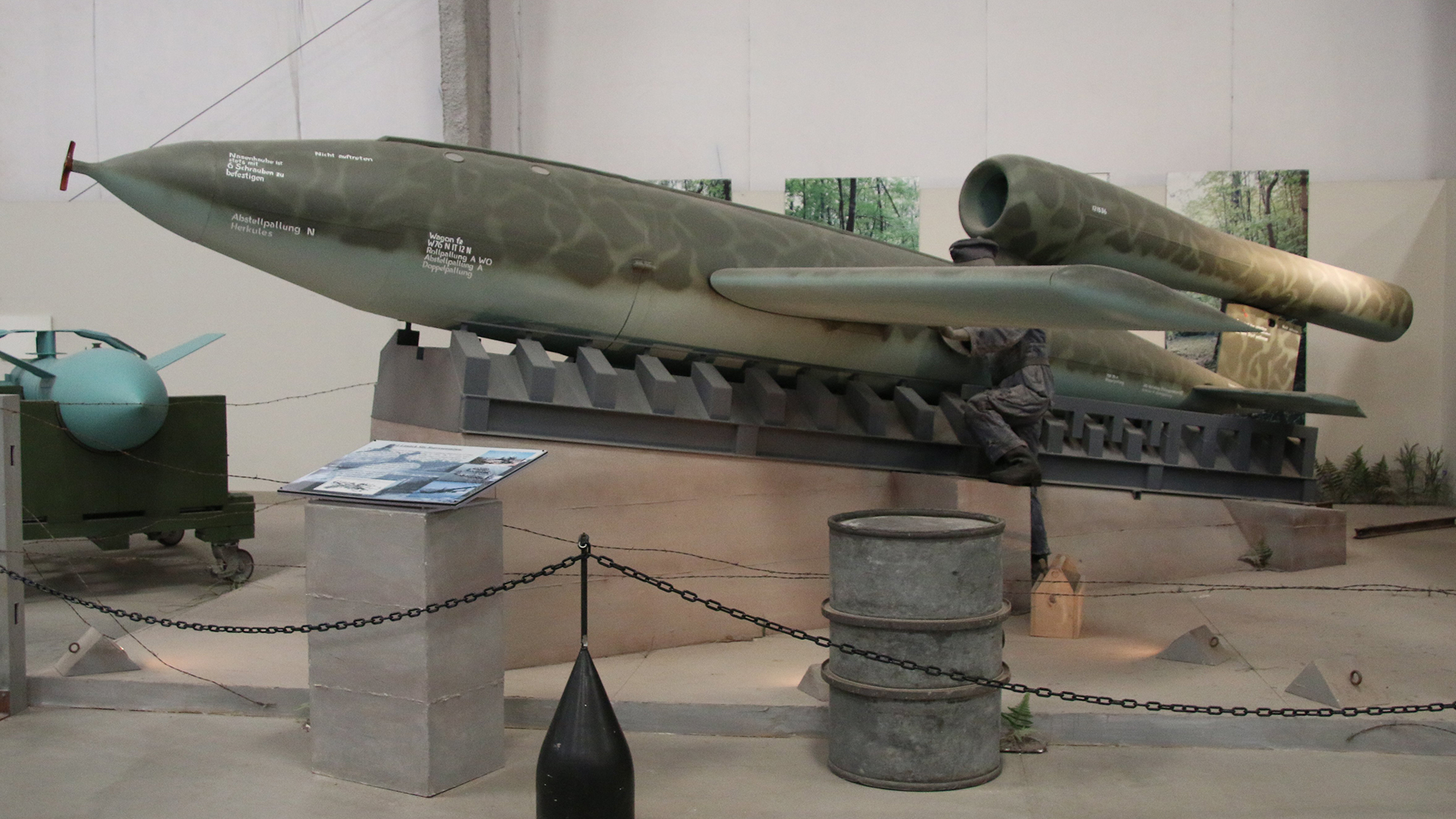
Vector’s BOMBARD puts a simple engine architecture at the center of an unmanned aircraft designed for high-volume production. The Bluffdale, Utah, company lists a range of about 684 miles (1,100 kilometers), a cruise speed of 235 mph (378 km/h) and a payload capacity of 110 pounds (50 kg). Those are company-published specifications; Vector says the aircraft remains in development and testing.
The propulsion choice is a pulse-jet. It produces thrust by burning fuel in repeated bursts inside a tube, using an operating cycle with few moving parts. That relative mechanical simplicity is part of Vector’s stated design rationale: the company says it wants an aircraft that can be produced in quantity and kept up with limited maintenance. The trade-offs and operating details behind those goals, including fuel consumption, noise, endurance and service intervals, haven’t been published.
Published specifications and operating features
Alongside its range, speed and payload figures, Vector gives BOMBARD a maximum takeoff weight of 281 pounds (127 kg). That puts the stated payload at a substantial share of the aircraft’s total listed takeoff mass, though the company hasn’t provided a breakdown of structure, fuel, propulsion or onboard equipment. Nor does its release specify the conditions used to calculate range, such as payload, fuel load or flight profile.
Vector says the aircraft is designed to fly autonomously from launch through its final engagement phase and to navigate when GPS is unavailable. It also lists Open C2 integration and a modular payload interface. C2 means command and control: in practical engineering terms, an integration standard and a modular interface can affect how a vehicle exchanges information and accommodates different equipment. The release doesn’t describe supported protocols, interface limits or the payload modules that have been tested.
The company calls the pulse-jet fuel-agnostic, meaning the engine design isn’t tied to a single fuel. That claim could offer flexibility in supply and operation, but the release doesn’t identify tested fuels or report how fuel choice affects thrust, efficiency or range. Those details will matter when the published performance figures are compared with results from flight tests.
Production aims and speed comparisons
Vector says it designed BOMBARD for mass manufacturing from the outset. It attributes that approach to experience producing first-person-view drones for the Drone Dominance Program run by the Defense Innovation Unit. CEO Andy Yakulis said the company responds quickly to new requirements, builds in the United States and iterates on customer feedback, describing BOMBARD as a result of that process.
Designing for volume can shape choices throughout an aircraft, from component selection and assembly methods to how quickly production can scale. But Vector hasn’t published manufacturing rates, unit costs or detailed production plans for BOMBARD, so the scale of the proposed operation remains unclear.
The listed cruise speed is close to the estimated 230 mph speed reported for Russia’s Geran-3, a turbojet-powered aircraft modeled on Iran’s Shahed-238. The comparison is limited: the Geran-3 figure is an estimate, while Vector presents BOMBARD’s speed as a specification, and the two numbers may not have been measured on the same basis. They offer a rough point of reference, not a controlled performance comparison.
Saudi production plans and open questions
Vector says BOMBARD will be produced in Saudi Arabia through SR2Vector, a joint venture based in North Riyadh. The aircraft is expected to be sold there under the name SKYWASP, with the venture supporting local production and an existing sales pipeline. No customers, order quantities or manufacturing start date were identified. The company also gave no price or delivery date.
A separate range figure adds uncertainty. Semafor reported in May that SKYWASP could reach targets about 930 miles (1,500 km) away. Vector’s release lists BOMBARD’s range as about 684 miles (1,100 km) and doesn’t explain the difference. It also doesn’t clarify whether either figure reflects a particular payload or set of operating conditions.
Other companies have announced unmanned aircraft with similar operating concepts. Ideal Aerosmith’s Troublemaker, for example, was described as usable for a one-way flight or recoverable for reuse, with a claimed range of about 864 miles. The different range figures can’t establish which design performs better without shared test conditions and clear definitions of payload, endurance and recovery.
Vector announced BOMBARD on Nov. 19 at the Axios Future of Defense Summit. It says engineering validation and flight testing will continue as the design develops. The next useful measures will be demonstrated flight performance, stated test conditions and details of how the production plans translate into an aircraft that can be built and maintained at the intended scale.