Perseverance and Mars Odyssey Pause Science Work During Radio and Reaction Wheel Checks
- Daniel Kamberski
- 902 reads
Perseverance has stopped science operations while engineers check two radios; Odyssey is testing a failed reaction wheel and its orientation options.
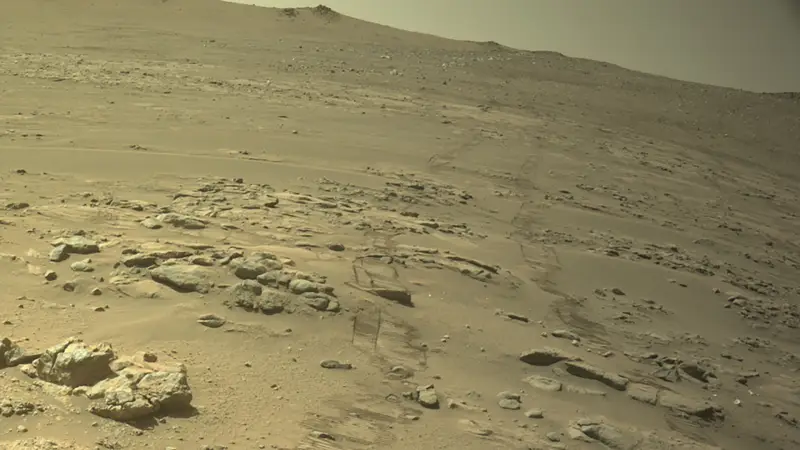
Two separate hardware faults have interrupted science work at Mars: Perseverance has stopped using its radios to orbiting relays, while Mars Odyssey is assessing a reaction wheel that no longer spins reliably. Both spacecraft remain in contact with their teams, but each investigation affects a different part of how the missions operate. Perseverance is prioritizing diagnostic data over new science observations; Odyssey’s instruments remain offline while engineers test the wheel and review how long the orbiter can manage without it.
NASA described possible late-November returns to science as targets, not confirmed restart dates. Perseverance’s team hopes to resume science by the end of November. Odyssey’s goal is to restart science and relay work during the month’s last week. NASA has not identified what caused either fault.
Perseverance is working with a slower data path
The rover’s ultra high frequency (UHF) radios normally send large volumes of data to orbiters, which relay it to Earth. That route supports the transfer of science and engineering information without relying on Perseverance’s direct-to-Earth link for every data set.
On Oct. 30, the rover’s primary downlink radio failed to send its usual electronic “heartbeats” to the main computer when Perseverance powered up for the day. The computer listens for those pings as an indication that the radio is operating. After 25 expected heartbeats went missing—about 100 seconds of silence—fault protection shut down the radio, switched to the backup and placed the rover in safe mode, which turns off nonessential systems. NASA outlined the sequence in its update on the two spacecraft.
“The rover’s main computer continually listens for that ping,” said Steven Lee, Perseverance project manager at the Jet Propulsion Laboratory (JPL). Engineers later found that the backup radio was transmitting at about half its expected power. The team stopped using both radios as it investigates the faults.
Perseverance now sends data directly to Earth through NASA’s Deep Space Network, using its high-gain antenna. This gives the team a way to receive information while the UHF radios are unavailable, but the direct link has a significantly lower data rate. Bandwidth is limited, so the rover has paused science operations and is using the connection to send diagnostic information. It is not taking new camera images during this period.
JPL engineers are examining the backup radio first, followed by the primary radio. That order gives the team a chance to understand the backup’s reduced transmission power while retaining the primary radio as a separate problem to investigate. The rover is stable and communicating with its team, but the limited link constrains how much information it can return.
Odyssey needs a dependable way to point
Mars Odyssey entered safe mode from Nov. 4 to 6. During the investigation, engineers found that one of its four reaction wheels had stopped spinning. Reaction wheels help a spacecraft change and hold its orientation. That control matters for pointing instruments and antennas in the directions needed for observations and communications.
Odyssey had already lost the use of another reaction wheel in 2013. The team says at least three wheels are needed to help orient the orbiter. If the newly affected wheel cannot be used, Odyssey would have to depend on thrusters alone for orientation. Those thrusters burn hydrazine propellant, and the team estimates the remaining fuel could support that approach for one to two months. NASA says it is still refining the estimate.
The orbiter has left safe mode, but its science instruments remain offline. In one test, the wheel moved after engineers commanded it to do so. Further testing will determine whether the wheel can be recovered; the result is not yet known. The difference between a wheel that responds during a test and one that can be relied on for mission operations is central to the next decision.
If the wheel remains unusable, the propellant estimate puts a limit on how long the spacecraft could rely on thrusters alone. That makes wheel testing relevant to both the prospect of resuming observations and the duration of Odyssey’s relay work. For now, the mission team is balancing those possibilities against an uncertain hardware condition and a fuel estimate still under review.
Two investigations, different constraints
Perseverance’s immediate constraint is data throughput: the direct-to-Earth route is available, but slower than the usual relay path, so the team is reserving it for diagnosis. Odyssey’s constraint is attitude control: its instruments are offline while engineers determine whether the wheel can again support spacecraft orientation or whether thrusters must carry that job.
Odyssey launched in April 2001 for a mission designed to last just over 2.5 years. It is NASA’s oldest Mars orbiter and remains part of the Mars Relay Network. Its long service makes the current wheel investigation especially consequential for the work it can continue to perform, while the remaining propellant estimate gives the team a practical limit to refine.
Neither spacecraft has a confirmed science restart date. The late-November targets depend on what the teams learn from the radio and wheel checks. The next useful milestone is evidence that Perseverance’s radios can support the usual relay route and that Odyssey can maintain orientation with a workable wheel or thruster configuration.