DOX Electrolyte Keeps Anode-Free Sodium Pouch Cells at 80% Capacity After 1,400 Cycles
- Kaushal Kishore
- 936 reads
A 1,3-dioxane electrolyte supports compact interphase formation in anode-free sodium cells, which retained about 80% capacity after 1,400 cycles.
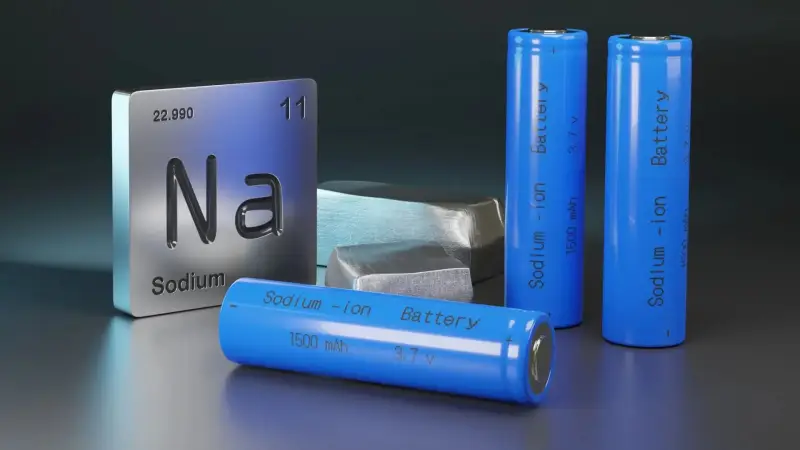
An electrolyte built around 1,3-dioxane (DOX) helped anode-free sodium pouch cells retain about 80% of their initial capacity after 1,400 charge and discharge cycles. The result points to a way of limiting the gradual sodium loss that shortens cell life: guide the surface reactions so they form a compact protective layer, rather than allowing continued electrolyte breakdown.
The work was led by Professor Weijiang Xue at Xi’an Jiaotong University, with researchers from the Chinese Academy of Sciences. The team tested 0.3-Ah pouch cells, moving beyond coin cells to assess cycling stability in a larger format. At −40°F (−40°C), the cells retained around 88% of their room-temperature capacity. These figures describe the tested cells and conditions; the researchers’ longer-term goal is to develop sodium batteries with energy densities comparable to high-energy nickel-rich lithium-ion batteries and stability beyond 1,000 cycles.
Why anode-free cells lose capacity
An anode-free battery starts without a separate anode active material. Instead, it uses a thin current collector as a substrate. During charging, sodium ions leave the cathode and plate onto that collector; during discharge, sodium is stripped from it and returns to the cathode.
That arrangement can improve active material utilization, while sodium’s abundance could make sodium-based batteries a lower-cost option than lithium batteries. But each plating and stripping cycle brings a surface chemistry challenge. Some sodium is consumed as reactions occur at the interface between the metal and electrolyte. Since that sodium is no longer available to move reversibly between electrodes, repeated losses reduce the energy the cell can store and eventually limit its service life.
The electrolyte therefore has to do more than transport ions. Its interactions with newly deposited sodium shape the solid electrolyte interphase (SEI), the layer that forms on the metal surface. A useful SEI must restrict further electrolyte decomposition while still allowing sodium ions to pass through during charging and discharging.
DOX shapes the interphase as sodium plates
Xue’s team examined cyclic ether solvents, organic molecules with an oxygen atom incorporated into a ring. The researchers compared solvents with pentane and hexane rings to see how molecular structure affected surface reactions. They selected 1,3-dioxane because its relatively low ability to coordinate sodium ions makes it easier for sodium ions to shed solvent molecules, supporting reversible plating.
DOX also undergoes controlled oligomerization at the sodium surface. In this process, solvent molecules join into short, polymer-like structures. The researchers found these oligomers within the SEI, where they contribute to a compact interphase. By limiting further electrolyte breakdown, that layer helps preserve sodium for repeated plating and stripping.
“Much previous research has focused on replicating the highly inorganic SEI found in lithium metal batteries. Our approach was to design a solvent that reduces ongoing electrolyte breakdown,” Xue said. He described DOX as serving two linked functions: allowing reversible sodium deposition while its controlled oligomerization helps build a compact protective layer.
The finding challenges the common assumption that a successful SEI for sodium metal batteries must be highly inorganic and arise mainly from salt decomposition. Here, the detected oligomers indicate that solvent-derived structures can also contribute to the interphase. The practical question is whether this surface chemistry can remain effective as cell designs, cathode materials and operating conditions change.
Pouch-cell results and next steps
The anode-free pouch cells had a capacity of around 0.3 amp hours (Ah), with cathode active material loading of roughly 0.041 oz/in² (20 mg/cm²). At charge and discharge rates of 0.25C/1C, they retained around 80% of their original capacity after 1,400 cycles. The low-temperature result adds a second point of interest: at −40°F (−40°C), capacity remained around 88% of the room-temperature value.
The team combined theoretical calculations, electrochemical measurements and advanced characterization to investigate how the electrolyte behaved, including the molecular composition of the interphase. Testing in pouch cells gives a more practical indication of cycling behavior than coin-cell measurements alone, though the reported capacity and loading describe a specific experimental configuration.
Next, the researchers plan to explore solid-state electrolytes and formulations compatible with high-voltage layered oxide cathodes. Those steps will test whether the same emphasis on controlling interfacial reactions can carry into different electrolyte systems and higher-voltage cell designs. The study was published online in Nature Energy.