NuScale’s 77 MW Reactor Modules Target Grid Power and Industrial Heat
- Aman Tripathi
- 618 reads
ENTRA1, Sargent & Lundy and NuScale are advancing plants built around 77 MW modules for electricity, process heat and staged capacity growth.
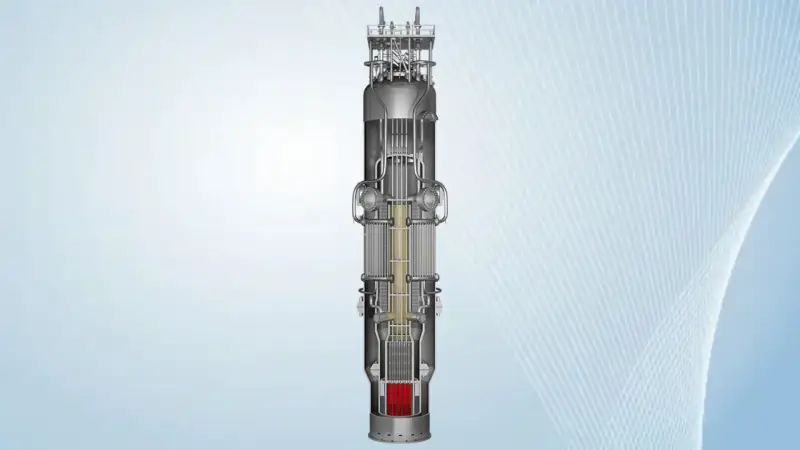
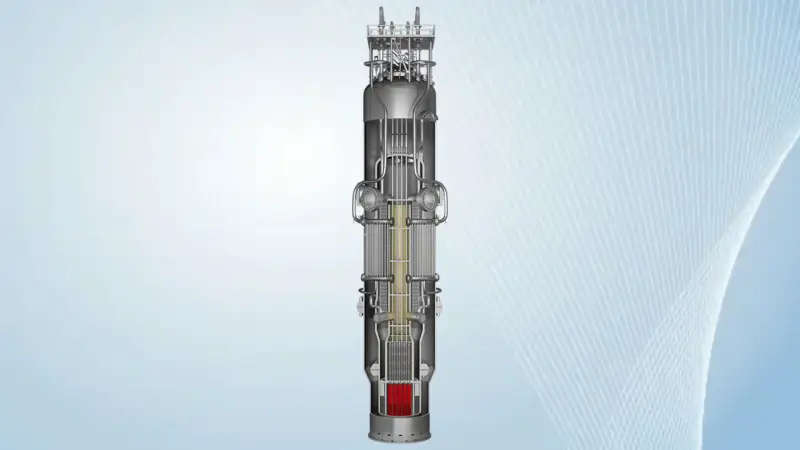
The proposed ENTRA1 Energy Plants are designed to pair modular nuclear generation with industrial heat and municipal services. Sargent & Lundy has joined ENTRA1 Energy to provide design and engineering support for plants based on NuScale Power Corporation’s small modular reactor technology. The arrangement brings plant engineering together with a project developer that plans to develop, finance, own and operate the facilities.
Each NuScale Power Module (NPM) is rated to produce 77 MW of carbon-free baseload electricity. Plants can add modules in stages, allowing an initial unit to begin generating while construction work continues on additional modules nearby. That sequencing could help match installed capacity to demand over time, though the source provides no project schedule, site, cost estimate or planned module count.
One module, several heat and power roles
The NPM uses pressurized water-cooled reactor technology. Sargent & Lundy describes its intended uses as electricity generation, district heating, desalination, commercial-scale hydrogen production and other process heat applications. This range matters because some industrial processes need steady heat as well as electrical power. A plant configured for multiple outputs could serve a grid connection while also supplying heat or supporting water treatment, depending on the project’s design.
Those applications bring different engineering requirements. Electricity delivered to a grid must fit the needs of the receiving system; direct process heat must match the temperature and operating pattern of the industrial user. Desalination and hydrogen production also depend on the equipment and infrastructure connected to the reactor plant. The stated applications describe what the module technology is intended to support, but they do not establish that every ENTRA1 plant will provide all of these services.
The design is also intended for sites with tight space constraints. The source describes the modules as having a small physical footprint compared with traditional nuclear plants, but gives no land area or site layout for a specific project. A smaller module footprint may widen the range of locations that can be considered; actual suitability will still depend on the complete facility, its supporting systems and the needs of the site.
Staged construction and operating modes
NuScale’s modules have been approved for both on-grid and off-grid operation, according to the source. Off-grid capability could be relevant to facilities that need a dedicated power supply, while grid-connected plants would contribute electricity to a wider network. The precise configuration will depend on each project, and no operating examples or performance data are provided here.
NuScale describes the modules’ safety response as passive: following an interruption, a module shuts down and cools without operator action, AC or DC power, or additional water, and can maintain that cooling indefinitely. That description identifies the intended response under the stated conditions; it does not replace project-specific safety analysis or explain the full set of events covered. The source also says the emergency planning zone is limited to the site boundary.
Building capacity in stages may give developers a way to align investment and construction with rising power needs. A first reactor unit could produce electricity while crews install further modules. In practice, that approach requires careful coordination of construction, shared plant systems and connections to customers or the grid. No details are given on how those interfaces will be arranged at ENTRA1 sites.
Roles across the project
The collaboration adds Sargent & Lundy’s engineering support to ENTRA1’s existing commercial relationship with NuScale. ENTRA1 is NuScale’s exclusive global strategic partner and is responsible for developing, financing, owning and operating the plants. NuScale supplies the reactor hardware, while Sargent & Lundy is expected to support design and engineering.
Victor Suchodolski, Sargent & Lundy’s chairman, president and CEO, said the company brings more than seven decades of nuclear engineering experience and emphasized the need for rigorous engineering from the start. ENTRA1 president Charles Peterson said the collaboration would support execution of the company’s development pipeline as demand for reliable electricity grows. Neither statement identifies particular sites, project milestones or contracts.
The NuScale Power Module is described as the first and only small modular reactor design to hold approval from the US Nuclear Regulatory Commission. The source does not specify the approval’s scope, and its claim of readiness for worldwide deployment should be understood as a company position rather than evidence of completed projects in multiple markets.
The practical measure of this alliance will be whether its teams can turn the module’s stated electricity, heat and staged-capacity options into designs that fit real sites and users. For engineers assessing the approach, the next useful details will be project locations, plant configurations, connection plans and schedules.