Nuclea Buys Moltex Assets to Pair Salt Reactors With Spent-Fuel Recycling
- Aman Tripathi
- 612 reads
Nuclea's purchase of Moltex technology links a 300 to 500 MWe salt reactor to a process that turns used CANDU fuel into reactor feedstock.
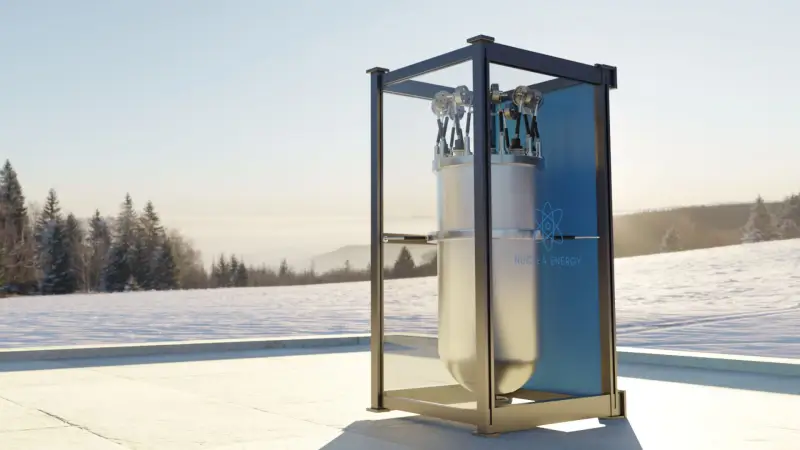
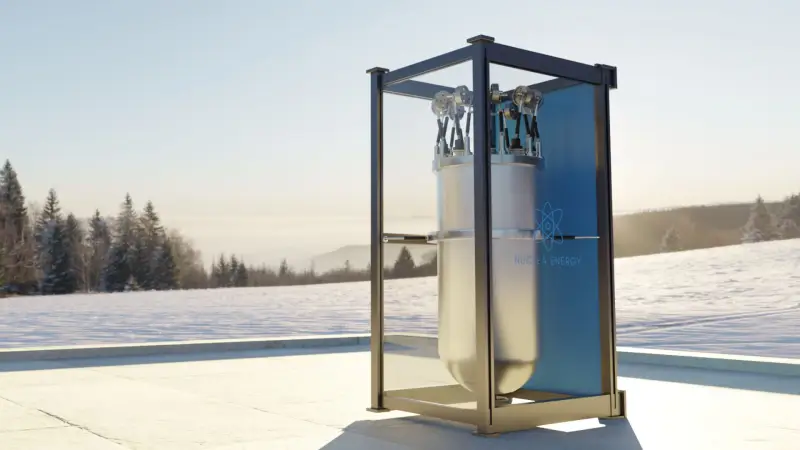
The interesting part of Nuclea Energy's latest deal isn't the reactor. It's the fuel supply chain behind it. By acquiring key technologies and intellectual property from Moltex Energy Limited, through its subsidiary Nuclea Energy Canada, the company now holds a grid-scale reactor design and a process for converting used reactor fuel into feedstock for that reactor. The stated aim is to address two pressures at once: rising electricity demand driven by artificial intelligence, and a projected shortfall of mined uranium.
What the transaction changes
Until now, Nuclea's business centred on the Morpheus microreactor, a lead-cooled unit rated at 3.5 to 50 MWe and built to supply off-grid power to remote communities, defence installations and mining sites. Those are useful markets, but they're small and specialised. Taking on Moltex's assets moves Nuclea into large-scale grid power, which is a very different commercial proposition.
The deal also clears a condition tied to the company's planned stock market listing. Nuclea still has to complete its $350 million business combination with NorthStrive Acquisition Corp I. That valuation remains subject to standard closing adjustments, along with NSAI shareholder approval, effectiveness of the Form S-4 registration, and a minimum cash requirement of $3 million. Once the merger closes, the combined company will hold a patent portfolio of more than 80 granted patents. Those numbers matter less to an engineer than the question of whether the technology performs as described, but they show how much of the company's value now rests on Moltex's IP.
The Stable Salt Reactor Wasteburner
The centrepiece is the Stable Salt Reactor Wasteburner (SSR-W), a 300 to 500 MWe fast-spectrum molten salt reactor designed for continuous grid supply. In a fast-spectrum design, the neutrons aren't slowed down by a moderator, which lets the reactor burn actinides that a thermal reactor would leave behind. That's the basis for the "wasteburner" name.
The SSR-W's most practical feature is its operating pressure. Unlike a conventional pressurised water reactor, it runs at atmospheric pressure, with liquid fuel salts sealed inside standard assemblies. That removes the need for the heavy, high-pressure containment vessels that dominate the cost and complexity of light-water plants. It also shifts the safety case. Instead of managing stored pressure energy, the designers rely on the chemistry and physics of the salt itself. The trade-off is that the fuel is a corrosive, high-temperature liquid, so materials selection, salt chemistry control and off-gas handling become central engineering problems rather than secondary ones.
The design has cleared Phase 1 of the Canadian Nuclear Safety Commission's Vendor Design Review. That's an early but meaningful checkpoint. Phase 1 is a preliminary assessment, not a licence, so the distance between a cleared concept and a operating plant is still considerable.
Closing the fuel loop with WATSS
To feed the reactor, Nuclea acquired the Waste To Stable Salt (WATSS) recycling process. Researchers have tested WATSS on real spent fuel at Canadian Nuclear Laboratories, which is a step beyond bench-scale chemistry. The process is pyrochemical and non-aqueous, so it doesn't rely on the solvent extraction used in conventional aqueous reprocessing. According to the company's description, WATSS extracts more than 90% of the transuranic elements from used CANDU reactor fuel and converts them into a liquid chloride salt. That salt becomes the fuel for the SSR-W.
The volume argument is the one most likely to resonate with waste managers. WATSS is said to reduce the volume of high-level waste that needs deep geological disposal by up to 95%. The process also co-extracts actinides rather than isolating pure plutonium. Engineers who have followed the reprocessing debate will recognise that distinction. Separating pure plutonium is what drives the proliferation concerns that have kept many countries away from reprocessing. Keeping the actinides mixed is a deliberate design choice, and it's one the company presents as a way to sidestep that concern.
Why the market timing matters
The demand case rests on two trends that are moving in opposite directions. The International Energy Agency expects global electricity demand to grow 3.1% a year through 2040, and power infrastructure is drawing up to $2 trillion in annual capital investment. Meanwhile, the World Nuclear Association warns that output from existing uranium mines will fall by roughly half between 2030 and 2040. Demand is climbing while the supply of the primary fuel is shrinking.
The waste side of the equation is just as pressing. The United States alone holds more than 95,000 metric tons of spent fuel across 79 sites. A recycling route that turns some of that material into reactor fuel, and reduces what needs permanent disposal, addresses a stockpile that's already on the books. That's the argument Nuclea is making, and it's a logical one. Whether it holds up depends on the reactor and the recycling process performing at commercial scale, which neither has yet demonstrated.
Chief Executive Josef Freundorfer said that bringing fuel recycling and fast-spectrum reactors in-house changes what Nuclea is. The company is no longer just a microreactor developer. Executive Chairman and Co-Founder Sagar Sanghera said Nuclea will now work with utilities, communities including Indigenous communities, and other governments to bring the technology to market.
What to watch
Three things will tell us whether this is a credible grid strategy. The first is the business combination closing and whether the listing goes ahead on the stated terms. The second is progress past Phase 1 of the Canadian Nuclear Safety Commission's review, where the detailed salt chemistry, materials and safety analysis will be tested. The third is whether WATSS moves from successful tests on real CANDU fuel to a throughput and product specification a reactor can run on day after day.
My read is that the fuel-loop idea is the stronger part of the story. A salt reactor is a familiar goal in the nuclear field, but a reactor that consumes the waste of the existing fleet while easing uranium supply is a sharper proposition. The engineering risk hasn't gone away. It has just moved from the reactor vessel to the chemistry plant, and that's where the next round of evidence will matter most.