Bosch Builds Local Chip Engineering in India as Third-Gen SiC Targets EV Inverters
- Semiconductor For You
- 820 reads
Bosch's Indian teams are building local application and communication-IP engineering as its third-gen SiC MOSFETs target EV traction inverters.


Most coverage of semiconductor localization in India fixates on wafer fabs. In a conversation with Sirous Etemadi, Regional President and Technical Plant Manager at Bosch Mobility Electronics' Naganathapura plant, the emphasis sits somewhere else: application engineering, validation, testing and packaging. That's a more useful lens for anyone who has to get a chip working inside a real vehicle.
What's actually owned locally
Bosch points to more than 60 years of semiconductor development and manufacturing experience, and says more than 30,000 of its engineers work in India across R&D and software. The work covers the integration of hardware, software and systems for intelligent mobility products.
Etemadi's argument is that as vehicle architectures grow more complex and software-defined, the value of local engineering rises. Application engineering, technical collaboration and customer support are what translate a global Bosch technology into something tuned for a particular vehicle and market. A chip datasheet rarely tells you how it behaves in a specific ECU layout under Indian operating conditions, and that gap is where local teams earn their keep.
One concrete example is in Bangalore, where Bosch supports development of automotive communication IP modules. These cover technologies used in CAN, CAN FD and CAN XL standards. For anyone designing zonal or centralized E/E architectures, that is the sort of IP that shows up deep in the network stack, and it's a meaningful step for Indian engineering to contribute there rather than only consume it.
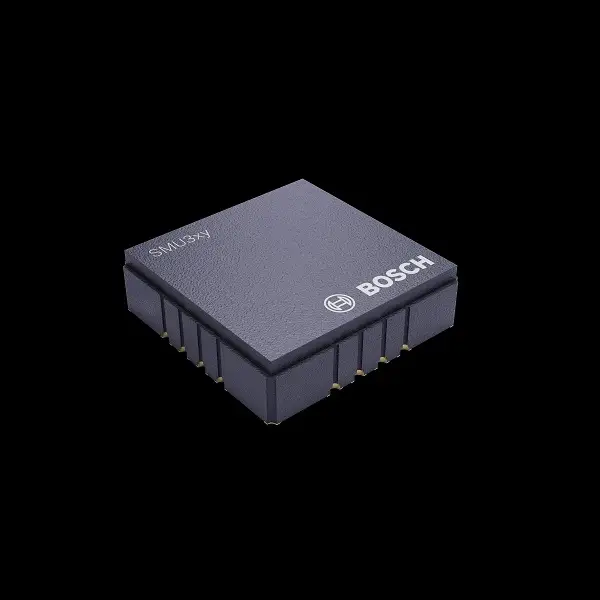
Third-gen SiC: what the 20% really measures
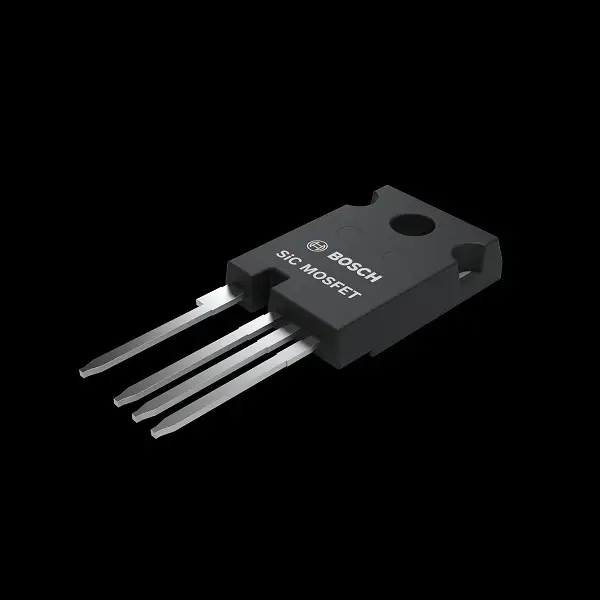
Bosch's third-generation silicon carbide MOSFETs are designed for automotive traction-inverter applications, and the company cites around 20% higher performance. The detail that matters most is what that number refers to. It describes the semiconductor, not the vehicle. Etemadi was clear that it doesn't translate into a 20% gain in range.
Here's the thing: the chain from device to driving range is long. SiC switches faster and dissipates less energy as heat, which means lower switching losses and improved ON-resistance at the device level. Less loss in the inverter means less energy wasted before it reaches the motor, and that can make better use of the energy already in the battery. Whether that shows up as extra range depends on the inverter design, the battery, the vehicle architecture and the duty cycle. Without battery capacity changes, the range benefit is real but conditional.
Thermal behaviour is the second lever. Lower electrical losses mean less heat for the cooling system to remove, which can ease thermal-management requirements and open room for more compact, lighter power-electronics packaging. Etemadi linked this to Indian operating conditions, including high ambient temperatures and intensive duty cycles, where reliable thermal margin matters. Commercial fleets are the obvious case, since small efficiency gains compound over many kilometres.
Bosch's Generation 3 design also uses a smaller chip, which can improve cost per device and allow more chips per wafer. That helps semiconductor-level economics, but it doesn't settle the system-level cost question on its own.
Where SiC stops and sensors and ICs start
Etemadi framed SiC, MEMS sensors and automotive ICs as complementary rather than competing. SiC handles electric-drive efficiency directly. MEMS sensors support vehicle-dynamics control, tyre-pressure monitoring, positioning and safety functions. Automotive ICs cover radar, ultrasonic sensing, motor control and in-vehicle communication, and they enable the move toward centralized and zonal architectures. In short, SiC makes electrification more efficient, while sensors and ICs make vehicles safer, smarter and more software-defined. For India, building market and engineering depth across all three is the more realistic path than betting on any single one.
Break-even depends on the whole system
Asked when SiC's lower total cost of ownership outweighs its higher upfront cost, Etemadi declined to name a single break-even point. There isn't one. The economics depend on the full power-electronics architecture and the vehicle's usage pattern. Commercial fleets and passenger cars in India may see incremental efficiency gains add up over the vehicle lifecycle, and reduced energy use per kilometre or fewer charging cycles could follow, but each application needs its own assessment. Anyone building a business case should model the inverter, battery and cooling costs together rather than comparing device prices in isolation.
Supply resilience and the global network
Bosch combines its own semiconductor development with a network of technology and manufacturing partners. For SiC, the company is establishing a dual-fab setup based on 200-mm technology in Reutlingen, Germany, and Roseville, California. Most semiconductor final testing happens at Reutlingen, Suzhou, Penang and Hatvan, and additional manufacturing capacity comes through strategic collaborations, including ESMC. That footprint matters for India because it sets up a two-way connection. Global capacity and supply-chain redundancy sit upstream, while local engineering brings customer proximity and an understanding of how Indian vehicle requirements differ. Etemadi's phrase for this was combining global scale with local relevance.
Naganathapura's role on the production floor
The Naganathapura plant, referred to as NhP1, manufactures electronic control units and next-generation power electronics for EVs, including products for EV inverter systems. It serves Indian and global customers. The process list is the practical part. NhP1 runs surface-mount technology, automated inspection and testing, laser welding, dispensing, potting and functional analysis, backed by quality systems. On the digital side, it uses Manufacturing Execution Systems, real-time production monitoring, AI-based inspection and digital work instructions. Those tools target process control, traceability and manufacturing quality, which become more demanding as electronic content per vehicle rises. Etemadi also stressed workforce development, with structured, continuous training aimed at building a skilled workforce in Bengaluru. Industrializing complex power electronics at volume is as much a people problem as an equipment one.
Testing, packaging and the next localization step
Etemadi argues India should think about semiconductor localization across the value chain, not just fabrication. Application engineering and validation are critical for automotive, because chips must perform reliably inside complete vehicle systems under varied real-world conditions. Local expertise there shortens development cycles and helps qualify technologies for specific markets. Testing and packaging are the next rungs. They determine product quality, reliability and scalability, and they connect chip development to end-product deployment. India already has a deep engineering talent base, and pairing it with validation, test and packaging depth could position the country as a hub for mobility semiconductor work. The goal, as he put it, is an integrated ecosystem that links engineering, manufacturing, validation and customer applications.
Collaboration and the skills to build now
Bosch runs a dual approach: it integrates chips and sensors into its own products and systems, and it works directly with Tier-1 suppliers and vehicle makers. That gives automakers more flexibility in defining their E/E architectures. Etemadi's view of the wider ecosystem is that OEMs define requirements, Tier-1s contribute system integration, semiconductor companies provide platforms, startups drive focused innovation and rapid prototyping, and universities and research institutes build research capacity and talent. The practical next step is moving past transactional supplier relationships toward structured programs: joint application development, reference designs, shared validation and test facilities, standardization work and talent partnerships. Those are the mechanisms that shorten the path from component research to qualified automotive parts. For young engineers, Etemadi's advice points toward systems thinking. Fundamentals in electronics, semiconductors, embedded software and power electronics remain essential. On top of that, expect to need systems engineering, E/E architecture, vehicle communication, validation and data-driven development. As architectures shift toward centralized computing and zonal systems, functional safety, cybersecurity and reliable high-speed communication will matter even more. My read is that the most useful takeaway is the caveat, not the headline. A 20% device-level gain is a starting point for an efficiency argument, and the vehicle-level result will be decided by inverter design, battery choice and cooling. Engineers who can trace those links, and who can validate chips in real operating conditions, are the people India's localization push will need most.