Iskander Guidance Upgrade Adds Terminal Radar and Optical Homing
- Ameya Paleja
- 554 reads
Reports describe radar and optical seekers that let Iskander missiles adjust course near impact, improving accuracy against narrow targets.
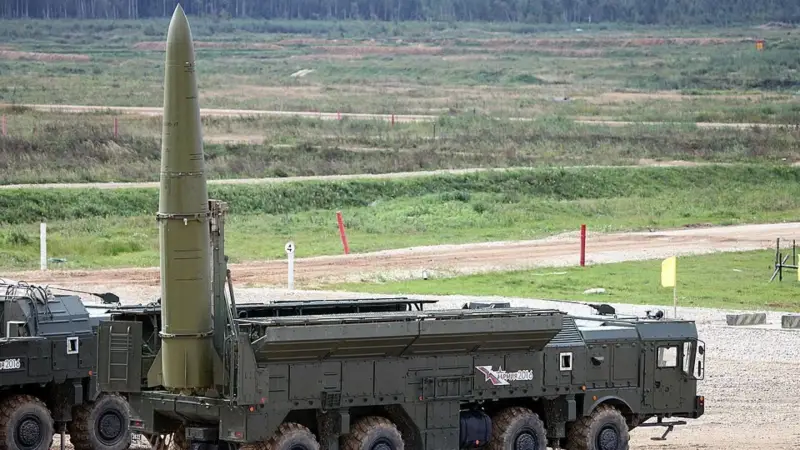
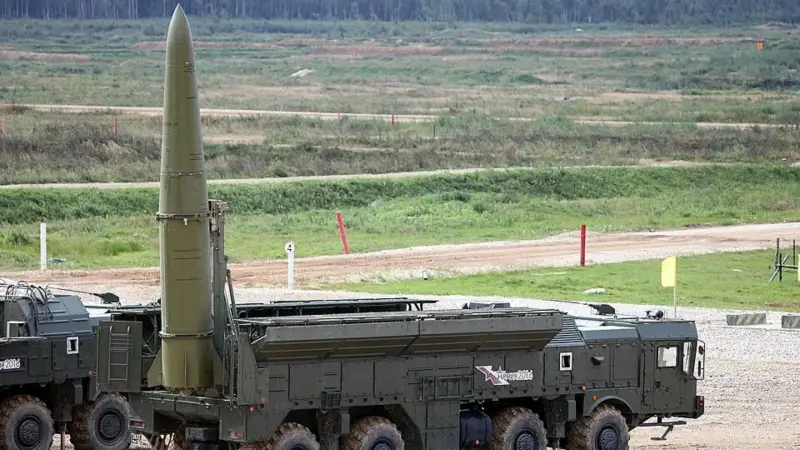
Radar and optical homing seekers are reported to have been added to Russia’s Iskander ballistic missiles, allowing them to adjust their flight path during the final part of descent. The engineering change addresses a basic limitation of unguided terminal flight: a vehicle can be aimed toward a target before its powered climb, yet small errors in its later trajectory can produce large misses at ground level.
The reported upgrade matters most when the intended target is narrow. A bridge crossing presents a much smaller aim area than a broad urban zone, and attacks using jet-powered drones reportedly failed to produce the desired results. Four Iskander missiles were then used against Kyiv’s North Bridge last weekend, according to the account. The reported seeker changes could improve the chance of reaching a selected point, though they do not establish whether a bridge can be put out of service.
What changes in the terminal phase
An Iskander is described as a short-range ballistic missile with a range of 310 miles (500 km). It accelerates under rocket power, then continues along a largely gravity-driven path after the engine shuts off. That flight profile can deliver high speed, but without later correction, the vehicle’s final position depends on how closely its actual path matches the planned one.
The reported radar and optical seekers add information during the approach. A seeker detects features associated with the intended aim point; the onboard control system can then use those observations to make course corrections. The central distinction is timing: an early aim direction sets up the flight, while terminal guidance can respond to conditions closer to impact.
Radar and optical sensing offer different ways to observe a target. Radar works by transmitting and receiving radio-frequency energy, while optical systems use light from the scene. The account does not specify the seeker designs, the sensors’ operating conditions, how they are combined, or whether one takes precedence over the other. Those details matter because sensing performance depends on the scene and the system’s ability to distinguish the intended point from surrounding features.
The reported accuracy is “a few meters.” That figure should be treated as an attributed claim rather than a guaranteed result for every flight: no test conditions, measurement method, or independent performance data are provided. Nor does a small miss distance by itself establish the effect on a structure. The outcome also depends on the target’s construction, the impact location, and the damage required to interrupt its use.
Accuracy and structural effect are separate questions
For a bridge, hitting closer to a chosen location may raise the chance of damaging a particular component. But accuracy alone cannot determine whether a crossing will fail or become unusable. Bridges are engineered assemblies, and their response depends on details such as load paths, support conditions, member design, and the location and extent of damage. The account says key river crossings are heavily engineered and describes their destruction as unlikely, while providing no structural assessments or test data to quantify that judgment.
That distinction is useful beyond this specific report. Guidance performance describes how near a vehicle gets to an intended point; structural performance describes what the resulting impact does to the target. Connecting the two requires information about both the guidance system and the structure. Without those details, a claim of improved precision does not settle the question of whether a bridge can be disabled.
Why the guidance change is being watched
Reports describe attacks on bridges across the Dnipro River and say Ukrainian authorities expect them to intensify as winter approaches. The stated aim is to disrupt movement between the river’s banks and affect logistics in nearby cities. Repeated attacks on power infrastructure are also described. These claims frame the immediate concern as the ability to reach particular infrastructure targets; the available account does not establish the broader operational consequences.
Electronic interference is another relevant part of the reported setting. The account says Ukraine has used electronic warfare to disrupt incoming projectiles, and presents the move from drone attacks to guided Iskander missiles as a change in approach after drones failed against narrow targets. It does not provide data on how the new seekers perform under interference or whether their sensors are vulnerable to it. That leaves a practical uncertainty: the reported terminal corrections may improve accuracy, but the performance of the complete guidance chain in real operating conditions remains unclear.
For engineers assessing the report, the key takeaway is to separate a specific technical claim from its consequences. Radar and optical homing can, in principle, supply information for late course corrections; the cited account attributes accuracy of a few meters to the upgrade. Whether that changes the vulnerability of a particular bridge depends on details the report does not give, including seeker performance, impact conditions, and the bridge’s structural design. Those are the facts to watch as further technical evidence emerges.