BP Brings Forward $350m Louisiana Payment as Profits Rise
- Michael Garcia
- 862 reads
BP will pay Louisiana $350m upfront, accelerating a previously scheduled seven-year payment while the company reports higher quarterly profits.
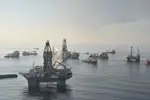
BP will pay Louisiana $350m upfront, bringing forward payments that had been scheduled across seven years. The change completes more than 20% of the company’s outstanding payments to five coastal states under agreements related to the 2010 Deepwater Horizon incident. BP’s latest results put the timing in focus: the company reported higher profits, driven largely by stronger refining margins and oil and gas prices.
CEO Meg O’Neill signed the revised agreement last month with Louisiana’s governor and attorney general. Under the earlier arrangement, BP was due to pay a total of $373m to Louisiana over the next seven years. The new deal replaces that schedule with a single $350m upfront payment. The figures show a faster transfer of funds for Louisiana and a lower total payment than the amount previously scheduled.
Part of a wider payment commitment
The agreement sits within a much larger set of commitments made after the 2010 explosion at BP’s Gulf of Mexico installation. The incident killed 11 workers and caused a major marine oil spill. In 2015, BP agreed to pay $18.7bn over 18 years through a number of agreements, including $4.9bn for five coastal states. Louisiana’s revised payment accounts for more than one-fifth of the remaining amounts BP owes those five states.
For BP, accelerating the Louisiana payment converts a long-term obligation into a near-term cash outflow. For the state, the arrangement brings the agreed funds forward. The practical effect is a shorter payment timetable; the source figures don’t provide details about how Louisiana will allocate the money or how the revised timing affects other outstanding payments.
Louisiana’s governor, Jeff Landry, said that unresolved matters had been holding the state back and described the agreement as a signal to businesses considering jobs and economic activity there. O’Neill said the incident’s consequences for workers, Gulf Coast communities and the environment continue to shape how BP operates, with safety at the heart of the company’s approach.
Higher earnings shape the payment decision
BP reported that profits rose by $2.7bn quarter-on-quarter last month. The company attributed much of the increase to stronger refining margins, alongside oil and gas prices that had remained high since the start of conflict in the Middle East. Over the first nine months of the year, profits increased from $5.9bn in 2025 to $17.4bn in 2026.
O’Neill said BP’s priority would be to use “excess cashflow” to address its remaining Deepwater Horizon commitments. The Louisiana payment therefore links the company’s stronger earnings to a specific financial obligation. It also puts a choice about cash use in view: money directed to past commitments is money that shareholders had hoped might support larger dividends or share buybacks.
Duncan Ferris, an analyst at Freetrade, attributed BP’s profit growth to higher refining margins and strong gas trading. He noted that investors might have expected the company to return more of its increased profits and cash generation to shareholders, while BP had chosen to meet outstanding commitments. The company’s results and payment decision provide evidence of that allocation; they don’t, on their own, indicate how future shareholder returns will develop.
Refining and gas also lift Shell’s results
Shell also reported higher profits last month. Its pre-tax earnings for the quarter rose by $2bn, while nine-month pre-tax profit increased from $43.3bn in 2025 to $61.2bn in 2026. Shell linked the growth to higher refining margins, higher realised liquefied natural gas (LNG) prices and increased volumes from its integrated gas business.
The company has been expanding its gas activity in Canada as LNG capacity in Qatar has fallen. Earlier this year, Shell completed its $16.4bn acquisition of Canadian shale producer ARC Resources. LNG Canada, a joint venture led by Shell, announced plans to double production. Shell said its LNG liquefaction volumes increased by 12%, mainly because LNG Canada was ramping up.
These results point to a shared earnings driver for the two companies: improved refining conditions, with gas trading and LNG volumes adding support. BP’s Louisiana payment shows how its reported cash generation is being directed toward an existing commitment. The next practical point to watch is how quickly BP addresses the remaining payments, alongside the way its refining and gas performance develops.